“I’ll Have a Juniper and Tonic, thanks”

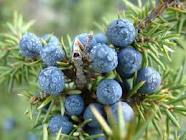
juniper berries

juniper berries

“I’ll have a juniper and tonic, thanks” – I really did say this to a barman once.  I had juniper on my mind and really needed it. Obviously what I wanted was a gin and tonic, with the smooth, styling flavour of juniper berries. Gin was originally made in the Netherlands where it is called “jenever”, and was first made as a medicine in the 16th century. Looking at the historical uses of plants and oils gives us a very clear indication of what they are good for (even without the modern scientific techniques of gas chromatography, which breaks down the oils into components). Juniper was also used against cholera and typhoid in this time by herbalists and common people –  the plants were the medicine!
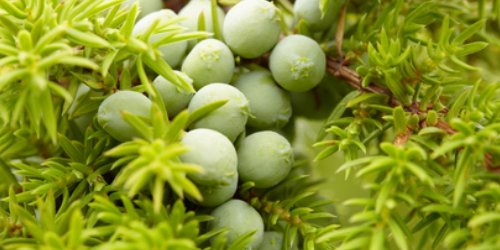
young unripe juniper berries

young unripe juniper berries

Juniper is an oil I often have cravings for and will spend months at a time obsessed with it. It’s a clean, crisp oil I refer to as having the “scent of sophistication”. It is a lightly scented oil produced from steam distillation of the ripe dark berries. l will use it for clients for anything from stress to lethargy.

It belongs to the Cupressaceae family which also holds Cypress, Cedarwood Virginian, Cade and Savin. Have a look at the leaves on the top pic – you can see how it would be related to a cypress tree.

sprawling juniper bush

sprawling juniper bush

Traditionally juniper is used for:

* a diuretic and detoxifier for the body eliminating excess fluid and also acidic build up in the blood

* this may then lead to help with issues such as gout and rheumatism

* and also cellulite (wouldn’t that be great) – I have never stuck with any one treatment long enough to know if anything helps with that …….

* cystitis – where a sitz bath or douche is used – be cautious when using essential oils in a douche and a very low ratio would be recommended

* oily skin

I use juniper for:

* energetic cleansing whether it be in your home or your personal aura

* to help release build up of emotions especially weepy and watery emotions

* to relieve someone of heavy self-deprecating feelings

* and generally when I feel ‘release’ is needed

energy vortex

energy vortex

Try these recipes:

unlike this lady I recommend putting the mask on all over your face!

unlike this lady I recommend putting the mask on all over your face!

1. Face Mask

For oily skin –

2 teaspoons of white clay

Juniper       2 drops

Lavender    1 drop

—————————————————————————————————————————————-

2. Personal Aura Cleansing Mist

To release negativity and invite sweetness and protection, in a 50ml mist bottle filled with water add –

“Ah That’s Better”

Juniper           12 drops

Orange             8 drops

Peru Balsam     5 drops

—————————————————————————————————————————————

3. Body Oil

For a detox treatment, in 3 teaspoons of oil add –

“Light as a Feather”

Juniper            4 drops

Fennel             2 drops

Ginger             1 drop

—————————————————————————————————————————————

4. Pure Pulse Point Perfume

In a little dish mix these oils and anoint your pulse points or chakras – 3 drops of essential oils and dilute with a few drops of carrier oil – always patch test first!

“Crisp Like Linen (that’s been ironed)”

Juniper      2 drops

Petitgrain   1 drop

—————————————————————————————————————————————

I also found this :

juniper plant will keep away witches; as such it was commonly planted near front doors.
(The witch could still enter, but only if she correctly counted needles on the tree).

Love that one!

copyright suzannerbanks 2013

Eucalyptus Oil and a Song About A Kookaburra

the great Australian Kookoburra

the great Australian Kookaburra

A kookaburra has recently moved into my hood – which is only 10 minutes from the city of Sydney. He, or she, has been singing every morning, and according to folk tale when the kookaburra sings. it will rain. That crafty Aussie bird hasn’t been wrong yet. What happened to our long, hot summer? Anyway, the cute little song we’ve been singing for almost a century in Australia goes like this:

“Kookaburra sits in the old gum tree,
Merry merry king of the bush is he.
Laugh, Kookaburra, laugh, Kookaburra,
Gay your life must be!”

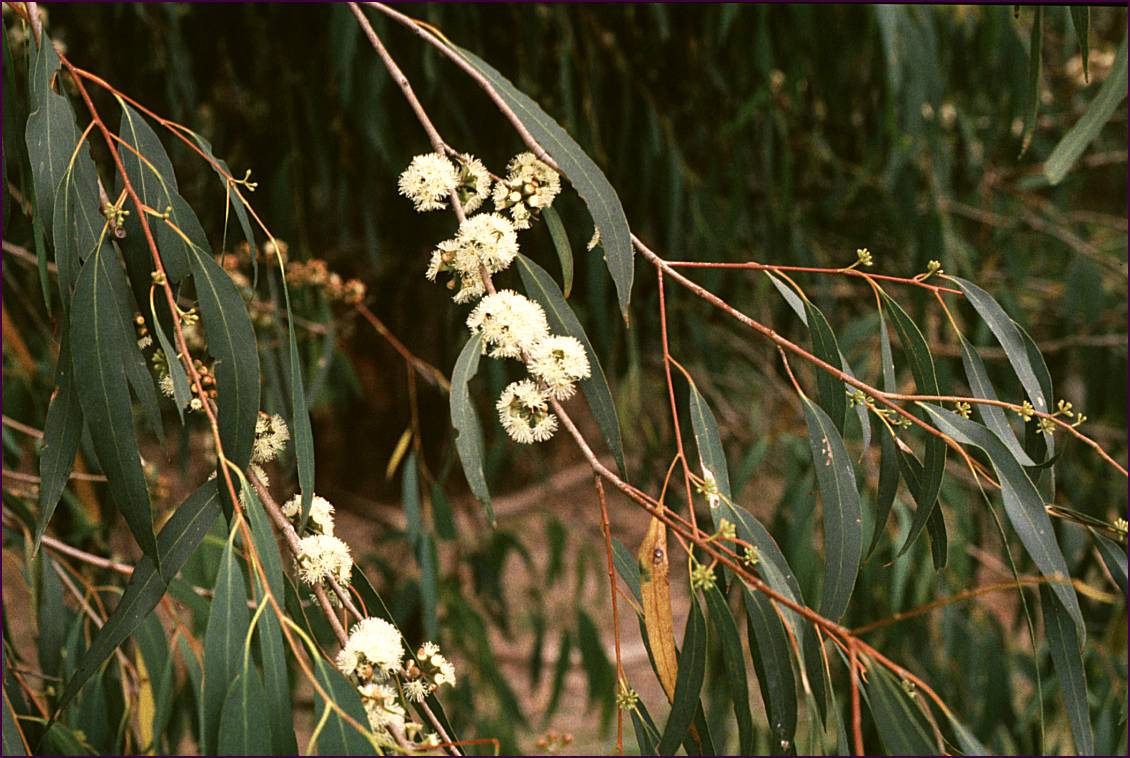
So the kookaburra sits in a gum tree. A eucalyptus tree. There are many types of euclaypts in Australia and quite a few essential oils are produced from them. Here’s a few I know about:

eucalyptus globulus

Eucalyptus globulus

1. Eucalyptus globulus

This eucalyptus tree – the “blue gum” – is the one most used to produce the essential oil. You are probably going to get Eucalyptus globulus when you buy eucalyptus oil. This oil is sharp, strong, clean and fresh and is the classic, most identifiable eucalyptus scent.This oil has been produced for nearly a century and the main production now comes from China. There are many of these trees in the USA too and other warm climates. The tree is easily able to adapt, and because of this it has been the most planted eucalyptus tree in the world.

Eucalyptus radiata

Eucalyptus radiata

2. Eucalyptus radiata

This is also called the “narrow-leaved peppermint gum” and there seem to be quite a few chemotypes (different scents). I buy this as my everyday eucalyptus oil, as it’s a bit milder and sweeter in scent than the globulus. It still has the same amazing qualities of globulus, and in fact all the eucalypts (as with the melaleucas – see my post http://wp.me/p2R7rE-55) share similar properties. I recommend trying this lovely oil next time you need some eucalyptus oil.

Eucalyptus polybractea

Eucalyptus polybractea

3. Eucalyptus polybractea

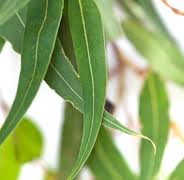
This is the ‘Blue mallee’ tree. The oil from this tree has a high cineole content (1,8-cineole is one of the particular active ingredients in eucalyptus tree), which gives it a camphorous and pungent scent. Penetrating and sharp, it is less likely to be found when searching for “eucalyptus oil”, but I have bought blue mallee oil from supermarkets here in Australia and it’s inexpensive and gorgeous. I think there is one brand I found in a supermarket that’s also organic. Even looking at these three pictures it’s hard to distinguish the difference in the look of the leaves and flowers.

Eucalyptus citriodora

Eucalyptus citriodora

4. Eucalyptus citriodora

Yep if you guessed lemon scented you’d be right. It has a citronella/lemon scent, a bit like lemon verbena too. It is high in citronellal and that would explain the scent. It is a warm, almost herbaceous lemon scent and has different shaped leaves to the others discussed so far. I don’t really use this oil although I do carry it in my kit. I would probably use a classic eucalyptus with another lemon scented oil if I need that combination.

Eucalyptus dives

Eucalyptus dives

5. Eucalyptus dives

This eucalyptus tree is also used to distill essential oils, but I don’t really use this one a lot either. In fact I don’t think I even have any. Its common name is “broad-leaved peppermint” (radiata was called narrow-leaved peppermint). It has a couple of chemotypes that produce oils and once again the constituents are particular to its type but include the 1,8-cineole, common to all eucalypts. I can’t describe the scent as I can’t remember the last time I used it or smelled it. It is however used for its high piperitone content which gives it a pepperminty-camphor scent.

Eucalyptus piperita

Eucalyptus piperita

6. Eucalyptus piperita

Wikipedia claims this is called “Sydney peppermint” but I’ve never heard that. Can’t say I ever smelled the oil either but this one is also high in piperitone too. I’ve never looked for it for sale but I’m sure someone makes it. The English phyto-chemist H. G. Smith who moved here in the late 1800’s, wrote a paper on the volatile oil of Eucalyptus piperita and also wrote a book with his colleague on the Eucalypts of Australia.

Eucalyptus smithii

Eucalyptus smithii

7. Eucalyptus smithii

This is the “gully gum” also found in South Africa where this is the main eucalyptus for oil production. It was named after Mr Smith (from the paragraph above) and is quite high in 1,8-cineole. It has that classic eucalyptus scent and all the qualities you would expect:

decongestant, astringent, analgesic, anti-septic, expectorant and the list goes on. It’s typically used for colds, flu, coughs and many respiratory complaints and is warming and refreshing.

I love Eucalyptus!

All the Australian Melaleucas

tea tree

tea tree

Many people know of the amazing properties of Tea Tree oil – Melalueca alternifolia. It’s fresh, it’s clean and it smells like the bush. The Australian bushland, that is. It is known for its powerful “anti’s” –

* anti-bacterial

* anti-fungal

* anti-viral

* anti-septic

Yep its powerful stuff and has been used by indigenous Australians as medicine and in smoking ceremonies for thousands of years (at the very least). It can be used topically for acne, fungal infections, cuts and abrasions. It is fantastic as an addition to your cleaning regime – just add a few drops to your cleaning products or go totally natural and use it on it’s own with some bi-carb soda or salt. Chuck a few drops straight onto the kitchen benches. This will not only disinfect the bench, and the cloth you are using but will also energetically and scentually make the kitchen beautiful!

But did you know there are some other types of melalueca that are lovely to use and have milder, softer fragrances?

Rosalina – Melalueca ericifolia

is much softer and sweeter than conventional tea tree, and is sometimes referred to as Lavender Tea Tree. It’s a good description and although it doesn’t really smell like lavender, it is gentle and has warm honey overtones. It has a high linalool content which is found in high quantities in lavender. I love to use this oil with kids, and in oil blends during treatments that require a formula to help the client get rid of negativity quickly.

Rosalina

Rosalina

Niaouli – Melalueca quinquinervia

this one has some lavender hints – more than Rosalina, but is also a bit citrusy and has a high content of 1,8 cineole which is found in eucalyptus, and limonene (guess where that is also found)? It is called the broad-leaved paperbark and the trees can grow quite large. Niaouli is also produced from Melalueca viridiflora and I can’t seem to find much information on whether both trees are used in the distillation, or only one tree and some information I have is incorrect. There is a Melalueca quinquinervia LN chemotype, which is called Nerolina as it has a high content of nerolidol. As I also mention below – they are all melaluecas and have similar properties.

Niaouli

Niaouli

Cajeput – Melalueca cajeputi

more spicy and “camphorous” than common tea tree, it’s great as an expectorant like eucalyptus. When you look at these pictures here, you can see that they are all very similar in their look as a plant, and are actually similar in their therapeutic properties. There are of course slight variations in scent and in chemical make-up, and cajeput could be a little too sensitising for use all over the body. I tend to use rosalina a lot more in body oil blends.

Cajeput

Cajeput

I love to use tea tree in oil vapourisers to purify the air and to help flush away bad vibes, stale energy – to help clear the way for new and exciting things!

So there you have it – some great Australian essentials oils to add to your library of scent. Go on, be adventurous.

Remember to treat yourself first, and everyone will benefit.