Spikenard – an Essential Oil with a Rich History and a Heady Scent

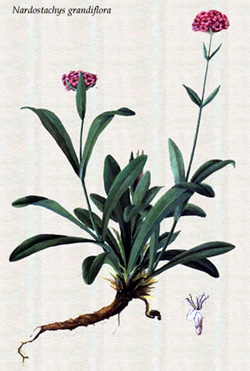
Nardostachys grandiflora or Nardostachys jatamansi pic via www.medievalcookery.com

Nardostachys grandiflora or Nardostachys jatamansi pic via http://www.medievalcookery.com

In a recent article I included spikenard in one of my recipes – see The Hierophant – A Tarot Card Reading with Essential Oils. It is commonly called spikenard, nard and the Indian name jatamansi (which is what I call it in my mind).

When I posted the link on my Facebook page one of my friends read the article (thanks Jason), and wanted to know more about this oil. My brief comments went something like this:

It’s an oil of the bible and the story is that Mary used this to bathe Jesus feet, and it was said to cost as much as a year’s wages. It has history in other religions and appears connected to the first and second Temples of Jerusalem. Used in Ayurveda it’s great for healing and a deep connection to spirit.

So that is a quick look at the oil and I thought I’d elaborate because it’s so amazing. This is a strong oil and belongs to the same family as Valerian, Valerianaceae. I must say I’ve never used Valerian oil in my practice, as even the scent of Valerian tea is super strong and if you’ve ever taken an herbal sleep formula with Valerian, you can smell it as soon as you open the bottle!

So spikenard has the same deep, base, intensity that valerian has, and also the vetiver root (even though vetiver is more like a grass). As with vetiver oil, the rhizomes of the spikenard plant hold the essential oil. It’s sweet, heavy and almost syrupy as it flares out of the bottle. One or two drops is enough in any formula to invoke the meta-physical properties of the oil, and to bring an oil blend together and give it substance.

spikenard flower - pic via www.rkessentialoil.com

spikenard flower – pic via http://www.rkessentialoil.com

As with many essential oils, the plants have been used for centuries for both healing and  religious and spiritual ceremonies. We are relying on ancient texts to illuminate us on the uses of these plants and also the scholars who translate them. It is always fascinating to me that thousands of years ago great healers knew what the plants were good for even though they had no scientific means of measuring their components. So is this intuition, trial and error, or a combo of both? However we look at it, it is a gift from the universe and our modern medicine would be nowhere today without this ancient knowledge.

There is so much to write about here I’ll just touch on the most interesting references to this oil. Said to have been used in the Temple of Solomon, the First Temple of Jerusalem (circa 800 BC)  and the Second temple (circa 530 BC onward to about 70 BC), in the incense called Ketoret mentioned n the Hebrew Bible and other texts. Ketoret is also very similar to the Egyptian incense called kyphi too which was recorded in the Pyramid texts dating back to 2300BC. Also talked about in the Bible, as mentioned above, this plant was used in Greek and Roman healing and ceremonies, and even used in medieval cookery. And as jatamansi, it’s been used in Ayurveda for thousands of years too, especially for grounding Vata, helping digestion and and as a heart tonic.
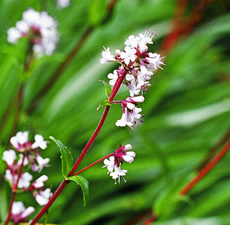
spikenard - pic via www.aroma-pure.com

spikenard – pic via http://www.aroma-pure.com

Ok so what is spikenard used for in modern Aromatherapy?

* as a calming tonic for someone freaking out (as is valerian and vetiver)

* to induce sleep

* to act as a calming digestive tonic

* as a wound healing oil by acting as a anti-bacterial agent and also an anti-inflammatory

* as an oil for meditation to induce a soothing, calming energy to connect to higher consciousness

* as a base oil to bring an oil blend together

* to stimulate hormone production

* for mature and dry skins

When you use this oil, use it sparingly like you would do with Vetiver. The secrets of the universe are encoded in every drop of oil!

copyright suzannerbanks 2013

Dear Clary Sage, I’m Sorry xoxo

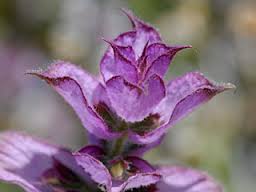
Flowering Clary sage pic via bellasugar.com

Flowering Clary sage pic via bellasugar.com

Dear Clary sage, I’m sorry I haven’t called on you in a while but I promise to consider you for my next client.

It’s not that I don’t like you, your scent is very heady and strong, and so much more sweet than sage. I realise you are very closely related and come from the same family – but I don’t favour sage over you – in fact it could be the other way around.

I like the fact that you are an expansive oil and for this I like to consider you as a very spiritual oil, as you relate to the crown and third eye chakras. You have the ability to open my mind, and that of my client too, and I suppose looking back over the centuries you have often been employed to help people over come depression and melancholy. You inspire, and can be considered an oil of euphoria – thank you. You are wonderful in allowing us to connect to the creativity of the universe too!

The essential oil is made from the flowering tops and the foliage

The essential oil is made from the flowering tops and the foliage

I love the way you work on excess oil on the skin and in the hair!

Another thing I am grateful for is that you are so powerful as an analgesic particularly in regards to period pain. I have used you on pregnant clients in preparation for labour and even in oil blends in a birthing suite. You are also great for older women during menopause to calm many of the very boring symptoms. Not only are you a very spiritual and creative oil you also help with pain.

I’ve even read you could help with lung spasm in bronchitis and asthma because of your relaxing effect on the muscles and bronchii via the hypothalamus and thalamus. You contain some similar functional groups to lavender and that’s why you are great for relaxation.

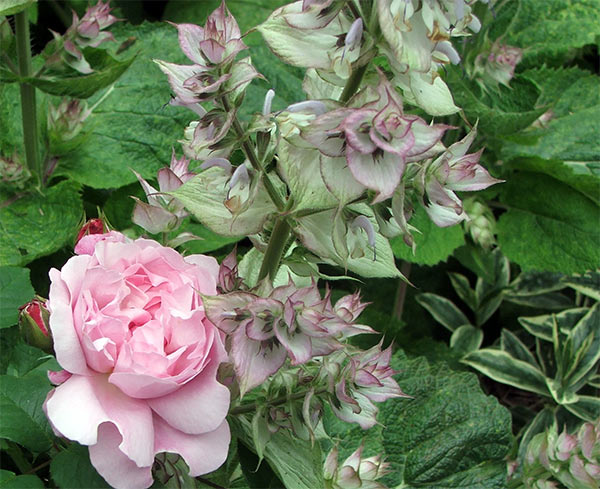
Clary sage and a rose at home in mooseycountrygarden.com

Clary sage and a rose at home in mooseycountrygarden.com

You inspire us to connect to the dream dimension – day dreaming and night dreaming – which can help shape our lives.

Here are some formulas for people to try so they can also experience your magnificence –

2. Face Mask

For oily skin –

2 teaspoons of white clay add 3 drops of oil

Clary sage      1 drop

Orange           2 drops

—————————————————————————————————————————————

Anoint yourself with pure essential oils

Anoint yourself with pure essential oils

2. Pure Pulse Point Perfume

In a little dish mix these oils and anoint your pulse points or chakras – 3 drops of essential oils and dilute with a few drops of carrier oil – always patch test first!

“Come In Please Creativity”

A blend to help release fears and invite in creativity to your life or a project –

Clary sage     1 drop

Lemongrass  1 drop

Mandarin       1 drop

————————————————————————————————————————————–

“Cool Calm and Collected”

Keep cool when you are hot flushing like crazy –

Clary Sage         2 drops

Rose Geranium  1 drop

—————————————————————————————————————————————

nourish your skin with oil blends

nourish your skin with oil blends

3. Nourishing Body Oil Blend

For a coat of your body use 3 teaspoons of carrier oil in a little dish and, add 7 – 8 drops of essential oil.

***** Always put the drops of essential oil into the bottle or dish first, then add the carrier oil. It gives the scents time to create a synergistic fusion.

For a 50ml bottle of oil add 25 drops and see my article “Aromatherapy – It’s Easy as 1 2 3”

“Oh Lord Help Me”

For period pain –

Clary Sage   2 drops

Peppermint  2 drops

Marjoram     2 drops

Lavender      2 drops

————————————————————————————————————————————–

“Even Stevens”

To clarify and tone oily skin –

Clary Sage                     2 drops

Sandalwood Australian  2 drops

Bergamot                      4 drops

—————————————————————————————————————————————

Happy blending and remember to use your intention when you are creating your formulas. See my article about intention.

copyright suzannerbanks 2013