Himalayan Cedarwood – Cedrus deodora

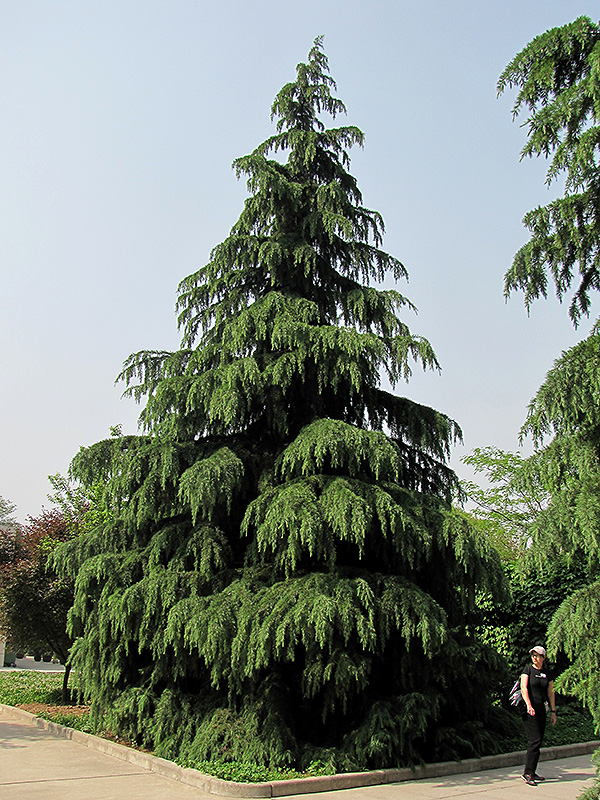
The shaggy Christmas tree type of Cedrus deodora - pic via plants.plantcrazy.ca

The shaggy Christmas tree type of Cedrus deodora – pic via plants.plantcrazy.ca

While I was searching for some good pics of Himalayan cedarwood I came across a few species variations, but they all look gorgeous – especially the one above which looks like the perfect Christmas tree to me. This cedarwood comes from the Pinacae family and the genus Cedrus (like Atlas and Lebanon cedars but not Virginian cedar which is actually a juniper).

The essential oil of Himalayan cedarwood is steam distilled from the wood, however I can’t find any evidence to support the notion that the needles are also used. I would have thought some twigs and leaves would also be used in the distillation process, but at any rate it’s a bloody gorgeous oil. It has an almost creamy, spicy, woody scent which seems much more rounded than Cedar Atlas and has roots in Ayurvedic medicine and spirituality on the sub-continent of India. Traditionally in India, the forests of Cedrus deodora have been regarded as sacred places, maybe even where one could reach a clearer connection with Shiva. In one of my Ayurvedic Aromatherapy books, the author Farida Irani claims the wood is offered to Ganesha, the remover of obstacles. Both these Gods are part of the Hindu religion.

It’s also the national tree of Pakistan.

In both Ayurveda and traditional aromatherapy this cedarwood is indicated to treat –

* respiratory tract infections, particularly the lungs as it is a drying oil

* urinary tract disorders

* fluid retention

* oily and acne skin.


Up close and personal with Himalayan cedarwood - pic via www.arbolesyarbustos.com

Up close and personal with Himalayan cedarwood – pic via http://www.arbolesyarbustos.com

As with many essential oils Himalayan Cedarwood is used to treat anxiety and stress related conditions and isn’t it interesting that many essential oils are used for the same thing.

Why?

By smelling an essential oil your brain responds almost immediately to the stimulus and starts to bring about change. This change could be anything from a change in emotion, a stimulus to the hormone producing centres in the brain and/or a shift in consciousness. These moments can start to breakdown resistance to the flow of life and therefore be interpreted as lessening stress. The outcome will be stronger the more you like the scent of the oil, and the more you are willing to release negativity.


One type of Himalayan cedrawood - pic via loneelder.7thcrow.com

One type of Himalayan cedrawood – pic via loneelder.7thcrow.com

Enhanced connection to spirit is often a claim when using essential oils and I wholeheartedly agree with this surmise. Essential oils are little drops of coded information, on which the future of the universe rides. Delve into a scented paradise and try to disprove me; you won’t be able to as you continue to expand exponentially!

Stay tuned for 10 Recipes with Cedrus deodora!

copyright suzanne


Sandalwood from India to Australia

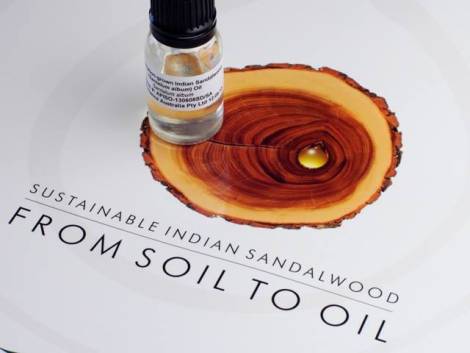
Mysore sandalwood now grown in Australia

Mysore sandalwood now grown in Australia

I was recently asked to contribute to an article called “Sandalwood Dreams” appearing as an 8 part series by perfume officiando and writer Jordan River.

It started with a surprise present in the post via my friend and perfume blogger Portia Turbo from Australian Perfume Junkies. I was happy to open the package to find a cute little bottle of sandalwood oil and a beautiful colour brochure, almost a book! This was a sample of Santalum album, commonly known as Indian sandalwood or Mysore sandalwood. The big difference is that this Indian Sandalwood is grown in Australia, from seeds obtained from India, and it packs a powerful punch. This oil is now being offered by one of my trusted suppliers and it’s more expensive than the Mysore sandalwood has ever been, however it’s now sustainable and offers the world a great solution to the previous shortage.

Click here to access Jordan’s magnificent series on this wonderful oil grown in Australia.

I appear in Part 7 which is titled “What Does It Smell Like?” that also asks other experts on the scent of Indian sandalwood grown in Australia.

Australian Sandalwood - pic via www.australian-aridlands-botanic-garden.org

Australian Sandalwood – pic via http://www.australian-aridlands-botanic-garden.org

I have also previously written about the two types of sandalwood on Australian Perfume Junkies (so click here for the original story, with excerpts from the story below):

An essential oil from a wood can draw us in to world of intrigue and secrets, ancient knowledge and divine scent. Wood oils bring an oil formulation together and can be considered “grounding” and “centering” – due to the fact the tree roots delve deep into the earth. Oils from woods have been used for thousands of years in sacred ceremonies, embalming techniques and in traditional healing. Cherish these beautiful gifts from nature.

Today most oils come from renewable plantations but in the case of Sandalwood we have seen a decline in the tree population for many years. Indian Sandalwood has been over farmed, which has led to a crisis in the industry and in our forests. Illegal felling of young trees has also led to more stringent controls from the Indian government to help sustain production long-term. This is the one driving factor in the huge price increase in the last 10 years, and is also the reason why the Australian Sandalwood industry is booming.

Australian sandalwood - pic via watoday.com.au

Australian sandalwood – pic via watoday.com.au

The Indian type “Santalum album”, and the Australian sandalwood “Santalum spicatum” have similarities but are wonderful in their differences. The Indian wood is the classic deep, sweet exotic scent that we have come to know and love and in the Australian oil, you can actually smell the bush. It really is beautiful. I use both oils, and both are considered to be premium oils and are more expensive than common oils.

Traditionally Sandalwood has been used for spiritual ceremonies and the spread of the use of this oil is claimed to have come hand-in-hand with Buddhism. If anyone has been to India you would know the widespread use of the scent in incense and temples, in soaps and perfumes.
It is used therapeutically to treat acne, urinary disorders and infections and as a nervine tonic to ease stress and anxiety.

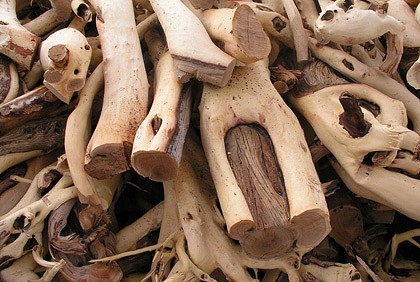
Sandalwood and oil - pic via www.fengshuidana.com

Sandalwood and oil – pic via http://www.fengshuidana.com

There is also an oil produced called West Indian Sandalwood but this tree comes from a different species and is sometimes called amyris oil. I’ve never used this oil, and have never seen it anywhere. It apparently has a slight sandalwood scent (hence it’s name) and is used in perfumes and fragrant body products.


Sandalwood is an oil for softening the edges in your life. Breathe it in and you wont be disappointed.

copyright suzannerbanks 2013


The Hierophant – A Tarot Card Reading with Essential Oils


The Hierophant - V in the Rider-Waite Deck

The Hierophant – V in the Rider-Waite Deck

I must say when I was learning about the tarot I never really got a strong vibe for this card when it came up in a reading. Perhaps it was the religious imagery I didn’t like, even though the main figure seems quite kind and placid. The monks in the foreground are being blessed by the priest, holding a triple cross – religious overload! As with all tarot cards there are many symbols embedded in the image that spark reactions and hint to meanings of the card in general.

graduation - pic via celebrationandpartyblog.com

graduation – pic via celebrationandpartyblog.com

Anyway, The Hierophant is here to let us know that if we are studying, learning anything in any form, we now have the power to take it to the next level. It could also mean we need a deeper understanding of our spirituality and this could be the sign we need to take that step. This card also represents marriage ordained by the church and religious elders.

Are you being challenged by an authority figure or feeling controlled by an institution? If so, The Hierophant will show up helping you to release your feelings of being blocked by others. Maybe this is a time to keep your continuing spiritual practice (going deeper within) and allow others – who appear to have authority – continue on their path. It may also indicate that this is a time not to rock the boat, but to abide by the rules and laws that govern us. It indicates the opposite to having free will and being totally creative.

pic via radioadelaidebreakfast.wordpress.com

pic via radioadelaidebreakfast.wordpress.com

It is a great card to meditate on now for those who are demanding marriage equality. We need balance with the relationship between the people, those in power, and our growing need for a deeper spiritual connection between us all. So I suppose this card is also about fairness and equality.

What essential oils could embody this card? The issues are fairness, marriage, deeper spirituality and the balance of power. Hmmmm.


Just use any mist bottle you can find

Just use any mist bottle you can find

1. Personal Aura Cleansing Mist & Room Mist

In a 50ml mist bottle filled with water add 25 drops of oil

“Will You Same Sex Marry Me”

Propose now, why wait?

Sandalwood Indian       8 drops

Petitgrain                       10 drops

Ylang Ylang                    4 drops

Rose Geranium           3 drops

—————————————————————————————————————————————

“My Own Mantra”

Release the bonds of traditional religions and find a deeper spirituality –

Cypress                    10 drops

Orange                    10 drops

Cedarwood Atlas    5 drops

—————————————————————————————————————————————

“I’ll Agree to Disagree”

Follow the rules this time to make it easier –

Lavender      8 drops

Ginger          8 drops

Lime              8 drops

Vetiver          1 drop

—————————————————————————————————————————————

Take a huge whiff to change your focus in seconds

Take a huge whiff to change your focus in seconds


2. Open The Bottle and Take a Huge Whiff

German Chamomile – instant relaxation

Palmarosa – being flexible with inflexible rules

Spikenard – a deep connection to spirituality

Juniper – release the old and unwanted

—————————————————————————————————————————————


Happy blending and remember to use your intention when you are creating your formulas. See my article about intention.


Green and Herbaceous – Tomato Leaf and Violet Leaf Oils

Image

Solanum lycopersicum

Tomato leaf essential oil actually exists! I don’t keep it in my library of oils because I’m not really sure that about its therapeutic properties. I was chatting with someone recently and we got talking about ‘fresh scents” and her ultimate smell for representing freshness and green essence was tomato leaf. She couldn’t believe it when I told her there was as essential oil.

In fact I think there is only an absolute of tomato leaf. Absolutes are still included under the essential oil banner but they different because of the extraction process. Often absolutes are from precious or delicate flowers and other medium. Solvents are used in the extraction process and unfortunately because of little or no industry standards, the solvent used can be hazardous or toxic and traces of the chemicals used can be present in the final product. Sometime natural chemicals are used and the process requires a type of change to occur to produce a mass of oily and water soluble parts of the flower or plant. This is called a concrete and it is then mixed with ethanol to extract the fragrant compounds. Filtration helps clean the absolute to create a scent that is very concentrated and close to the plant in its natural form.

So anyway, tomato leaf. Believe it or not, it smells exactly like tomato leaf. It smells green, peppery, and herbaceous. I wouldn’t use this oil in a treatment with a client but I may consider using it with an intention to amplify a scent in a perfume.

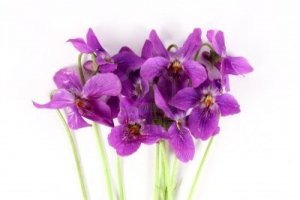
Viola odorata

Viola odorata

Violet leaf has a similar story. It’s an absolute. It has an herbaceous, green scent. There isn’t much information the breakdown of the chemical constituents so it is hard to determine what therapeutic properties this oil will have. Once again I wouldn’t be very excited to use this with a client in a body massage but I’m thinking that both these oils could work well on a spiritual and energetic level. The violet flower is an intense purple colour, with a sweet intoxicating yet subtle scent. This colour draws you in when you see it and it relates to the crown chakra, to opening and connecting with universal intelligence. Perhaps the role of the leaf for the pretty little violet flower is to give it support and protection. Could this oil be good for nourishing spiritual growth and giving someone the courage to expose their psychic powers to the world?

oh so pretty

oh so pretty

What do you think?

And what could you use tomato leaf for?

I love the idea of these leaves supporting the fruit and flower and giving us unusual scents to play with. Aromatherapy is an art and I encourage you to explore the infinite possibilities of our scented world.