Balneotherapy – Let’s Create Our Own Using Essential Oils!

mystic hot springs Utah via thesoakinglife.com

Mystic Hot Springs Utah via thesoakinglife.com

Balneotherapy – what is it?

It encompasses many aspects of bathing including soaking in mineral enriched waters in natural springs (either hot or cold or both); it may also include massage while in a bath and may also have added extras like clays and essential oils. The water may be hot or cold or both.

While it is not hydrotherapy, the title balneotherapy is basically about bathing in water, and all its variations.
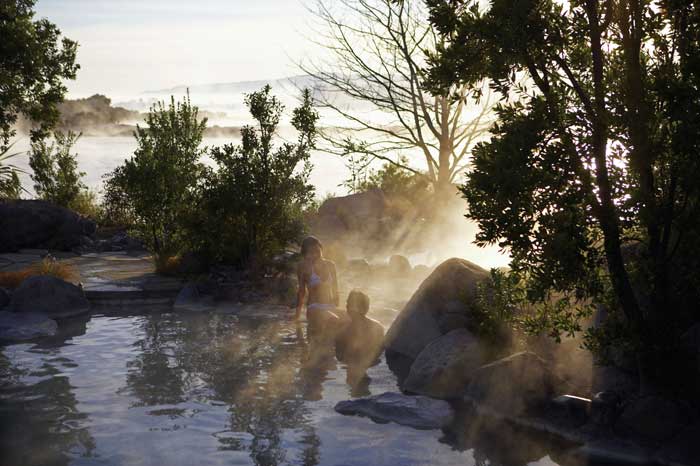
Rotorua hot pools enriched with sulphur

Rotorua hot pools enriched with sulphur

There are many amazing natural springs all over the world, including the incredible pools in Rotorua, New Zealand which have a very high sulphur content, and a very high sulphuric scent too. Nature is a wonderful thing, but if we can’t get to a hot spring once a week, I’ve decided that we can create our own balneotherapy treatment schedule. If you don’t have a bath use a bucket and soak your feet and legs instead. It wont be as fabulous but you’ll be amazed at how much difference it can make.

This regime will:

* relax your muscles

* help your body unwind

* soften and improve the look of your skin

* hydrate your body

* increase flow in your lymphatic system to help rid your body of a build up of toxins

* cleanse and balance your energetic body

* allow your mind to release stress

* allow space for change and creation

TIPS:

Don’t make the bath too hot. It’s better to add more hot water if necessary. Soak for 15 minutes minimum.

Sometimes essential oils can sting the skin when mixed with a hot bath. If you find you feel a bit prickly, then smooth a carrier oil like almond, all over your skin (when you get out of the bath) to disperse the essential oil.

3 Week Balneotherapy Course  (In Your own Home)

sea salt

sea salt

Week 1 “DETOX” – 2 baths

Try and have the baths a few days apart but if that wont work just do it whenever you can.

Bath 1

To a bath add 2 cups of sea salt either Dead Sea Salt or Celtic Sea Salt

with

Lavender 6 drops

Juniper    4 drops (add the oils to the salt first)

++++

To a foot bath add 3/4 cup of Dead Sea Salt or Celtic Sea Salt

with

Lavender   3 drop

Juniper      2 drop

—————————————————————————————————————————————-

Bath 2

To a bath add 2 cups of magnesium sulphate (Epsom salts)

with

Eucalyptus    4 drops

Rosewood    6 drops (add the oils to the salt first)

++++

To a foot bath add 3/4 cup of magnesium sulphate

and

Eucalyptus   2 drop

Rosewood   3 drop

—————————————————————————————————————————————

clay bath or a mud bath?

clay bath or a mud bath?

Week 2 “NURTURE” – 2 baths

Bath 1

To a bath add 1 cup of white clay

with

Rose 3 %  18 drops

Bergamot  4 drops (add the oils to the clay first)

++++

To a foot bath add 1/4 cup of white clay

with

Rose 3%   9 drops

Bergamot  2 drops

—————————————————————————————————————————————-

Bath 2

To a bath add 1 can of coconut milk (high fat)

with

Geranium   6 drops

Marjoram   4 drops (add the oils to the milk first)

++++

To a foot bath add 1/2 can coconut milk

with

Geranium   3 drops

Marjoram   2 drops

—————————————————————————————————————————————
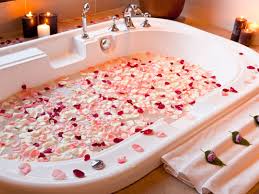
a petal bath - looks great but the cleaning -UGH!

a petal bath – looks great but the cleaning -UGH!

Week 3 “CREATE” – 2 baths

Bath 1

To a bath add a bunch of fresh mixed herbs including coriander, basil, marjoram and thyme. You wont need any essential oils as the oils from the herbs will make an infusion.

To a foot bath add the same bunch, but just a bit less.

** This may be quite stimulating so try not to do it right before bed

—————————————————————————————————————————————

Bath 2

To a bath add a 4 or 5  herbal tea bags. It could be plain chamomile, or a relaxing blended tea. If you have loose leaf tea that’s even better, just put it in a stocking, a piece of fine material or a larger infuser.

To a foot bath add the same as above, but just a bit less (2 teabags should be enough)

—————————————————————————————————————————————-

3 weeks of balneotherapy to nurture your body, open your mind and connect with your spirit.

I’m going to do this course and report on my findings. If you’d like to try it I’d love to hear from you.

Good Luck!


copyright suzannerbanks 2013

Eucalyptus Oil and a Song About A Kookaburra

the great Australian Kookoburra

the great Australian Kookaburra

A kookaburra has recently moved into my hood – which is only 10 minutes from the city of Sydney. He, or she, has been singing every morning, and according to folk tale when the kookaburra sings. it will rain. That crafty Aussie bird hasn’t been wrong yet. What happened to our long, hot summer? Anyway, the cute little song we’ve been singing for almost a century in Australia goes like this:

“Kookaburra sits in the old gum tree,
Merry merry king of the bush is he.
Laugh, Kookaburra, laugh, Kookaburra,
Gay your life must be!”

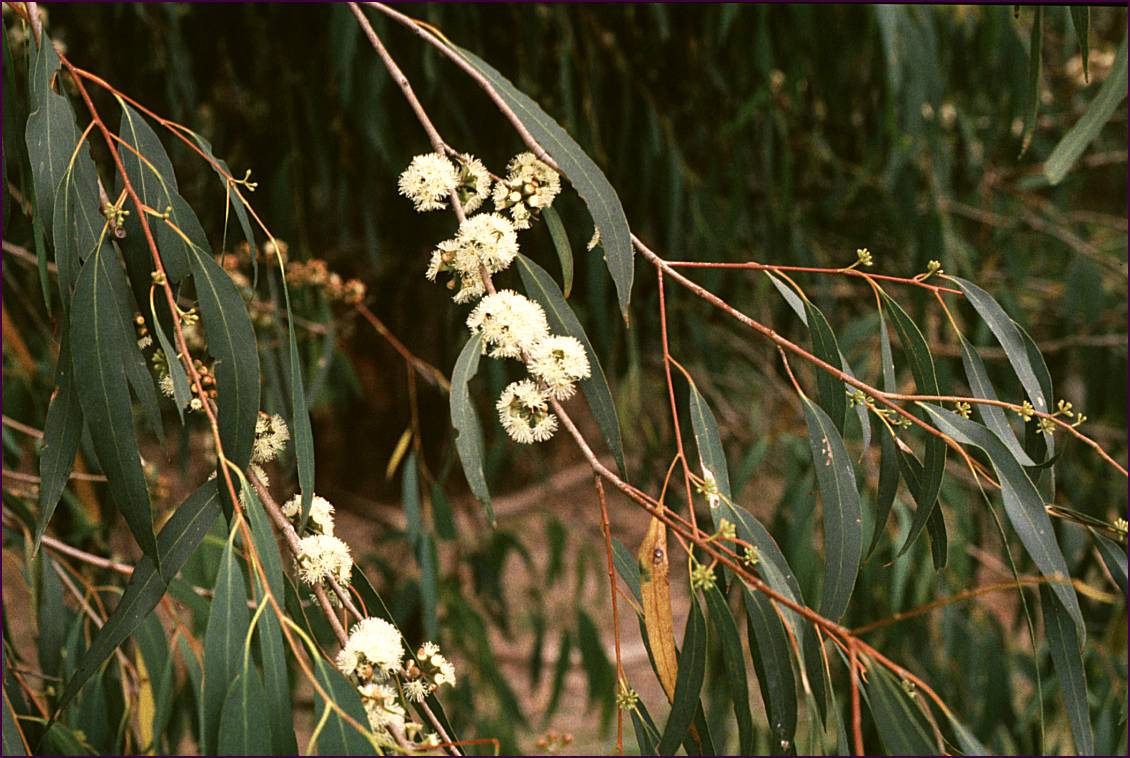
So the kookaburra sits in a gum tree. A eucalyptus tree. There are many types of euclaypts in Australia and quite a few essential oils are produced from them. Here’s a few I know about:

eucalyptus globulus

Eucalyptus globulus

1. Eucalyptus globulus

This eucalyptus tree – the “blue gum” – is the one most used to produce the essential oil. You are probably going to get Eucalyptus globulus when you buy eucalyptus oil. This oil is sharp, strong, clean and fresh and is the classic, most identifiable eucalyptus scent.This oil has been produced for nearly a century and the main production now comes from China. There are many of these trees in the USA too and other warm climates. The tree is easily able to adapt, and because of this it has been the most planted eucalyptus tree in the world.

Eucalyptus radiata

Eucalyptus radiata

2. Eucalyptus radiata

This is also called the “narrow-leaved peppermint gum” and there seem to be quite a few chemotypes (different scents). I buy this as my everyday eucalyptus oil, as it’s a bit milder and sweeter in scent than the globulus. It still has the same amazing qualities of globulus, and in fact all the eucalypts (as with the melaleucas – see my post http://wp.me/p2R7rE-55) share similar properties. I recommend trying this lovely oil next time you need some eucalyptus oil.

Eucalyptus polybractea

Eucalyptus polybractea

3. Eucalyptus polybractea

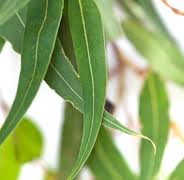
This is the ‘Blue mallee’ tree. The oil from this tree has a high cineole content (1,8-cineole is one of the particular active ingredients in eucalyptus tree), which gives it a camphorous and pungent scent. Penetrating and sharp, it is less likely to be found when searching for “eucalyptus oil”, but I have bought blue mallee oil from supermarkets here in Australia and it’s inexpensive and gorgeous. I think there is one brand I found in a supermarket that’s also organic. Even looking at these three pictures it’s hard to distinguish the difference in the look of the leaves and flowers.

Eucalyptus citriodora

Eucalyptus citriodora

4. Eucalyptus citriodora

Yep if you guessed lemon scented you’d be right. It has a citronella/lemon scent, a bit like lemon verbena too. It is high in citronellal and that would explain the scent. It is a warm, almost herbaceous lemon scent and has different shaped leaves to the others discussed so far. I don’t really use this oil although I do carry it in my kit. I would probably use a classic eucalyptus with another lemon scented oil if I need that combination.

Eucalyptus dives

Eucalyptus dives

5. Eucalyptus dives

This eucalyptus tree is also used to distill essential oils, but I don’t really use this one a lot either. In fact I don’t think I even have any. Its common name is “broad-leaved peppermint” (radiata was called narrow-leaved peppermint). It has a couple of chemotypes that produce oils and once again the constituents are particular to its type but include the 1,8-cineole, common to all eucalypts. I can’t describe the scent as I can’t remember the last time I used it or smelled it. It is however used for its high piperitone content which gives it a pepperminty-camphor scent.

Eucalyptus piperita

Eucalyptus piperita

6. Eucalyptus piperita

Wikipedia claims this is called “Sydney peppermint” but I’ve never heard that. Can’t say I ever smelled the oil either but this one is also high in piperitone too. I’ve never looked for it for sale but I’m sure someone makes it. The English phyto-chemist H. G. Smith who moved here in the late 1800’s, wrote a paper on the volatile oil of Eucalyptus piperita and also wrote a book with his colleague on the Eucalypts of Australia.

Eucalyptus smithii

Eucalyptus smithii

7. Eucalyptus smithii

This is the “gully gum” also found in South Africa where this is the main eucalyptus for oil production. It was named after Mr Smith (from the paragraph above) and is quite high in 1,8-cineole. It has that classic eucalyptus scent and all the qualities you would expect:

decongestant, astringent, analgesic, anti-septic, expectorant and the list goes on. It’s typically used for colds, flu, coughs and many respiratory complaints and is warming and refreshing.

I love Eucalyptus!

Fir and Pine – Fresh and Clean

Pine

Pine

PINE

Pine is most associated with this time of year, if you celebrate Christmas. There are many types of Pine but the one most used for the essential oil is Pinus sylvestrus – often referred to as Scots Pine. From what I can gather, yes it is actually found in Scotland and is native to parts of Europe and Asia.

I do love this oil but rarely use it in a body oil blend for a treatment. It can be a bit harsh to use all over the body and is more effective used an inhalation to help with breathing and upper respiratory tract infections. The scent is bushy and fresh and is fantastic used for scenting a space and doing an energetic cleanse. You can have an aromatherapy treatment, clean and disinfect your house, and create a clean slate for new beginnings, all with a few drops of pine oil.

When you are doing a ritual or energetic cleanse of a space, your intention is as important as the oils you use. Always go with your positive intention and emotions rather than trying to clear negativity (even though this may be your goal). So instead of thinking/chanting/saying something like this;

“I’m purging all the toxic energy of my past relationship…”

try saying

“I love living in my beautiful, happy and creative space”.

As you clean, just have this thought in your mind. You can do this with any essential oil but Pine is one that lends itself to clarification. The oil comes from a steam distillation of the twigs, buds and needles and has a spicy green scent, perfect for inviting the energy of nature into your home

FIR

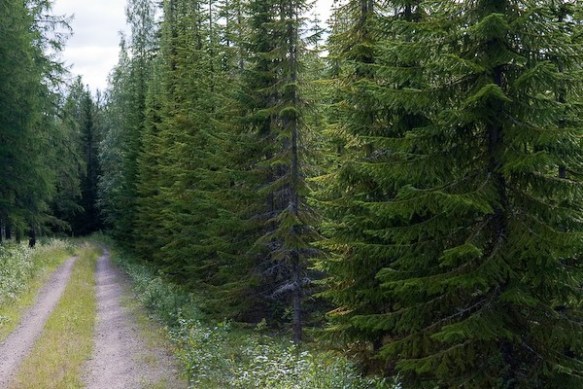
a fir forest in Finland borrowed from cartinafinland.fi

a fir forest in Finland borrowed from cartinafinland.fi

I’ve got a beautiful Siberian Fir essential oil – Abies sibirica. It is a part of the Pinacae family, but firs differ to pines in that their leaves are flat. “Flat, friendly fir” I remember a Park Ranger telling me in Arizona somewhere. Pine needles are cylindrical.

Anyway, the scent of the fir essential oil is much softer than that of pine but I really don’t use this essential oil all over the body either. This family of trees can be slightly sensitising to skin and tends to be more powerful used as a tonic for the emotions and energy. It’s main constituents on a typical breakdown are bornyl acetate, alpha and beta pinene and camphene and the oil can be seen as warming as is often claimed to be a great analgesic to rheumatism.

I would choose fir over pine for the scent. With pine, it can tend to be a bit more medicinal smelling. Fir is warmer and softer and a little bit more special and lovely to use in a perfume. Fir can be used in the same way as pine for cleaning and cleansing so why not give it a go?

Remember to use your intention when employing essential oils for health and well being and treat yourself first, so everyone can benefit.

Oils for Meditation

aaahhh meditation!

Meditation is a wonderful thing, and doesn’t really need any added help. It’s about being, not doing. It’s about connecting and detaching. So do we need essential oils to help our meditation practice? Probably not, but sometimes it adds anchoring to the ritual and helps some relax into the process. When you vapourise oils in a classic “oil burner” with a candle, the flame acts as an agent of transformation.

I love this oil burner from pagethirtythree.com

My choices for meditation oils are:

Lavender – I use lavender for everything! It is as warming as it is cooling, It is calming and nurturing, It is centering and grounding, and brings together your energy. It is a well-known oil for relaxation due to its high ‘linalool” content. A few deep breaths of lavender at the start of your meditation will help you zone in to yourself quite quickly. My motto is “If in doubt, use lavender”.

Frankincense – oh ye olde magic of frankincense! It starts out as a resin from the tree and is then steam distilled to make the oil. It is the oil of breathing deeply and has its roots in spiritual and religious practices. By breathing deeply and expanding your lungs, more oxygen can flow into your body. The combination of increased oxygen and the natural feeling of relaxation when you take a deep breath, adds up to a very peaceful vibration. It is in this state we can connect with our higher selves, and essentially “God”. It is almost used in churches as a scent to induce a type of hypnotic trance.
For a quite peaceful meditation use frankincense oil.

Rose – the ‘queen’ of oils, it is an oil of self nurturing and self-love. Rose can be used for everything from heat exhaustion to cuts and wounds. The scent is divine and when you are in the presence of pure rose oil you wont be able to escape is enveloping nature. I think of rose crystal quartz when I use this oil too, the love crystal. Shakti Gawain talks about “pink bubbles of love” in her revolutionary book from 1978 “Creative Visualization”. Pink, oil of rose, and rose quartz go hand in hand – I often surround myself with the energy of rose quartz, and rose oil, when I feel I need a bit of help and kindness. Use rose oil in your meditation to give yourself a feeling of security, softness and love so you can open to the messages of the universe.

unpolished rose quartz borrowed from angelreikihealing.com

So many oils can be used for the practice of meditation just be guided by your intuition and your personal fragrance preferences. You don’t even need to vapourise the oils you could just put a drop on your upper lip (patch test for sensitivity first).

Some more relaxing oils for meditation are:

orange, bergamot, petitgrain, lemon balm, neroli,

Some expansive oils:

pine, cypress, fir, tea tree, basil

The most important thing is to set some time aside to meditate – and that can be so hard in our busy daily lives! The oil is the icing on the cake.

Meditate, and the whole world will benefit.