
Eucalyptus Oil and a Song About A Kookaburra

the great Australian Kookoburra

the great Australian Kookaburra

A kookaburra has recently moved into my hood – which is only 10 minutes from the city of Sydney. He, or she, has been singing every morning, and according to folk tale when the kookaburra sings. it will rain. That crafty Aussie bird hasn’t been wrong yet. What happened to our long, hot summer? Anyway, the cute little song we’ve been singing for almost a century in Australia goes like this:

“Kookaburra sits in the old gum tree,
Merry merry king of the bush is he.
Laugh, Kookaburra, laugh, Kookaburra,
Gay your life must be!”

So the kookaburra sits in a gum tree. A eucalyptus tree. There are many types of euclaypts in Australia and quite a few essential oils are produced from them. Here’s a few I know about:

eucalyptus globulus

Eucalyptus globulus

1. Eucalyptus globulus

This eucalyptus tree – the “blue gum” – is the one most used to produce the essential oil. You are probably going to get Eucalyptus globulus when you buy eucalyptus oil. This oil is sharp, strong, clean and fresh and is the classic, most identifiable eucalyptus scent.This oil has been produced for nearly a century and the main production now comes from China. There are many of these trees in the USA too and other warm climates. The tree is easily able to adapt, and because of this it has been the most planted eucalyptus tree in the world.
Eucalyptus radiata

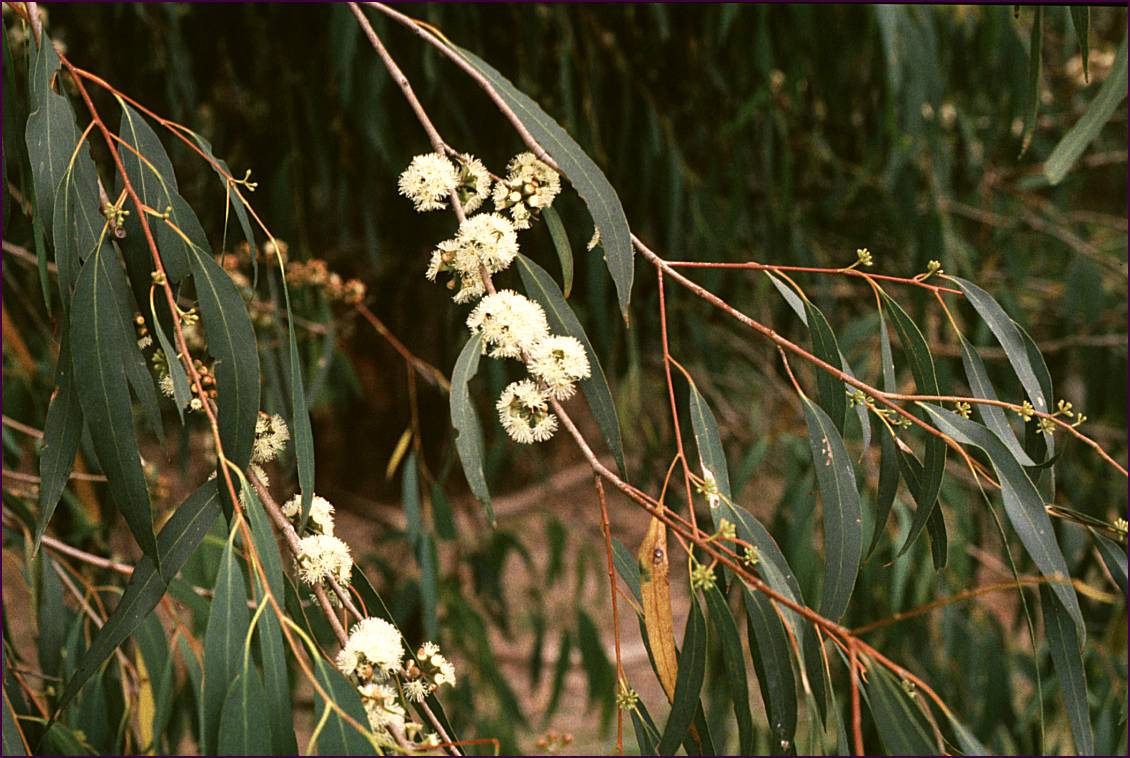
Eucalyptus radiata

2. Eucalyptus radiata

This is also called the “narrow-leaved peppermint gum” and there seem to be quite a few chemotypes (different scents). I buy this as my everyday eucalyptus oil, as it’s a bit milder and sweeter in scent than the globulus. It still has the same amazing qualities of globulus, and in fact all the eucalypts (as with the melaleucas – see my post http://wp.me/p2R7rE-55) share similar properties. I recommend trying this lovely oil next time you need some eucalyptus oil.

Eucalyptus polybractea

Eucalyptus polybractea

3. Eucalyptus polybractea

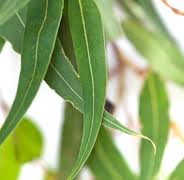
This is the ‘Blue mallee’ tree. The oil from this tree has a high cineole content (1,8-cineole is one of the particular active ingredients in eucalyptus tree), which gives it a camphorous and pungent scent. Penetrating and sharp, it is less likely to be found when searching for “eucalyptus oil”, but I have bought blue mallee oil from supermarkets here in Australia and it’s inexpensive and gorgeous. I think there is one brand I found in a supermarket that’s also organic. Even looking at these three pictures it’s hard to distinguish the difference in the look of the leaves and flowers.

Eucalyptus citriodora

Eucalyptus citriodora

4. Eucalyptus citriodora

Yep if you guessed lemon scented you’d be right. It has a citronella/lemon scent, a bit like lemon verbena too. It is high in citronellal and that would explain the scent. It is a warm, almost herbaceous lemon scent and has different shaped leaves to the others discussed so far. I don’t really use this oil although I do carry it in my kit. I would probably use a classic eucalyptus with another lemon scented oil if I need that combination.

Eucalyptus dives

Eucalyptus dives

5. Eucalyptus dives

This eucalyptus tree is also used to distill essential oils, but I don’t really use this one a lot either. In fact I don’t think I even have any. Its common name is “broad-leaved peppermint” (radiata was called narrow-leaved peppermint). It has a couple of chemotypes that produce oils and once again the constituents are particular to its type but include the 1,8-cineole, common to all eucalypts. I can’t describe the scent as I can’t remember the last time I used it or smelled it. It is however used for its high piperitone content which gives it a pepperminty-camphor scent.

Eucalyptus piperita

Eucalyptus piperita

6. Eucalyptus piperita

Wikipedia claims this is called “Sydney peppermint” but I’ve never heard that. Can’t say I ever smelled the oil either but this one is also high in piperitone too. I’ve never looked for it for sale but I’m sure someone makes it. The English phyto-chemist H. G. Smith who moved here in the late 1800’s, wrote a paper on the volatile oil of Eucalyptus piperita and also wrote a book with his colleague on the Eucalypts of Australia.
Eucalyptus smithii

Eucalyptus smithii

7. Eucalyptus smithii

This is the “gully gum” also found in South Africa where this is the main eucalyptus for oil production. It was named after Mr Smith (from the paragraph above) and is quite high in 1,8-cineole. It has that classic eucalyptus scent and all the qualities you would expect:

decongestant, astringent, analgesic, anti-septic, expectorant and the list goes on. It’s typically used for colds, flu, coughs and many respiratory complaints and is warming and refreshing.

I love Eucalyptus!

Lavender is the “Little Black Dress” of the Oil Wardrobe

absolutely stunning lavender fields via reddit.com

absolutely stunning lavender fields via reddit.com

Lavender is the “Little Black Dress” of the oil wardrobe. The L.B.D. It is. Let me explain.

The other night I was going to a 20’s Prohibition themed 40th birthday party and didn’t really have time to get an outfit together – or really had no idea what to wear. My friend said “oh come on all you have to do is wear a little black dress and stick a flower in your hair”.

Right. Of course. And then the fact that I didn’t own a L.B.D became the issue. Off I went to the new year sales and after hours of trying on dresses I found my L.B.D. It wasn’t what I had imagined so now I realise it may be necessary to own a few. So anyway the L.B.D. is the item in your wardrobe you can take anywhere. You can wear it out to dinner, to the opera/symphony/theatre, to a party, to an intimate evening at home, to lunch and pretty much anywhere. It’s how you accessorise that counts. You can dress it up or dress it down, and mould it into something new every time you wear it. In fact it could just be a little black slip and still work.

the L.B.D via groominglady.com

the L.B.D via groominglady.com

Lavender is the same. It is a MUST have oil for any collection! Even if you aren’t into aromatherapy in a big way, it’s a must have for any household due it’s amazing first aid properties. Burns, cuts and abrasions, panic attacks, stress, headaches and anything else you can think of. It’s the fortifying oil, the oil of bringing energy together.

Lavender has cell regenerating properties too so it’s great in skincare and haircare, helping scars heal and helping sunburn. Here’s a few body oil blend recipes for lavender:

“I’ll Have a Sour Plum Margarita Thanks”

Take lavender to a cocktail bar – in 3 teaspoons of carrier oil add

Lavender      2 drops

Ylang Ylang  3 drops

Orange         3 drops

—————————————————————————————————————————————-

“I have No Idea What She is Singing”

Take lavender to the dress circle at the opera – in 3 teaspoons of carrier oil add

Lavender        3 drops

Frankincense  3 drops

Patchouli        1 drop

Nutmeg          1 drop

—————————————————————————————————————————————-

“Behind Closed Doors”

Take lavender into the bedroom – in 3 teaspoons of carrier oil add

Lavender                 1 drop

Jasmine in jojoba     12 drops

Sandalwood             1 drop

—————————————————————————————————————————————-

dance floor at Sydney Mardi Gras 2007

dance floor at Sydney Mardi Gras 2007

“I like the Extended Dance Mix Better than the Radio Edit”

Take lavender to the dance floor – in 3 teaspoons of carrier oil add

Lavender                 1 drop

Cedarwood Atlas     2 drops

Bergamot                4 drops

Cinnamon                1 drop

—————————————————————————————————————————————-

“I’ll Save Room for Dessert”

Take Lavender to a dinner party – in 3 teaspoons of carrier oil add

Lavender                                 3 drops

Fennel                                     1 drop

Roman Chamomile in jojoba    8 drops

—————————————————————————————————————————————-

“What’s the Wi-Fi Password?”

Take Lavender into a business meeting – in 3 teaspoons of carrier oil add

Lavender             2 drops

Neroli in jojoba    12 drops

—————————————————————————————————————————————-

lavender

lavender

Lavender is a fantastic, versatile herb that should never be overlooked. It is powerful!

I hope you have fun with these recipes and please feel free to tell me about your experience of lavender in the comments section.

Remember to treat yourself first, then everyone will benefit.

Deep, Cool, Grounding Vetiver

Hairy vetiver root

Hairy vetiver root

Vetiver essential oil (Vetiveria zizanoides) is steam distilled from the root or “rhizome” of the plant. As you can see from the pic above the rhizome is hairy and fine, exposing as much surface area as possible to the surrounding soil. This scent of vetiver is similar to damp soil, although this is a simplification. It is an essential oil that is used extensively in perfume as a “fixative”: bringing all the scents together and binding or fixing them into a cohesive blend. It is used in many scents for men due it’s strong, deep, smoky aroma- but having said that it is also used in women’s perfumes too.

In aromatherapy it is therapeutically used for many things, and is also used the bind a formula together. I would use 1 drop of vetiver in a formula to make this possible. The most important thing to remember about vetiver is that the scent is so strong, less is more! One drop is enough in a small oil blend for your body.

less IS more via zazzle.com

less IS more via zazzle.com

I would chose one or two drops of vetiver to treat a client who is unsure, confused, overwhelmed and spends too much time in their head. It is often referred to as a “grounding” oil as it has the ability to draw energy into the ground. Patchouli works in a similar way too. Hysteria, especially in kids, can be stopped immediately with a drop of vetiver oil. You could do this by placing a drop in your hands, rub them together, and smooth all over the energetic body – ensuring your child gets to smell the oil. It’s the scent of the oil, traveling through the nasal epithelium and into the brain, that makes this possible. With aromatherapy, the scent is of the oil has one of the most powerful effects, and using them in a mist is a lovely way to do it.

use a drop of vetiver on a screaming child

use a drop of vetiver on a screaming child

Here are a few recipes using vetiver oil:

Chill Baby

for a mist that will help anyone chill out – in a 50ml mist bottle

orange    15 drops

lavender    8 drops

vetiver       2 drops

I’m Freaking Out (I need to Get Myself Together)

for a body oil blend to nourish your skin and help you calm down – in 3 teaspoons of carrier oil add

rosewood      2 drops

mandarin        4 drops

vetiver             1 drop

Oh No I Think I’m Sunburnt!

for a body oil blend to cool your skin  – in 3 teaspoons of carrier oil add

rose in jojoba   12 drops

vetiver               1 drops

Vetiver is sometimes referred to as “The Oil of Tranquility”, especially in India where it is commonly used, and produced. If you just remember this little phrase you will automatically know what to use vetiver oil for. It can also be used in hair care and skincare as a moisturiser for dry skin, and you can use any essential oil as an antiseptic.

The last time I was in Bali a shop was selling the root, and the scent was absolutely divine. I have read that the root is dampened and hung in windows to cool everyone down. The mild scent of the root is just a hint of what the power of the oil smells like.The essential oil is strong so use sparingly!

Remember to treat yourself first, then everyone will benefit.

Peru Balsam – I LOVE you!

Myroxylon balsamum - Peru or Tolu Balsam (pic sneakily borrowed Fragrantica)

Myroxylon balsamum – Peru or Tolu Balsam (pic sneakily borrowed Fragrantica)

I placed an order with one of my suppliers the other day and was upset to find they will no longer stock peru balsam essential oil. The customer service operator said there has been a lot of negative publicity lately about the oil as a skin irritant, and that it was used more in perfumery. Yeah! That’s why I want it! I want it for the scent. So I’ll be looking for this stunning oil from somewhere else and hope I can find a lovely one.

This beautiful oil, is like a combination of benzoin and vanilla. (Benzoin tincture is the red liquid used for cuts and abrasions and other skin issues that need an anti-bacterial wash. It was often in the first aid kit for wound healing, and has been used for hundreds of years. It was also called Friars Balsam and is also a resin like Peru Balsam, but comes from the Styrax family. It is also used in perfumery and comes from Indonesia and other parts of Asia).

Peru Balsam is sweet and soft and has warming stimulating properties reportedly to be a great treatment for skin conditions. I suppose over-use of the oil can lead to the opposite effect – skin irritations.  I have never seen any negative results from using this oil and actually love to use it as a perfume. It’s fantastic for vapourising to act as a soothing agent to stress, and add some sweetness and healing energy into the room. It is like a balm for the soul and when you take a deep whiff, it’s almost like you can smell a protective honeycomb, multi-dimensional energy field.

peru balsam resin

peru balsam resin

So apparently it’s not used in Aromatherapy as much as it is used in perfumery. It hails from Central and South America and although it isn’t native to Peru, it was shipped to Europe from Lima in Peru in the 1600’s for perfumery, medicine and food flavouring.

In my practice I use Peru Balsam when I feel nurturing and protection is required. It goes well with orange and in fact this blend is a favourite of one of my clients. I use this on myself as a perfume straight from the bottle and also blend it with other oils for a body oil blend.

Here are a couple of recipes;

Sweet Unicorn Dreams

25 drops in a vapuouriser to sweeten the air, de-stress and to help avoid bad dreams

Peru Balsam 12 drops

Orange          9 drops

Marjoram       4 drops

Skin of Silk

8 drops in 3 teaspoons of carrier oil for a body oil

Peru Balsam    4 drops

Lavender          3 drops

Patchouli          1 drop

Knight in Shining Armour

25 drops in a 50ml mist bottle topped up with water for use as a space cleansing and protection mist

Peru Balsam  10 drops

Lime                8 drops

Rosewood       6 drops

Vetiver             1 drop

I don’t think we need to be afraid of the potentially sensitising nature of this oil, but perhaps use caution and don’t use it with kids. The old adage “everything in moderation” works well for us here as it does in everyday life.

Remember to treat yourself first and then everyone will benefit!

Are there any Aromatherapists out there who use Peru Balsam, and also those who don’t? I’d love to hear from you in the comments section, don’t be shy.

Delicious, Mouth-watering Petitgrain Essential Oil

Citrus aurantium ssp amara or var. amara

Citrus aurantium ssp amara (or var. amara)

I recently mentioned petitgrain essential oil in my new year article I’ve Got a New Attitude but I feel it requires a lot more attention because I LOVE it!

The scent of petitgrain is beautiful and these are some words to describe it:

* citrus with a hint of grass

* green yet floral

* herbaceous and tangy with citrus undertones

* light

* slightly “soapy” in scent

* similar to Neroli (orange blossom from the same tree)

Petitgrain stands out from the other citrus oils because it is actually made from the leaves, twigs and green buds of the tree. See the pic below which captures the branches and leaves being prepared for distillation.

the leaves and twigs ready to be distilled

the leaves and twigs ready to be distilled

Lemon, grapefruit, mandarin, orange and lime essential oils are all pressed or distilled from the rind of the fruit, but our lovely petitgrain oil claims its distinction with ease. It is a scent widely used in perfumery and appeals to men and woman alike because of its fresh, clean nature.

Due to its chemical constituents it has a relaxing and soothing effect, similar to the properties of all the citrus oils. It is high in linalool (in lavender) and linalyl acetate. Other oils high in linlayl acetate are clary sage (a very high content) , lavandin, lavender, and bergamot, as well as neroli, lemon, lime, rosewood, and some mints.

Remember it is interesting to note the similar components of essential oils ,but each oil will have a very complex arrangement of molecules and the oil as a whole has a very individual energy, scent, and effect on the mind and body. “The whole is greater than the sum of its parts” applies so well to essential oils – and then when you add your intention you potentially create a whole new level of benefits.

petitgrain (citrus aurantium v amara)

petitgrain (citrus aurantium v amara)

Petitgrain can be used :

* as a perfume straight from the bottle mixed with a little carrier oil

* in an oil blend for the body where this oil will work in synergy with the others oil for its scent and as an addition to an anti-inflammatory blend

* in a body oil blend as an astringent or tonic for oily skin

* in a facial as a soothing and repairing treatment for acne and inflamed skin, particularly in teenagers as the oil will help with anxiety too

* to help release tension in the house use the oil in a diffuser or oil burner

* to reduce stress use a few drops in the shower and inhale the steam

* perfect for children and the elderly as it has an appealing scent with relaxing qualities and it will go to work for you in helping you amplify your care

* as a treatment for general sickness use a few drops on a cool washcloth and press all over the skin, then leave the cloth across the forehead

* use in place of lavender if a different scent is needed, but you still require a calming nurturing oil

I like to use Petitgrain when I need to look at things in a new light, or if I just need to chill out. It has so many uses in my practice, and when I am treating someone who is a bit stressed it is an oil that has far-reaching effects and tends to also work as an agent to simplify life.

Remember to add your intention when you make an oil blend which will add a powerful energetic, yet subtle force. Expects miracles using essential oils!

Green and Herbaceous – Tomato Leaf and Violet Leaf Oils

Image

Solanum lycopersicum

Tomato leaf essential oil actually exists! I don’t keep it in my library of oils because I’m not really sure that about its therapeutic properties. I was chatting with someone recently and we got talking about ‘fresh scents” and her ultimate smell for representing freshness and green essence was tomato leaf. She couldn’t believe it when I told her there was as essential oil.

In fact I think there is only an absolute of tomato leaf. Absolutes are still included under the essential oil banner but they different because of the extraction process. Often absolutes are from precious or delicate flowers and other medium. Solvents are used in the extraction process and unfortunately because of little or no industry standards, the solvent used can be hazardous or toxic and traces of the chemicals used can be present in the final product. Sometime natural chemicals are used and the process requires a type of change to occur to produce a mass of oily and water soluble parts of the flower or plant. This is called a concrete and it is then mixed with ethanol to extract the fragrant compounds. Filtration helps clean the absolute to create a scent that is very concentrated and close to the plant in its natural form.

So anyway, tomato leaf. Believe it or not, it smells exactly like tomato leaf. It smells green, peppery, and herbaceous. I wouldn’t use this oil in a treatment with a client but I may consider using it with an intention to amplify a scent in a perfume.

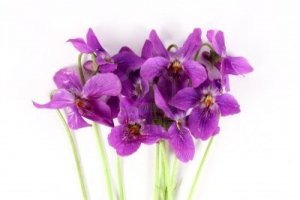
Viola odorata

Viola odorata

Violet leaf has a similar story. It’s an absolute. It has an herbaceous, green scent. There isn’t much information the breakdown of the chemical constituents so it is hard to determine what therapeutic properties this oil will have. Once again I wouldn’t be very excited to use this with a client in a body massage but I’m thinking that both these oils could work well on a spiritual and energetic level. The violet flower is an intense purple colour, with a sweet intoxicating yet subtle scent. This colour draws you in when you see it and it relates to the crown chakra, to opening and connecting with universal intelligence. Perhaps the role of the leaf for the pretty little violet flower is to give it support and protection. Could this oil be good for nourishing spiritual growth and giving someone the courage to expose their psychic powers to the world?

oh so pretty

oh so pretty

What do you think?

And what could you use tomato leaf for?

I love the idea of these leaves supporting the fruit and flower and giving us unusual scents to play with. Aromatherapy is an art and I encourage you to explore the infinite possibilities of our scented world.

Fir and Pine – Fresh and Clean

Pine

Pine

PINE

Pine is most associated with this time of year, if you celebrate Christmas. There are many types of Pine but the one most used for the essential oil is Pinus sylvestrus – often referred to as Scots Pine. From what I can gather, yes it is actually found in Scotland and is native to parts of Europe and Asia.

I do love this oil but rarely use it in a body oil blend for a treatment. It can be a bit harsh to use all over the body and is more effective used an inhalation to help with breathing and upper respiratory tract infections. The scent is bushy and fresh and is fantastic used for scenting a space and doing an energetic cleanse. You can have an aromatherapy treatment, clean and disinfect your house, and create a clean slate for new beginnings, all with a few drops of pine oil.

When you are doing a ritual or energetic cleanse of a space, your intention is as important as the oils you use. Always go with your positive intention and emotions rather than trying to clear negativity (even though this may be your goal). So instead of thinking/chanting/saying something like this;

“I’m purging all the toxic energy of my past relationship…”

try saying

“I love living in my beautiful, happy and creative space”.

As you clean, just have this thought in your mind. You can do this with any essential oil but Pine is one that lends itself to clarification. The oil comes from a steam distillation of the twigs, buds and needles and has a spicy green scent, perfect for inviting the energy of nature into your home

FIR

a fir forest in Finland borrowed from cartinafinland.fi

a fir forest in Finland borrowed from cartinafinland.fi

I’ve got a beautiful Siberian Fir essential oil – Abies sibirica. It is a part of the Pinacae family, but firs differ to pines in that their leaves are flat. “Flat, friendly fir” I remember a Park Ranger telling me in Arizona somewhere. Pine needles are cylindrical.

Anyway, the scent of the fir essential oil is much softer than that of pine but I really don’t use this essential oil all over the body either. This family of trees can be slightly sensitising to skin and tends to be more powerful used as a tonic for the emotions and energy. It’s main constituents on a typical breakdown are bornyl acetate, alpha and beta pinene and camphene and the oil can be seen as warming as is often claimed to be a great analgesic to rheumatism.

I would choose fir over pine for the scent. With pine, it can tend to be a bit more medicinal smelling. Fir is warmer and softer and a little bit more special and lovely to use in a perfume. Fir can be used in the same way as pine for cleaning and cleansing so why not give it a go?

Remember to use your intention when employing essential oils for health and well being and treat yourself first, so everyone can benefit.

All the Australian Melaleucas

tea tree

tea tree

Many people know of the amazing properties of Tea Tree oil – Melalueca alternifolia. It’s fresh, it’s clean and it smells like the bush. The Australian bushland, that is. It is known for its powerful “anti’s” –

* anti-bacterial

* anti-fungal

* anti-viral

* anti-septic

Yep its powerful stuff and has been used by indigenous Australians as medicine and in smoking ceremonies for thousands of years (at the very least). It can be used topically for acne, fungal infections, cuts and abrasions. It is fantastic as an addition to your cleaning regime – just add a few drops to your cleaning products or go totally natural and use it on it’s own with some bi-carb soda or salt. Chuck a few drops straight onto the kitchen benches. This will not only disinfect the bench, and the cloth you are using but will also energetically and scentually make the kitchen beautiful!

But did you know there are some other types of melalueca that are lovely to use and have milder, softer fragrances?

Rosalina – Melalueca ericifolia

is much softer and sweeter than conventional tea tree, and is sometimes referred to as Lavender Tea Tree. It’s a good description and although it doesn’t really smell like lavender, it is gentle and has warm honey overtones. It has a high linalool content which is found in high quantities in lavender. I love to use this oil with kids, and in oil blends during treatments that require a formula to help the client get rid of negativity quickly.

Rosalina

Rosalina

Niaouli – Melalueca quinquinervia

this one has some lavender hints – more than Rosalina, but is also a bit citrusy and has a high content of 1,8 cineole which is found in eucalyptus, and limonene (guess where that is also found)? It is called the broad-leaved paperbark and the trees can grow quite large. Niaouli is also produced from Melalueca viridiflora and I can’t seem to find much information on whether both trees are used in the distillation, or only one tree and some information I have is incorrect. There is a Melalueca quinquinervia LN chemotype, which is called Nerolina as it has a high content of nerolidol. As I also mention below – they are all melaluecas and have similar properties.

Niaouli

Niaouli

Cajeput – Melalueca cajeputi

more spicy and “camphorous” than common tea tree, it’s great as an expectorant like eucalyptus. When you look at these pictures here, you can see that they are all very similar in their look as a plant, and are actually similar in their therapeutic properties. There are of course slight variations in scent and in chemical make-up, and cajeput could be a little too sensitising for use all over the body. I tend to use rosalina a lot more in body oil blends.

Cajeput

Cajeput

I love to use tea tree in oil vapourisers to purify the air and to help flush away bad vibes, stale energy – to help clear the way for new and exciting things!

So there you have it – some great Australian essentials oils to add to your library of scent. Go on, be adventurous.

Remember to treat yourself first, and everyone will benefit.

What Essential Oil is This?

sneakily borrowed from biodagar.com

sneakily borrowed from biodagar.com

So many essential oils share similar qualities and properties, although they are all unique in their characteristics. Scent is the main way we distinguish essential oils from one another, and we know how varied the beautiful fragrances are!

I’m going to tell you about an oil, and as you are reading you may have an idea of what it could be. I will talk about the oil from the perspective of its uses and how it can influence the body.

The plant is grown in tropical climates, in Asia.

Some of its chemical constituents are:

* linalool (an alcohol) – also found in lavender and basil and has a warming effect

* B-caryophyllene (a sesquiterpene)- also found in cloves and could be considered balancing

* Benzyl benzoate (an ester) – also found in jasmine and can be seen as calming

Each chemical constituent within an essential oil, gels with all the others to produce an general effect on the body. Not all oils with esters will necessarily be calming oils. I know that’s a bit technical but I’ll give you some more hints.

yin yang

yin yang

Energetically it is said to be a “yang” (masculine) oil, and has an absolutely stunning oil with a heady, sweet aroma.

This oil could be blended with others to make a sexy, love oil.

It is a flower.

Uses of this oil include:

* calming nerves

* as an aphrodisiac

* stimulating cell growth

 is our mystery flower

this is our mystery flower

This oil is used extensively in perfumery, but it doesn’t need anything else to help it.

This oil is YLANG YLANG – Cananga odorata! What a beautiful oil it is. I love using Ylang Ylang anytime. It works well with orange oil and is great to counteract frustration and even anger. Soothing and calming to the nerves, it also works as an aphrodisiac with it’s deep, base scent.

How about a body oil blend like this –

“Gorgeous”

3 teaspoons carrier oil

3 drops ylang ylang

3 drops orange

1 drop patchouli

Gorgeous!

Aussie Blue Sky – Aussie Blue Cypress

Sydney summer sky

Sydney summer sky

You’d be forgiven for thinking that the blue pic above, was just a picture of blue. I took this, this afternoon lying on Maroubra beach – it’s a picture of a clear blue Sydney summer sky! I felt so fortunate today. I’d just finished doing the last of the Chopra Centre 21 Day Meditation Challenge about abundance and as I opened my eyes this is what I saw.

The feeling of freedom was overwhelming.

Then I thought “cypress”.

Then I thought “Australian blue cypress”. Callitris intratropica.

This oil is not very well-known but its absolutely stunning. It comes from the trees that grow in the Northern Territory, the wood and bark being resistant to insects. It is native to the area of the mainland and also the Tiwi Islands. The Tiwis’s are Melville and Bathurst Islands and they have a magic and special energy. It is claimed that the islanders have been living here for at least 20,000 years or more. Just like our other indigenous peoples, these civilisations have actually been around for much, much longer.

The trees grown in sustainable plantations and have various uses, one being the essential oil that is distilled from the wood.

Australian Blue Cypress sneakily borrowed from  griffith.edu.au

Australian Blue Cypress sneakily borrowed from griffith.edu.au

The blue colour comes from the active ingredient “Guaiazulene” which is similar to “chamazulene” in German Chamomile. This is the anti-inflammatory component of the oil, and one of the most obvious. It is dark blue, almost inky and has a spicy, woody fragrance. It’s is quite thick and heavy too.  I remember being at a conference years ago and someone presented this oil as wonderful for lung infections. Any kind of disorder that requires cooling and soothing could be used with Blue Cypress. It still isn’t really classified as an essential oil as the regulating body in Australia hasn’t recognised it’s therapeutic qualities yet.

Australian Blue Cypress is a more expensive oil as the yield is quite low, and it takes a long time to distill.

I sometimes use it as a grounding, centering treatment when a client is overwhelmed or heated up with stress. It is powerful. I always say all oils go with all oils, but this cypress lends itself to lighter sweeter oils like lemon, orange, geranium, rose geranium, rose and anything you can think of really.

If you ever see it, it is worth a try. What about 1 drop on your wrists as a connection to the mysterious, wondrous time of the last world age.