Wo Oh Black Pepper – Video

Video

Please check out my new book REVELATION! – Reveal Your Destiny with Essential Oils

Amazon USA      Booktopia AU      Amazon UK

and many other stores worldwide as a Kindle and Paperback


Wo Oh Black Pepper

Last week on YouTube I talked about black pepper essential oil. We have discussed this oil here before, and it has appeared in many recipes too.

Black pepper is a warming stimulating oil, and is a great oil to use for courage. Once again I get my words a bit muddled, but onwards and upwards!


For more info on this beautiful oil check out “Black Pepper – A Strong Essential Oil with a Soft Scent “.

Happy blending and remember to use your intention when you are creating your formulas. See my article about intention.

Thanks so much!

copryright SR Banks 2014

The Start of the Vlog!

Video

Please check out my new book REVELATION! – Reveal Your Destiny with Essential Oils

Amazon USA      Booktopia AU      Amazon UK

and many other stores worldwide as a Kindle and Paperback


The Start of the Vlog!

at the movies!

at the movies!

I’ve started my YouTube channel to try something new.

I’ve been writing 2 articles a week for just over 2 years, and sometimes it’s hard to find things to write about – especially now I have a book to promote too.

I’ve got a way to go with presenting style but I’d be grateful if you hang in there with me, as I talk about essential oils and aromatherapy.

This week I introduced myself – now you know what I look like (but after having said that I had just come from the hairdresser’s so it’s not always going to be that pretty)

etoile


And I also talked about Fennel Oil:

etoile


So with a few less “ums” and “ahs” and “so’s” and “yeah’s”, I’m looking forward to doing some new things. Please subscribe to my channel if you feel so inclined.

hearts to you

hearts to you


Thanks so much everyone,

Suzanne

copryright SR Banks 2014


I Just Used Wintergreen On A Client …..

Please check out my new book REVELATION! – Reveal Your Destiny with Essential Oils

Amazon USA      Booktopia AU      Amazon UK

and many other stores worldwide as a Kindle and Paperback


I Just Used Wintergreen On A Client …..

Wintergreen - be cautious!

Wintergreen – be cautious!


Well it’s nothing new I often used wintergreen on clients. A couple of drops at the most. I’m an aromatherapist and I am trained, however it wasn’t an oil I learnt about at college. A couple of text books I have, say we mustn’t use wintergreeen, as it’s too strong and potentially toxic. I say to you, follow this advice, as in everyday life there are other oils you can use that don’t have the potency, and that are more tried and tested.

Wintergreen, Gaultheria procumbens, comes from the family Ericaceae and the genus Gaulteria. The family Ericaceae generally refers to heath or heather and it has (according to Wikipedia), over 120 genera. This family also includes plants such as cranberry, blueberry, huckleberry, azalea, rhododendron. I’m not sure if any other plants in the genus lend themselves to producing essential oils, but I’d love to find out!

“Gaultheria procumbens (eastern teaberry, checkerberry, boxberry, or American wintergreen) is a species of Gaultheria native to northeastern North America from Newfoundland west to southeastern Manitoba, and south to Alabama.[1] It is a member of the Ericaceae (heath family).”


Dwelley, Marilyn J. (1977). Summer & Fall Wildflowers of New England via Wikipedia


Eastern teaberry sounds nice!

Wintergreen - pic via naturallycuriouswithmaryholland.wordpress.com

Wintergreen – pic via naturallycuriouswithmaryholland.wordpress.com

The oil of wintergreen smells like a lot of sports rubs and liniments, very menthol-like. You can understand why it would be used in a product for sore muscles, when you look at the traditional uses of the oil –

Traditionally this oil has been used for –

* joint pain and inflammation

* muscle and tendon pain

* headaches

* bad circulation

and many other issues, that you could take aspirin for – pain and inflammation.

The reason it is thought of as toxic is that it is extremely high in Methyl salicylate, which when absorbed by the body turns into salicylate, basically aspirin. But a very, very high dose of aspirin from a very small amount of wintergreen oil. Check out this article, which states:

“The sudden death of a 17-year-old Staten Island high school track star was caused by the accidental overuse of an over-the-counter remedy routinely used by millions of Americans to treat sore muscles and joints, the New York City medical examiner ruled after a two-month investigation.”


This happened in 2007, and while rare, please take note that just because something says it’s “natural” or has “natural ingredients, doesn’t always mean its safe.

From Kohler's Medizinal Plfanzen a book now in the public domain

From Kohler’s Medizinal Plfanzen a book now in the public domain

So basically it’s a anti-inflammatory, high in aspirin, and can cause people to react with asthma and other aspirin overdose issues.

Use lavender or German chamomile instead.

OK?

And FYI my blend was equal parts of lavender, juniper and lemon with a couple of drops of wintergreen. It was stunning. I’m going to text my client now to see how she’s feeling.

Look after yourself people!


copryright SR Banks 2014


Dalbergia sissoo I MUST Have You!

Please check out my new book REVELATION! – Reveal Your Destiny with Essential Oils

Amazon USA      Booktopia AU      Amazon UK


 Dalbergia sissoo I MUST Have You!

The gorgeous tree Dalbergia sissoo - pic via www.mswn.com

The gorgeous tree Dalbergia sissoo – pic via http://www.mswn.com

While searching for supplies of Rosewood essential oil – Aniba roseaodora, I found this!

Called Indian Rosewood, it

“is an evergreen rosewood tree, also known as sisu, sheesham, tahli, Tali and also Irugudujava. It is native to the Indian Subcontinent and Southern Iran. In Persian, it is called Jag. It is the state tree of Punjab state (India) and the provincial tree of Punjab province (Pakistan).” Wikipedia

I’m a bit excited because I didn’t know an essential oil was produced from this tree and it’s the first essential oil that I know of that comes from a plant in the “Fabaceae” family and the Dalbergia genus. This family is the legume or pea family of trees, and is the 3rd largest family of plants on earth. It is found in tropical and subtropical climates and is widely distributed in Pakistan and India, Iraq, Afghanistan and even Kenya and Tanzania.


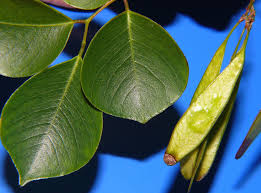
The leaf and pod of Sissoo

The leaf and pod of Sissoo

The scent is quite similar to Rosewood, and what makes this essential oil so important is that Aniba roseaodora is still under threat, and supplies of the oil and wood are severely limited. To read more about Rosewood see my article “Rosewood – A Story of Ecology and Conservation”. While we are waiting for sustainable Rosewood trees to mature, this Indian Rosewood can be the savior.

The most information I can find out about the typical analysis of the essential oil of Indian Rosewood is that it is high in linalool, which is found in many plants and essential oils including lavender, basil, cinnamon and palmarosa just to name a few. It usually lends a floral scent to an oil, but of course that is an over simplification. So we can assume this Indian Rosewood is relaxing and could be used in place of traditional Brazilian Rosewood.

The scent is a little spicier than Rosewood, but has very similar sweet, rosey notes too.

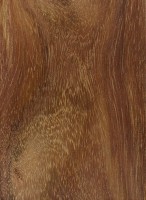
The heartwood - pic via wood-database.com

The heartwood – pic via wood-database.com

I’ve also found an interesting database for woods which includes Dalbergia sissoo, which  lists lots of other Dalbergia plants too. Many of the other related species are from tropical climates all over the world. Check it out here.

I have also found an article on the various medicinal uses of the plant which include:

* using the crushed leaf in boiling water to remove dandruff – Pakistan

* leaf juice used for eye and skin ailments in Ayurveda

* again the juice of the leaf proved to be anti-inflammatory and analgesic

Check out more info “DALBERGIA SISSOO DC AN IMPORTANT MEDICINAL PLANT”.

I am reluctant to give you recipes until I’ve used the oil myself, but in the meantime, get excited! I’m looking forward to talking more about this oil in the future.

Thanks scent lovers!

copryright SR Banks 2014

Is Amber Oil Real?

Please check out my new book REVELATION! – Reveal Your Destiny with Essential Oils

Amazon USA      Booktopia AU      Amazon UK


Baltic Amber - from a few different species in the Mediteranean

Baltic Amber – from a few different tree species in the Mediterranean

The other day my client asked me about amber oil. I told her that I’d researched it years ago and that it didn’t seem to be straight forward – and that I’d forgotten everything too, and that I never used it. She had a little sample of resin and it did smell beautiful. So what is her sample, really?

It seems there’s a few stories floating around out there which include –

Ambergris – sperm whale vomit or poo

Liquidambar orientalis – the sap from the tree

Baltic amber or succinite – the hard crystals we know that are used for jewelry

and

Pinus succinefera fossil – fossilised sap

Here’s what I can gather about the truth of Amber oil.

Ambergris

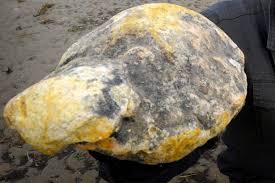
ambergris - I think

ambergris – I think

Ah yes the lovely scent of sperm whale poo and vomit. The ambergris seems to be a secretion in the digestive system of the whale to protect it’s gut from spikey cuttlefish. It is excreted with fecal matter, or regurgitated if the amount is too large to pass.The story goes that this intriguing substance was found around the Atlantic Ocean along the shorelines of many countries including Australia and NZ, Japan, South Africa, The Maldives and other areas in the world. Apparently as it aged, the scent changed to a sweet balsamic, earthy odour and was therefore grabbed and distilled by perfumers to use as a fixative in scents. It can still be found today and is worth a lot of money! If you have a perfume with that listed it would be synthetic. Most modern perfume is synthetic anyway, so don’t panic, there’s no vomit in your fragrance.

Fragrantia.com give a great review of a book called “Floating Gold, A Natural (an Unnnatural) History of Ambergris” by Christopher Kent which goes into great detail about ambergris in all it’s glory.

Liquidambar orientalis

This seems to have more credit in the ‘amber stakes’. The name also has “amber” in it so there’s a bit of a hint (or coincidence). This gorgeous tree is planted all over Sydney and I believe it originates from the Mediterranean region, particularly in Turkey. The trees are referred to generally as “sweet gum” and these forests in Turkey (according to wikipedia) are under threat due to dam building and clearing for agriculture. This oil is also produced in India, and the tree is also native to India.

In English, this oil is known under several names, shortly as Storax to include all sweetgum oils, or as Styrax Levant, Asiatic Storax, Balsam Storax, Liquid Storax, Oriental Sweetgum Oil, or Turkish Sweetgum Oil. …. it is used externally in traditional medicine for abrasions, anxiety, bronchitis, catarrh, coughs, cuts, ringworm, scabies, stress-related conditions and wounds. It is a different product than the benzoin resin produced from tropical trees in the genus Styrax.

Wikipedia

I have never used this oil but now I’m a bit desperate for it. It sounds bloody gorgeous. We had a beautiful liquid amber tree in our backyard when I was growing up. I did a school project on it – if I’d only know it contained a medicinal, scented secret!

As with Frankincense and Myrrh, the tree is tapped and the sap collected. To produce the oil, the resin then undergoes steam distillation.

Baltic Amber

Baltic Amber with a fossilised insect

Baltic Amber with a fossilised insect

Baltic amber refers to fossilised tree resin from a variety of conifers living around the Scandinavian countries and the Baltic region. The Pinus succinefera is one of these trees and this stone is sometimes referred to as succinite (and also because it contains succinic acid). The Baltic region contains most of the world’s supply of amber which could be between 40 to 60 million years old! Oh dear should we really be digging this up?

So this leads us to the claims that this stone can produce a resin, then an oil.

Pinus succinefera – fossil

Pinus succinefera - the fossil - also possibly Baltic amber

Pinus succinefera – the fossil – also possibly Baltic amber

This fossil relates to the Baltic Amber above. But can the stone produce this oil? How is it extracted? Dry distillation could be used, whereby a solid is heated to produce gasses and materials which are then condensed and collected. Or is Baltic amber just thicker and older that the thin slivers of Pinus succinefera in the pic above?

There are stories of this stone and resin/oil being used by the Romans and Greeks to use medicinally and in rituals. Did they have dry distillation techniques or were they collecting sap of pine trees and distilling it?

So if you’re buying an “amber oil” you’ll want to know what the botanical name is so you can work out what you’ve got.


copryright SR Banks 2014


10 Recipes with Sage Essential Oil – Salvia officanalis

Please check out my new book REVELATION! – Reveal Your Destiny with Essential Oils

Amazon USA      Amazon AU      Amazon UK


10 Recipes with Sage Essential Oil – Salvia officanalis

Sage has a beautiful soft leaf with a pungent scent

Sage has a beautiful soft leaf with a pungent scent

I’ve written about sage before calling it “An Essential Oil of Wisdom and Abundance”.

In my book I refer to sage oil as an oil of wisdom and courage and it appears in the chapters about SPIRITUALITY, ABUNDANCE and DHARMA. It is a very powerful oil in its energetic resonance and scent, and I must admit in my practice I don’t use it nearly as much as the other herb oils, (sorry sage). It has a cousin called clary sage which is also quite pungent and both these oils can be used for feminine issues including;

* to stop milk production in lactating women

* to help regulate periods, and even participate in some pain relief with other oils

Sage is also used in aromatherapy today

* as a diuretic

* to ease sore throats

* to ease rheumatic pain

Fresh sage

Fresh sage

So let’s check out some recipes.

1. Open The Bottle and Take a Huge Whiff

Easy. This will open your throat, third eye and crown chakras to the intelligence of the universe.

It will help you realise, and speak the truth. Remember to be kind to yourself.


Classic oil burner with candle

Classic oil burner with candle


2. Scent Your Space

In a traditional oil burner with a candle or a diffuser add 25 drops of oil. You will notice the difference in the scent when you use a candle vapouriser as the oils are gently warmed and infused into the atmosphere. The fire of the candle is also transformational in its sheer existence. Transform and cleanse as you scent your space.

“Softly, Gently, Open Your Mind”

Sage            8 drops

Mandarin    12 drops

Patchouli      5 drops


“Stand Up for Yourself”

– in a compassionate way

Sage            6 drops

Fennel          6 drops

Petitgrain     13 drops


“Get Into The Flow”

Sage                   6 drops

Rose Geranium   6 drops

Cinnamon           6 drops

Orange               6 drops


a simple hairdressing mist bottle will do the trick for your amazing essential oil mist

A simple hairdressing mist bottle will do the trick for your amazing essential oil mist

3. Personal Aura Cleansing Mist & Room Mist

In a 50ml mist bottle filled with water add 25 drops of oil

(depending on the packaging you have, you may need to use a little alcohol -like vodka- at the bottom of your bottle first, so the oils disperse into smaller drops to prevent clogging the atomiser top. I’ve found sometimes it works just with water, and sometimes it doesn’t – very annoying!)

“I’ve Got My Own Thing Goin On”

Sage                5 drops

Peru Balsam   10 drops

Lime               10 drops


“I AM Living My Dream Life”

Sage                              8 drops

Bergamot                      10 drops

Sandalwood Australian    4 drops

Lavender                         3 drops


The classic Duralex glass dish is handy to make oil blends and quick perfumes in

The classic Duralex glass dish is handy to make oil blends and quick perfumes in

4. Pure Pulse Point Perfume

In a little dish mix these oils and anoint your pulse points or chakras – 3 drops of essential oils and dilute with a few drops of carrier oil – always patch test first!

“I’m Ready for Expansion”

Sage                  1 drop

Jasmine 3%       4 drops   * see my article for more info on 3% blends in jojoba


“Owl”

Sage          1 drop

Spearmint  1 drop

Lemon        1 drop


Nourish your body with a beautiful oil blend - pic via redbookmag.com

Nourish your body with a beautiful oil blend – pic via redbookmag.com

5. Nourishing Body Oil Blend

For a coat of your body use 3 teaspoons of carrier oil in a little dish and, add 7 – 8 drops of essential oil. It’s always best to patch test first, before you apply all over.

***** Always put the drops of essential oil into the bottle or dish first, then add the carrier oil. It gives the scents time to create a synergistic fusion.

For a 50ml bottle of oil add 25 drops and see my articles “Ratios for Blending Essential Oils – A Reminder of the Basics” and “Aromatherapy – It’s Easy as 1 2 3”

“That Time of the Month”

Sage           2 drops

Geranium    3 drops

Lavender     2 drops

Peppermint  1 drop


“Abundantia”

Sage              2 drops

Ylang Ylang    2 drops

Rose 3%        4 drops * see my article for more info on 3% blends in jojoba


Happy blending and remember to use your intention when you are creating your formulas. See my article about intention.

copryright SR Banks 2014

10 Recipes with Orange Essential Oil – Citrus sinensis

Please check out my new book REVELATION! – Reveal Your Destiny with Essential Oils

Amazon USA      Amazon AU      Amazon UK


10 Recipes with Orange Essential Oil – Citrus sinensis

Oranges and orange oil can make you happy!

Oranges and orange oil can make you happy!

I love orange oil because it’s light and fresh and so easy to use. Like most of the citrus oils the molecules are slightly less complex than other oils and have a smaller amount of chemical bonds. This makes them quite light and when using them to scent a room, you will need to anchor it down with a heavier oil to keep the scent around for a bit longer. You could use a wood like cedarwood or sandalwood; a floral like geranium or ylang ylang, or herbs like lavender and marjoram.

Citrus oils are best avoided in large amounts before going into the sun. A few drops in a blend will be fine but don’t lather yourself in orange and lime then head down to the beach for a full-on sunbaking session. They can be phytotoxic which means they can make your skin burn in the sun and while I’ve never seen evidence of this I’m sure people have found out the hard way.

Let’s go:

An essential oil steam in the shower will do wonders for your mind and energy levels - pic via completehealthcircle.com

An essential oil steam in the shower will do wonders for your mind and energy levels – pic via completehealthcircle.com

1. Put A few Drops Of Oil into the bottom of the Shower

This works in a similar way to just taking a whiff straight from the bottle, but if you’ve got an extra minute, it will give you a completely different experience. Your whole body will be immersed in an essential oil steam. Just cover the drain with a cloth or your foot for a couple of minutes and breathe in the medicinal goodness.

Orange oil will brighten your outlook.


There are lots of great essential oil diffusers on the market now - pic via www.aliexpress.com

There are lots of great essential oil diffusers on the market now – pic via http://www.aliexpress.com

2. Scent Your Space

In a traditional oil burner with a candle or a diffuser add 25 drops of oil

“Sweet Surrender”

Sweetly happy and content –

Orange             12 drops

Peru Balsam       7 drops

Rose Geranium   6 drops


“Cool Kids Space”

Create a lovely environment for the little ones –

Orange       15 drops

Cinnamon    5 drops

Marjoram     5 drops


“Invitation”

Invite happiness in –

Orange        10 drops

Palmarosa     8 drops

Lime              7 drops


“Pixies”

Connect to the elements –

Orange                           9 drops

Frankincense                 10 drops

Cedarwood Himalayan    6 drops


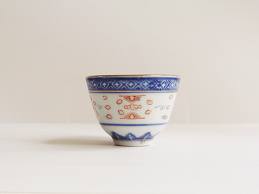
Chinese tea cup - perfect for a little perfume magic

Chinese tea cup – perfect for a little perfume magic

3. Pure Pulse Point Perfume

In a little dish mix these oils and anoint your pulse points or chakras – 3 drops of essential oils and dilute with a few drops of carrier oil – always patch test first!

“Helium Balloon”

Happiness and lightness –

Orange     2 drops

Geranium  1 drop


“Life is Wonderful”

Orange           1 drop

Jasmine 3%    2 drops * see my article for more info on 3% blends in jojoba


“Laughter is the Best Medicine”

Orange         1 drop

Lime             1 drop

Rosewood    1 drop


“In This Moment”

Be present –

Orange                            2 drops

Sandalwood Australian    1 drop


“Maybe”

I’ll make up my mind when I fee like it, I’m going with the flow today –

Orange         1 drop

Lemongrass  1 drop

Ylang Ylang   1 drop


Essential oils can make you happier

Citrus essential oils are all about making you happier


Remember to treat yourself first, then everyone will benefit.

copryright SR Banks 2014


Rose and Rosehip – A Winning Combination for Youthful Skin

Please check out my new book REVELATION! – Reveal Your Destiny with Essential Oils

Amazon USA      Amazon AU      Amazon UK


Rose and Rosehip – A Winning Combination for Youthful Skin

Stunning rosehips - pic via the-grazer.blogspot.com

Stunning rosehips – pic via the-grazer.blogspot.com

I declare the best facial moisturiser in the entire world to be essential oil of rose with rosehip oil. Some may disagree but I don’t care because I love it. And here’s why ……

Rosehip Oil

the orange colour of reosehip oil

the orange colour of rosehip oil

Rosehips are the little buds left on a rose bush after the flowers have gone. They are high in Vitamin C and are now being used in supplements for immune strength and as an anti-inflammatory agent in joint formulas too. We have been drinking delightfully pink rosehip tea for years too, which is high in anti-oxidants and can help with colds and flu. It is the fruit of the rose bush and is also used in jams and jellies.

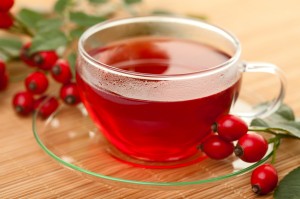
Delicious rosehip tea - pic via www.therosehipcompany.com

Delicious rosehip tea – pic via http://www.therosehipcompany.com

The oil can be extracted by cold pressing the buds or by using CO2 extraction process. This sounds a bit technical but it is actually a good way to extract oils as not much energy is needed, and the products are very near to their natural state.

It is obvious that all these amazing properties are present in the oil which is a dark orange colour, quite viscous with a distinct scent. It is luxurious to say the least and I find it funny when I read the back of the labels of some retail products that say to use “a few drops”. I use way more than that everyday. I use a decent pump’s worth. It is hydrating. soothing, and the Vitamin C really keeps your skin looking and feeling youthful!

Sometimes the scent is what puts some people off but I use it straight and love it. This is where mixing some rose essential oil into it will turn it into a stunning serum.

Rose Essential Oil

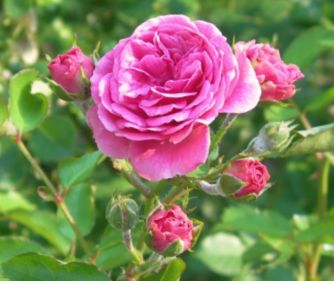
Rosa damascena - the most used rose for oil production

Rosa damascena – the most used rose for oil production

As a skin oil rose is amazing because it treats heat and redness in the skin. It is a complex oil revered through the ages for its use in beauty and femininity. Great for any skin condition from eczema and psoriasis through to scars and sunburn.

It is called the “Queen of Oils” and will make you feel just that. It is an oil of inner strength and wisdom.

Who wouldn’t want to have it everyday? I’d take a drop of rose oil over any perfume or any scented skin cream, any day.

Quantities for mixing – assuming you have rose 3% in jojoba:

5 mls rosehip oil          add           4 drops

10 mls rosehip oil        add           7 drops

15 mls rosehip oil        add          11 drops

20 mls rosehip oil        add          15 drops

25 mls rosehip oil        add          19 drops

30 mls rosehip oil        add          22 drops

These are my own ratios for any oil in 3% jojoba for the face. It will be a higher concentration for the body. They are also rounded up and down to get a whole drop – unless you can get 1/2 a drop or 3/4’s of a drop, but I cant seem to do that very well!

See my article for more info on 3% blends in jojoba

Or just pump some rosehip onto your fingers and add a few drops of rose oil. Sometimes we just need to simplify things.

create your own natural skincare

create your own natural skin care

Enjoy this skincare regime, and for extra hydration spritz your face with a rose hydrosl or floral water before you oil up. There is a difference between them so check out my article “Hydrosols vs Floral Waters – What’s the Diff?”.

Remember to treat yourself first, then everyone will benefit.

copryright SR Banks 2014


10 Recipes with Neroli Essential Oil – Citrus aurantium ssp amara/Bigaradia

Please check out my new book REVELATION! – Reveal Your Destiny with Essential Oils

Amazon USA      Amazon AU      Amazon UK


10 Recipes with Neroli Essential Oil – Citrus aurantium
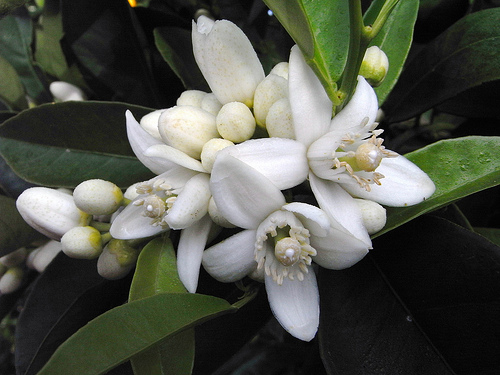
citrus blossom that makes neroli oil

The citrus blossom that makes neroli oil

Pretty flower. Very pretty scent.

Neroli essential oil is made from the blossom of a couple of citrus trees which do produce bitter fruit, sometimes used for marmalade – but the main focus is to harvest the blossoms for perfume. Thank you tree, your perfume is beautiful!

In the world of essential oils and plant-based medicine it is a relative newcomer. While some herbs and oils have been used for thousands of years (lavender, myrrh, frankincense, cypress for example), this scent was made popular in Italy in the 1700’s. The story goes that,

“by the end of the 17th century, Anne Marie Orsini, duchess of Bracciano and princess of Nerola, Italy, introduced the essence of bitter orange tree as a fashionable fragrance by using it to perfume her gloves and her bath. Since then, the term “neroli” has been used to describe this essence.”


The principality of Nerola is close to Rome where the Princess really worked the diplomacy angle in the Italian capital, securing her future in the courts of France, Spain and Rome. The essence was used particularly in Venice to ward off water born viruses and nasties.

Anne-Marie-de-La-Tremoille_Dss-Bracciano via wikipedia.com

Anne-Marie-de-La-Tremoille_Dss-Bracciano via wikipedia.com

It is an oil that is precious and expensive to make and therefore is mostly sold in a 3% blend. (see my article “Essential Oils 3% in Jojoba – What are they, and Why?” for more information on 3% blends).

Let’s check out some recipes with Neroli 3%:

1. Facial Oil Treatment

Mix one or two drops of essential oil in one teaspoon of carrier oil. You can warm the oil slightly first if desired – it will be very relaxing! Massage your face and rest for 10 minutes. You can also place a cool or warm wet face cloth on your face as a compress over the oil mask. Remove excess oil with a tissue or cloth.

Neroli 3%    4 drops
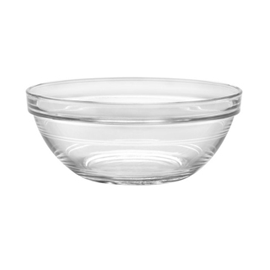


The classic Duralex glass dish is handy to make oil blends and quick perfumes in

The classic Duralex glass dish is handy to make oil blends and quick perfumes in

2. Pure Pulse Point Perfume

In a little dish mix these oils and anoint your pulse points or chakras – 3 drops of essential oils and dilute with a few drops of carrier oil – always patch test first!

“Bride”

Perfect to calm the nerves and smell wonderful too –

Neroli 3%      5 drops

Ylang Ylang   1 drop


“Summer Nights”

Get into your happy summer place –

Neroli 3%       3 drops

Lemongrass   1 drop

Lavender        1 drop


Anoint yourself with pure essential oil blends

Anoint yourself with pure essential oil blends

“Whimsical”

Neroli 3% straight from the bottle on your wrists and heart


“Quietly Powerful”

When you need a little oomph –

Neroli                         3 drops

Cedarwood Virginian  1 drop

Nutmeg                      1 drop



nourish your skin with oil blends

nourish your skin with oil blends

3. Nourishing Body Oil Blend

For a coat of your body use 3 teaspoons of carrier oil in a little dish and, add 7 – 8 drops of essential oil. It’s always best to patch test first, before you apply all over.

***** Always put the drops of essential oil into the bottle or dish first, then add the carrier oil. It gives the scents time to create a synergistic fusion.

For a 50ml bottle of oil add 25 drops and see my articles “Ratios for Blending Essential Oils – A Reminder of the Basics” and “Aromatherapy – It’s Easy as 1 2 3”

“Sweetness and Light”

Neroli 3%        8 drops

Lemon            2 drops

Frankincense  2 drops


“Youthful Glow”

Neroli 3%            6 drops

White Grapefruit  4 drops

Rose Geranium   1 drop


And if you have Neroli pure essential oil then you can use it in a vapouriser or in a mist bottle. The 3% blend is only good for mixing with oil or in a cream for your face and body, or using direct from the bottle as a perfume. Here are some recipes with pure Neroli oil:

Any bottle with an atomiser top will do!

Any bottle with an atomiser top will do!

4. Personal Aura Cleansing Mist & Room Mist

In a 50ml mist bottle filled with water add 25 drops of oil

(depending on the packaging you have, you may need to use a little alcohol -like vodka- at the bottom of your bottle first, so the oils disperse into smaller drops to prevent clogging the atomiser top. I’ve found sometimes it works just with water, and sometimes it doesn’t – very annoying!)

“Divinity”

Neroli           8 drops

Palmarosa    8 drops

Bergamot     9 drops


“Seduction”

Neroli              10 drops

Sandalwood      6 drops

Juniper              6 drops

Cinnamon         3 drops


“I Am”

Neroli         8 drops

Orange      6 drops

Patchouli   4 drops

Cypress     6 drops

Spikenard   1 drop


Happy blending and remember to use your intention when you are creating your formulas. See my article about intention


copryright SR Banks 2014


Palo Santo – I Tried to Like You But I Didn’t, Sorry

Please check out my new book REVELATION! – Reveal Your Destiny with Essential Oils

Amazon USA      Amazon AU      Amazon UK



Palo Santo – I Tried to Like You But I Didn’t, Sorry

The spindly tree Palo Santo pic via blessyourbody.com

The spindly tree Palo Santo

About this time last year, Palo Santo popped into my world. Within a week or two, a friend had asked about it and one of my readers here on the blog also mentioned it in one of her blends. I’d never used it nor had I really heard much about this oil. So my interest was sparked and I did a bit of research to find –

* it belongs to the Family “Burseraceae” of which frankincense and myrrh also belong, and it definitely shows in its form and the fact that it’s a desert dwelling tree and looks just like a frankincense or myrrh tree

* according to Wikipedia the Burseraceae family has also been called the incense tree family

* its sort of like the South American sandalwood, as the scented wood is used to make incense and of course essential oil

* it is used in the Americas more than in Europe or Asia

* it has been used for healing in communities in South American countries for many years and has a strong place in their folklore too

* spiritual and healing ceremonies often used the smoke of the burning wood to purify bad or stagnating energy (similar to indigenous Australians using tea tree branches, and Native American Indians using sage for smudging)

* my friend who studied in Thailand was told it was good for increasing sexual drive and raising kundalini

The dried wood can be burnt directly

The dried wood can be burnt directly

“It is widely used in folk medicine for stomach ache, as sudorific, and as liniment for rheumatism. Aged heartwood is rich in terpenes such as limonene and α-terpineol.”  Wikipedia

As it is very high in limonene one would expect a lemon scent (if only slightly), but the mix of molecules makes for a very deep, earthy, heady scent indeed!

I bought a couple of bottles from a small environmentally focused company in Ecuador and I was feeling very international and slightly self-important when I placed the order. I was excited to receive and smell this intriguing oil of history and healing in many South American cultures including Mexico, Argentina, Paraguay, Bolivia, Brazil, Peru, Costa Rica, El Salvador, Guatemala, Honduras, Colombia, Ecuador, and on the Galapagos islands.

Then it arrived. It probably didn’t help that I was unwell at the time. I ripped open the bag to find a cute little wooden box. Opened the box, cracked the lid, took a huge whiff and almost vomited. It has an earthy, rich, almost truffle scent, which is pungent and warm.

I could end the story right there, but I put it away in the oil cupboard until my friend dropped in for a blend. A week or two later she came by to collect her bottle of oil (she had actually experienced this oil in a yoga teacher training place in Thailand!)

She was excited. I wasn’t.

50 ml bespoke body oil made by me

50 ml bespoke body oil made by me

I made her oil blend and put 6 drops of Palo Santo in 150mls with a few other oils. Months later she reported that her body oil blend was beautiful, but now I’m scarred for life!

The weather is warming up and I’ve started to smell the Palo Santo wafting from my studio. It has managed to penetrate the triple bubble wrapping.

It is POWERFUL.

Use with caution!

Ay comments on this interesting oil are welcomed.

copryright SR Banks