Hydrosols vs Floral Waters – What’s the Diff?

Please check out my new book REVELATION! – Reveal Your Destiny with Essential Oils

Amazon USA      Amazon AU      Amazon UK


Hydrosols vs Floral Waters – What’s the Diff?

A lovely selection of rosewater

A lovely selection of rosewater

Recently one of my wholesale suppliers sent an email lamenting about the short shelf life of hydrosols and how difficult it is to maintain great standards for their customers.

I would have to agree. I absolutely love hydrosols but their scent doesn’t last long and it’s always disappointing when you open up a bulk container to find it has “turned”. The scent goes a bit dull and brownish and it simply isn’t right. So what’s the difference between hydrosols and floral waters?

Hydrosols

Hydrosols are the water left over from the steam and water distillation of a plant or flower. They contain many water-soluble constituents from the plant and therefore have a different make-up to the essential oil they come from. Hydrosols also have the beautiful scent of the plant, but at a more softer, rounder level. They contain minerals, cellulose and aromatic compounds. According to Wikipedia they “contain essential oil compounds as well as organic acids..…. and will include many of the water-soluble plant pigments and flavonoids.”

Hydrosols will be harder to find in a retail environment, mostly everything will be a floral water- either the essential oil infused into the water, or the plant boiled or infused in water. If you can buy a true hydrosol its definitely worth a try.

Hydrosols can be used in skin care and as a therapuetic treatment. I remember taking a weekend class with an Indian Ayurvedic doctor and rosewater was used for an eye bath to soothe the infection and used when any kind of heat or inflammation was present. Rose water has been used in Ayurveda as a treatment for centuries and is also used by woman in their skin care regimes.

If it’s a real hydrosol it can be amazing when its fresh. If it’s not a real hydrosol it could be a floral water.

Floral Waters

The most well-known would be rose-water, orange blossom (neroli) water and pine (kewra) water. Check out this article for some fabulous Oregon scented alcohols.

Pine water (essence)
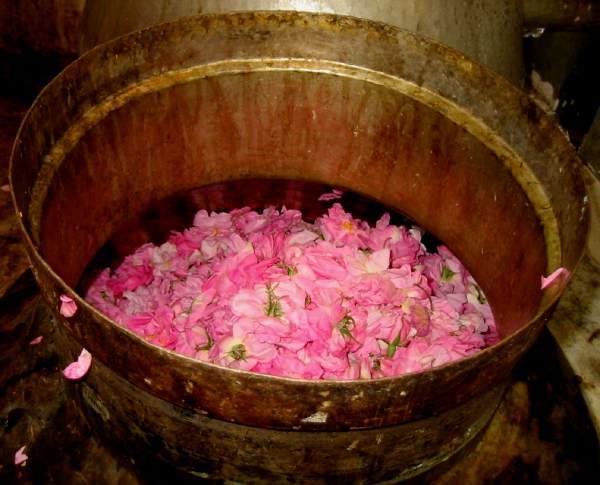
Pine water (essence)

A simple hand made rose water sneakily holistichealthherbalist.com

A simple hand made rose water – pic sneakily holistichealthherbalist.com

Hydrosols could be called floral waters (because they are), but this usually refers to a water that has been scented with essential oils. The best floral waters use a process that breaks essential oils into tiny droplets and forces them into de-ionised water. In this process no extra chemicals are used and the scent is true to the essential oil. The scent will also last longer and floral waters can still be used for everything that a hydrosol is used for.

If you go into a middle eastern or Indian shop and find a bottle of rose-water, for example, it probably wont be a hydrosol. It will be a floral water made in another way. That’s not to say they aren’t fabulous but always check the label to find if there are any chemical preservatives or nasty ingredients.

You can use your stunning floral water in these ways:

  • Misting your face before moisturising to soften and hydrate
  • Misting your body after the sun
  • Use in place of a facial toner for a more gentle clarifying and cooling treatment
  • particularly lovely for misting kids to help cool them down
  • add to a cocktail for a delicious scented drink
  • add a splash to a glass of water
  • use in cooking with sweets and salad dressings

I’m sure you can think of many more so don’t hesitate to use hydrosols and floral waters in your daily regime.

copyright suzanne

Electrifying Essential Oil Body Blends – for the Ladies

Please check out my new book REVELATION! – Reveal Your Destiny with Essential Oils

Barnes & Noble      Booktopia AU      Amazon UK

and many other stores worldwide as a Kindle and Paperback


Electrifying Essential Oil Body Blends – for the Ladies

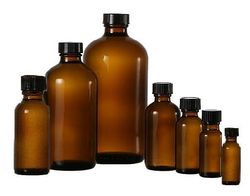
The classic bottle for aromatherapy "Boston Round Amber"

The classic bottle for aromatherapy “Boston Round Amber”

Get Ready!

What you will need:

1. Oils! Hehehehe.

You will need some carrier oils which could be any of the following – almond, grapeseed, sunflower, jojoba, apricot, avocado (this is a bit thick and dark so it’s good to mix with another lighter oil), coconut, camelia, olive and maybe some macadamia (good to mix this with another oil too).

All your essential oils.

2. Bottles (see pic above) or a glass dish to mix enough for one moisturising treatment.

3. A good intention – this will play an important part in how the oil blend will come together in the end. It could mean the difference between an absolutely beautiful formula or an ordinary one.

4. A clear space around you – simplify your area,  and make sure it’s clean.

Let’s go!

I will give you quantities for a 50ml oil blend which is 25 drops of essential oil in 50mls of carrier oil.

For a quick coat of your body you can use 3 teaspoons of carrier oil and 8 drops of essential oil.

one drop of oil at a time

one drop of oil at a time

***** Always put the drops of essential oil into the bottle or dish first, then add the carrier oil. It gives the scents time to create a synergistic fusion.

1. Look Out Here I Come

Black pepper    5 drops

Orange           15 drops

Geranium         5 drops

—————————————————————————————————————————————–

2. Red Hot Mamma

Ylang Ylang      5 drops

Mandarin        15 drops

Cardamom       2 drops

Patchouli          3 drops

—————————————————————————————————————————————–

3. Sugar and Spice

Cinnamon          8 drops

Rose Geranium  8 drops

Rosewood         9 drops

Wonder Woman IS Cool

Wonder Woman IS Cool

4. Wonder Woman is COOL

Cedarwood Atlas  5 drops

Bergamot            12 drops

Fennel                   2 drops

Lime                      6 drops

—————————————————————————————————————————————–

5. Chillax-arama

Marjoram              6 drops

Petitgrain            12 drops

Lavender              7 drops

—————————————————————————————————————————————–

6. Brilliant Idea

Basil                    5 drops

Rosemary           8  drops

Lemon               12 drops

——————————————————————————————————————————————

7. Pink Bubble of Love

Peru balsam       8 drops

Orange             10 drops

Frankincense      6 drops

aaahhhh the beautiful rose

aaahhhh the beautiful rose

8. Rosey Posey

Rose in jojoba     30 drops (this is an oil that usually comes diluted in jojoba because of the cost)

Rosewood           5 drops

—————————————————————————————————————————————–

9. Oh Happy Day!

Spearmint           8 drops

Rose geranium   8 drops

Lemongrass       9 drops

—————————————————————————————————————————————-

10. I’m Willing to Be Flexible on That

Palmarosa          8  drops

Grapefruit          17 drops

I hope this gives you some ideas for blending and moisturising. Have fun, and ask me a question if you aren’t sure. You an also refer to my previous articles for further information “Ratios for Blending Essential Oils – A Reminder of the Basics” and “Aromatherapy – It’s Easy as 1 2 3”

Happy mixing and remember to use your intention when you are blending.
See my article about intention.

copryright SR Banks

A Recipe for Recovery and How to Choose Oils

Recovery Formula

Recovery Formula

I visited a friend today, and when he opened the door I said “emergency aromatherapy”. He is recovering from an operation and this was my first visit. Naturally I took my essential oil case, which accompanies me to all my clients homes and a few places in between. This has most of my essential oils, 2 styles of empty bottles for making bespoke aromatherapy formulas in, a towel, labels, pens, a hair clip, a few different kinds of carrier oils and some tissues. And a liniment. Prepared for anything I reckon! Oh – and a lip balm.

My lovely case of oils

My lovely case of oils

I needed to make a formula that would help with scar tissue from the operation, work as an anti-inflammatory on the skin and surrounding tissues, act as a soothing agent for emotional imbalances that come with the invasion of surgery and anesthesia, as a pain relief balm and something that can aid sleep. So basically my formula needed to be repairing, soothing, cooling and calming. There are a lot of oils in my case and an infinite number of combinations. When I say “infinite” I really mean “infinite”. So how do I choose?

My method for Choosing Oils for a treatment:

* open the case

* look at the oils

* breathe deeply

* pick the oils that seems to amplify themselves – it’s almost like they are glowing

* look at the selection then return any that don’t feel right

* consolidate the selection and work out quantities -drops of each oil to go into the formula

You can also do this when you are deciding on what oils to use, even if you are just picking an oil to use direct from the bottle as a perfume. When I first started treating people I used this method. Sometimes I would have no idea why I chose the oils (or they chose the client), so when the client was getting ready to get on the table, I’d wait outside and madly flick through an aromatherapy book.  I’d get a word or two for each oil and when I entered the room I’d say “Your oil blend today is ………… and this is for ………….. and to help you with …………..”. Sometimes I’d just make it up. This is actually called intuition and don’t ever be too scared to use it. It could be the difference between a nice oil blend and a mind-blowing combination!

German chamomile - Matricaria recutita

German chamomile – Matricaria recutita

So my oil blend today was simple and grand! Lavender, Marjoram and German Chamomile. I called it “Recovery Formula” and my intention was to help my friend relax and heal.

Recovery Formula

In 50 mls of carrier oil add

Lavender 8 drops- all purpose healing oil, anti-inflammatory and cell regenerating

Marjoram 8 drops- relief, pain relief, relief from sadness, sedating

German chamomile in jojoba 15 drops – strong anti-inflammatory especially when used with lavender

I actually made my formula stronger but for your information and guidance it’s better to stick with the official blending quantities.

Use your intuition (borrowed from eventexperts.com.au)

Use your intuition (borrowed from eventexperts.com.au)

Remember to use your intuition and your intention when choosing oils for your oil blend and when deciding on how many drops of each to use. Intuition is like a muscle – the more you use it, trust it, rely on it – the stronger it will become.

Delicious, Mouth-watering Petitgrain Essential Oil

Citrus aurantium ssp amara or var. amara

Citrus aurantium ssp amara (or var. amara)

I recently mentioned petitgrain essential oil in my new year article I’ve Got a New Attitude but I feel it requires a lot more attention because I LOVE it!

The scent of petitgrain is beautiful and these are some words to describe it:

* citrus with a hint of grass

* green yet floral

* herbaceous and tangy with citrus undertones

* light

* slightly “soapy” in scent

* similar to Neroli (orange blossom from the same tree)

Petitgrain stands out from the other citrus oils because it is actually made from the leaves, twigs and green buds of the tree. See the pic below which captures the branches and leaves being prepared for distillation.

the leaves and twigs ready to be distilled

the leaves and twigs ready to be distilled

Lemon, grapefruit, mandarin, orange and lime essential oils are all pressed or distilled from the rind of the fruit, but our lovely petitgrain oil claims its distinction with ease. It is a scent widely used in perfumery and appeals to men and woman alike because of its fresh, clean nature.

Due to its chemical constituents it has a relaxing and soothing effect, similar to the properties of all the citrus oils. It is high in linalool (in lavender) and linalyl acetate. Other oils high in linlayl acetate are clary sage (a very high content) , lavandin, lavender, and bergamot, as well as neroli, lemon, lime, rosewood, and some mints.

Remember it is interesting to note the similar components of essential oils ,but each oil will have a very complex arrangement of molecules and the oil as a whole has a very individual energy, scent, and effect on the mind and body. “The whole is greater than the sum of its parts” applies so well to essential oils – and then when you add your intention you potentially create a whole new level of benefits.

petitgrain (citrus aurantium v amara)

petitgrain (citrus aurantium v amara)

Petitgrain can be used :

* as a perfume straight from the bottle mixed with a little carrier oil

* in an oil blend for the body where this oil will work in synergy with the others oil for its scent and as an addition to an anti-inflammatory blend

* in a body oil blend as an astringent or tonic for oily skin

* in a facial as a soothing and repairing treatment for acne and inflamed skin, particularly in teenagers as the oil will help with anxiety too

* to help release tension in the house use the oil in a diffuser or oil burner

* to reduce stress use a few drops in the shower and inhale the steam

* perfect for children and the elderly as it has an appealing scent with relaxing qualities and it will go to work for you in helping you amplify your care

* as a treatment for general sickness use a few drops on a cool washcloth and press all over the skin, then leave the cloth across the forehead

* use in place of lavender if a different scent is needed, but you still require a calming nurturing oil

I like to use Petitgrain when I need to look at things in a new light, or if I just need to chill out. It has so many uses in my practice, and when I am treating someone who is a bit stressed it is an oil that has far-reaching effects and tends to also work as an agent to simplify life.

Remember to add your intention when you make an oil blend which will add a powerful energetic, yet subtle force. Expects miracles using essential oils!

Macadamia Oil – the scent of CAKE!

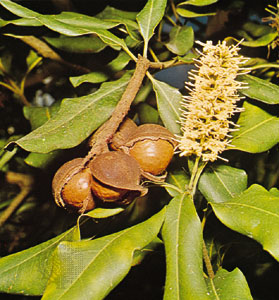
Macadamia integrifolia

Macadamia integrifolia

I’ve just been on holidays in the Northern Rivers district of NSW, which claims hundreds of kilometres of beautiful beaches, rainforests, waterfalls, divine weather, great food, tea plantations, a huge tea tree plantation used to produce fantastic Australian Tea Tree oil  and lots of Macadamia farms. MMMMMMMMM….. macadamias. The Macadamia trees are native to Australian rainforests and were “discovered” by white botanists in the mid 1800’s. They come from the Proteacae family, the genus name “macadamia” being coined by a German botanist after his colleague John Macadam. According to Wikipedia this tree may also go by the common names “macadamia, macadamia nut, Queensland nut, bush nut, maroochi nut, queen of nuts and bauple nut; Indigenous Australian names include gyndl, jindilli, and boombera”. I’ve just read an article also claiming local Aborigines from this area call the tree “kindal kindal”.

They are a gorgeous little round nut with wonderful health properties which include:

* 83% (typical value) of monounsaturated fats – the healthier fats that may help in lowering blood cholesterol. It also has the most balanced ratio of Omega 3 to Omega 6 fatty acids of any oil.

*  significant levels of protein and all the essential amino acids

* many antioxidants including Vitamin E as tocopherols and tocotrienol, epicatechin (which is the principal antioxidant in tea), the amino acids methionine and cysteine and the mineral selenium.

* Macadamias also contain phytosterols (plant sterols) believed to lower total serum cholesterol and the undesirable low density cholesterol. I’ve just read an article where the author claims “Research from Australia’s Newcastle University has shown that a balanced diet supplemented daily with macadamias can help lower blood cholesterol levels and reduce the risk of heart disease.”

Right so they are good for you ok?

But what about using macadamia oil for health and beauty externally? The reason this is on my mind is not only the fact that I I’ve seen loads of little macadamia farms, but also that I’ve been visiting my “aunty” from childhood, Wendy. Wendy is at home in palliative care being looked after by her son and daughter, their families and the district nurses and doctors. To my absolute surprise, one of the doctors actually prescribed grapefruit essential oil in macadamia oil to smooth on her legs to help prevent oedema. I was so happy when I heard this and even though I would probably use cypress and juniper oils over grapefruit (and even fennel oil), I was very happy.

So why did the doctor choose macadamia oil rather than almond oil, or sunflower oil? It’s probably because he is lives in an environment where it is a native. Great work doc!

I must say I don’t use a lot of macadamia oil for body oil blends because it is very viscous (thick) and has a distinct scent. Whenever you mix an essential oil into it, it smells like cake. Now I know that can’t be bad, but it never quite works for me. I would be inclined to use it as a hair tonic, rather than a body oil but I encourage you to have a go. I have also used the oil in cream products where it forms part of a formula but it’s not overwhelming.

Most cold pressed carrier oils have anti-oxidants and other nutrients so they are quite comparable therapeutically. I tend to use the carrier oils that have a more neutral scent and that are a little thinner in consistency. So if you have some why not try making a blend with it, and if you don’t like it you can use the oil in cooking.

sneakily borrowed from informedfarmers.com

sneakily borrowed from informedfarmers.com

Long live the macadamia!

Green and Herbaceous – Tomato Leaf and Violet Leaf Oils

Image

Solanum lycopersicum

Tomato leaf essential oil actually exists! I don’t keep it in my library of oils because I’m not really sure that about its therapeutic properties. I was chatting with someone recently and we got talking about ‘fresh scents” and her ultimate smell for representing freshness and green essence was tomato leaf. She couldn’t believe it when I told her there was as essential oil.

In fact I think there is only an absolute of tomato leaf. Absolutes are still included under the essential oil banner but they different because of the extraction process. Often absolutes are from precious or delicate flowers and other medium. Solvents are used in the extraction process and unfortunately because of little or no industry standards, the solvent used can be hazardous or toxic and traces of the chemicals used can be present in the final product. Sometime natural chemicals are used and the process requires a type of change to occur to produce a mass of oily and water soluble parts of the flower or plant. This is called a concrete and it is then mixed with ethanol to extract the fragrant compounds. Filtration helps clean the absolute to create a scent that is very concentrated and close to the plant in its natural form.

So anyway, tomato leaf. Believe it or not, it smells exactly like tomato leaf. It smells green, peppery, and herbaceous. I wouldn’t use this oil in a treatment with a client but I may consider using it with an intention to amplify a scent in a perfume.

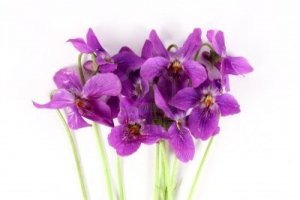
Viola odorata

Viola odorata

Violet leaf has a similar story. It’s an absolute. It has an herbaceous, green scent. There isn’t much information the breakdown of the chemical constituents so it is hard to determine what therapeutic properties this oil will have. Once again I wouldn’t be very excited to use this with a client in a body massage but I’m thinking that both these oils could work well on a spiritual and energetic level. The violet flower is an intense purple colour, with a sweet intoxicating yet subtle scent. This colour draws you in when you see it and it relates to the crown chakra, to opening and connecting with universal intelligence. Perhaps the role of the leaf for the pretty little violet flower is to give it support and protection. Could this oil be good for nourishing spiritual growth and giving someone the courage to expose their psychic powers to the world?

oh so pretty

oh so pretty

What do you think?

And what could you use tomato leaf for?

I love the idea of these leaves supporting the fruit and flower and giving us unusual scents to play with. Aromatherapy is an art and I encourage you to explore the infinite possibilities of our scented world.

I’ve Got a New Attitude

New!

NEW!

New Year.

New vibe.

New attitude.

Just listen to Patti LaBelle she’ll give you a buzz …….

So how can we create a feeling of newness and inspiration at the beginning of the New Year and the new world age? Use essential oils of course!

The easiest way, is to have a steam with a few drops of essential oil in the shower. You can refer to my previous blog “Meet Me in the Shower”  for some tips on how to treat yourself holistically with essential oils.

Here a few oils to use to entice a feeling of newness, inspiration and rejuvenation:

petitgrain (citrus aurantium v amara)

petitgrain (citrus aurantium v amara)

Petitgrain

This is one of my favourite oils with it’s green slightly spicy, citrus scent. Unlike lemon, orange, grapefruit, lime and mandarin, the essential oil of petitgrain is distilled from the twigs, buds and leaves from the plant. The other citrus oils come from the rind of the fruit. It is a beautiful oil to use to freshen your senses and open your mind to possibilities. Use a few drops of petitgrain in your morning shower to allow the wonder of the universe to enfold you. An oil of the “bigger picture”, it will also help relieve stress and tension.

lemon

lemon (citrus limonum)

Lemon

You can’t deny the loveliness of lemons! Well you can if you want to but it’s difficult because they are so versatile. See my article “The Loveliness of Lemons”  for more info.

Lemons are light, sparkly and colourful. If you like those attributes try a few drops in your shower or make a mist with lemon essential oil to carry with you for an instantaneous burst of sunshine and newness. Lemons are all about cleansing your aura or space with happiness and feeling of clearing the slate and starting again. Give your kitchen benches the once over with some lemon rind if you don’t have any oil. You can always squeeze the rind into a bath to bathe in the fragrance of lemons too!

palmarosa - Cymbopogon martinii

palmarosa – Cymbopogon martinii

Palmarosa

This oil is under-rated and under-used. It does have flora,l rosey undertones but is mostly quite a green scent – even a little peppery and tangy. It is used in perfumery and aromatherapy to boost a rose scent without the expense. As you can see it’s a grass and when I employ palmarosa in my practice with a client, I’m often drawn to it because of its flexible nature. Flexibilty is a great quality to have when you wish to create a new attitude, a new thing, a new job or even a new thought process.

Go ahead and create your new attitude with the scent of nature.

Remember to treat yourself first, and everyone will benefit.

Remember to use your intention when you use your essential oils. This is just holding a thought and energy about what you want to create as you are scenting your space, doing an energetic cleanse or steaming in the shower

Happy New Year!

Fir and Pine – Fresh and Clean

Pine

Pine

PINE

Pine is most associated with this time of year, if you celebrate Christmas. There are many types of Pine but the one most used for the essential oil is Pinus sylvestrus – often referred to as Scots Pine. From what I can gather, yes it is actually found in Scotland and is native to parts of Europe and Asia.

I do love this oil but rarely use it in a body oil blend for a treatment. It can be a bit harsh to use all over the body and is more effective used an inhalation to help with breathing and upper respiratory tract infections. The scent is bushy and fresh and is fantastic used for scenting a space and doing an energetic cleanse. You can have an aromatherapy treatment, clean and disinfect your house, and create a clean slate for new beginnings, all with a few drops of pine oil.

When you are doing a ritual or energetic cleanse of a space, your intention is as important as the oils you use. Always go with your positive intention and emotions rather than trying to clear negativity (even though this may be your goal). So instead of thinking/chanting/saying something like this;

“I’m purging all the toxic energy of my past relationship…”

try saying

“I love living in my beautiful, happy and creative space”.

As you clean, just have this thought in your mind. You can do this with any essential oil but Pine is one that lends itself to clarification. The oil comes from a steam distillation of the twigs, buds and needles and has a spicy green scent, perfect for inviting the energy of nature into your home

FIR

a fir forest in Finland borrowed from cartinafinland.fi

a fir forest in Finland borrowed from cartinafinland.fi

I’ve got a beautiful Siberian Fir essential oil – Abies sibirica. It is a part of the Pinacae family, but firs differ to pines in that their leaves are flat. “Flat, friendly fir” I remember a Park Ranger telling me in Arizona somewhere. Pine needles are cylindrical.

Anyway, the scent of the fir essential oil is much softer than that of pine but I really don’t use this essential oil all over the body either. This family of trees can be slightly sensitising to skin and tends to be more powerful used as a tonic for the emotions and energy. It’s main constituents on a typical breakdown are bornyl acetate, alpha and beta pinene and camphene and the oil can be seen as warming as is often claimed to be a great analgesic to rheumatism.

I would choose fir over pine for the scent. With pine, it can tend to be a bit more medicinal smelling. Fir is warmer and softer and a little bit more special and lovely to use in a perfume. Fir can be used in the same way as pine for cleaning and cleansing so why not give it a go?

Remember to use your intention when employing essential oils for health and well being and treat yourself first, so everyone can benefit.

Christmas Essential Oil Blends

Please check out my new book REVELATION! – Reveal Your Destiny with Essential Oils

Amazon USA      Booktopia AU      Amazon UK

and many other stores worldwide as a Kindle and Paperback


Christmas Essential Oil Blends

The North and the South

The North and the South

Christmas may be famous for snowflakes and reindeer, but believe it or not people it’s a HOT Christmas for some. And oh how we love to go to the beach and do summery things at Christmas in Australia. I’ve created a few blends for you according to your place in the world

Here are some great essential oil recipes for scenting your space on Christmas Eve and Christmas Day.

Southern Hemisphere

sneakily borrowed from silver-mg.com

sneakily borrowed from silver-mg.com


I’m thinking citrus and a little spice. Maybe even some indigenous trees.

All blends are for a vapouriser or “oil burner”.

Buzz Off – a blend for an outdoor celebration, to keep away the little biters

Lemongrass       10 drops

Lavender            10 drops

Peppermint         5 drops

—————————————————————————————————————————————–

Chill –  a cooling and relaxing blend

Lemon               10 drops

Tea Tree              5 drops

Petitgrain           10 drops

—————————————————————————————————————————————–

Aaahhhhh Summer! – sparkly and fun

Lime                  10 drops

Orange               10 drops

Cinnamon            5 drops

++++++++++++++++++++++++++++++++++++++++++++++++++++++++++++++++++++++++++++++++++++

Northern Hemisphere

All I Want for Christmas .....

All I Want for Christmas …..


I’m thinking herbs and spice.

All blends are for a vapouriser or “oil burner”.

—————————————————————————————————————————————–

White Christmas – a classic Christmas scene

Rosemary             5 drops

Orange               12 drops

Nutmeg                5 drops

Myrrh                    3 drops

——————————————————————————————————————————————

All I want for Christmas is Mariah Carey – a fun, uplifting blend

Cinnamon            10 drops

Peru Balsam        10 drops

Mandarin               5 drops

—————————————————————————————————————————————–

Mulled Wine – warm and lovely

Marjoram           5 drops

Clove                 5 drops

Lavender           5 drops

Bergamot         10 drops

************************************************************************************************************************************************

Get scenting! I’d love to hear what blends you are making for Christmas. And if you don’t celebrate Christmas, what blends are you creating right now?

Remember to use your intention when you are placing the oils in your vapouriser. What mood do you want to create? How do you want yourself and your guests to feel? See my article about intention.

copryright SR Banks

Toxic Skincare and Perfumery Ingredients

beware!

beware!

There are a lot of toxic ingredients in skincare and perfumery.

Fortunately, due to the ever-expanding information highway of the internet, they are much easier to identify with the help of great websites and blogs. While each source may not be 100% accurate, at least we have a place to start, and with that, a choice. How lucky are we to have a choice? Some people in the world struggle to survive, so let us all be thankful for even the smallest choice!

Here are some ingredients to avoid:

Preservatives – Parabens

They include methylparaben , ethylparaben , propylparaben  and butylparaben and are synthetically and cheaply produced as preservatives in skincare, perfume, makeup and foods. These compounds have shown up in breast cancer tumours, although studies show they are non-toxic. Possibly this is a hint not to use underarm deodorants with aluminium and parabens! Often these compounds are followed by numbers and these can be different in different countries. Have a look on your face cream, what is the preservative used in it? You’ll probably find it has a list of ingredients that sounds hideous – another hint – stay away from this shit.

Basic rule of thumb – if it has a number, its not natural. I am not claiming all synthetics are bad, but with the groundswell against ingredients such as these over the past 20 years, something isn’t quite right. And on the flip side, possibly not all natural ingredients are healthy either. For example an ingredient in bergamot essential oil is warned as being phototoxic – makes you burn faster when in the sun.Remember you have a choice, and the ability to inquire.

Preservatives – Formaldehyde

It is used as a preservative, and more recently formaldehyde-releasing preservatives are used. It is a naturally occurring substance, but the issue is the over use in skincare ingredients .This has recently been taken out of Johnson’s Baby Shampoo – but it was in there from it’s inception in 1953. Known to create cancer in humans (again), it is toxic to many organs and really isn’t very nice. It’s used in cleaning products too and is also used in most nail polishes and of course its that pungent ingredient used in embalming fluid and in scientific labs to preserve tissues ans organs.

Foaming Agents – Sulphates

Many people are now aware of the sulphates used as surfactants in shampoos, body wash, toothpastes and any else you can think of that foams up.

Sodium Lauryl Sulphate (SLS) is the foaming agent that is used in about 90% of shampoos with Sodium Laureth Sulphate (SLES), Ammonium Lauryl Sulphate or Sodium Myreth Sulphate, also used. These compounds are known to create cancer in people and other dastardly disease when tested on animals. And they are tested on animals and you can be assured nearly everything we use in society today has been tested on animals.

what's in your perfume?

what’s in your perfume?

Fragrance

Perfumes

Each perfumes is considered a trade secret and most are not legally obliged to list what the ingredients are. They include neuro-toxins, carcinogens, allergens and sensitizing agents. Individual ingredients may include some of the above, plus Phthalates which can effect fertility. Most perfumes are not subject to any health guidelines and are made from thousands of individual synthesized notes. So next time you spray your favourite perfume all over you, remember what’s in it. You are also involving yourself with the un-healthiness of those around you too.

Fragrance

This is listed in many skincare products so the producer doesn’t have to give away firstly, what scent is in it, and secondly what toxic crap is in it. Many chemicals can be grouped under this heading as a generic description for the scent. Even some relatively natural products still have “fragrance” on the list of ingredients so no one can steal their particular combination of scent. Sorry, if you can’t tell me what’s in it. I don’t want it! I want to make an informed choice.

And can you imagine what toxic chemicals are in cleaning products? Vile.

Check out these great resources before you buy your next bottle of perfume or expensive cream or serum:

http://www.ewg.org/skindeep/

http://www.safecosmetics.org/

Become informed!