Peppermint Oil! An Oldie but a Goodie!

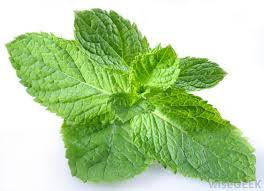
Ah lovely peppermint - pic via thebodyhut.com.au

Ah lovely peppermint – pic via thebodyhut.com.au

Peppermint essential oil is usually Mentha piperita and comes from the family Lamiacae, and the genus Mentha. A supplier of mine also offers Mentha arvensis, but really when it comes down to it the variations won’t make a huge difference to the therapeutic value for most users of oils.This family also holds many herbs like lavender, sage, marjoram, patchouli, oregano, thyme and many others. It seems as though this family of plants has been around for thousands of years going back to, at least, the Romans, the Greeks, and it is even recorded in Egyptian records. These are hardy herbs and have wonderful medicinal properties.

Please see my article Essential Oils from Herbs are Spectacular for a more comprehensive list of healing herbs. I’ll be concentrating on these herbs over the next few weeks so stay tuned.

Peppermint lollies - pic via health.com

Peppermint lollies – pic via health.com

Peppermint essential oil is one of the most used oils in the world and this is because it’s use in food flavourings. Peppermint lollies are sweet, cute and fun and for all these reasons I also see peppermint essential oil as an oil of happiness. It appeals to many people, both young and old and is an easily accessible and inexpensive oil.

A typical analysis of peppermint oil shows it is high in menthol and menthane, and these constituents are the ones that give peppermint its heat. Funnily enough this warmth or heat actually translates to a cool feeling, and peppermint could be considered and anti-inflammatory oil.

Peppermint oil is used in aromatherapy today –

* as an antidote for nausea and travel sickness

* to help calm symptoms of irritable bowel (via products that contain peppermint oil)

* as a pain relief for muscles and nerve pains

* as a decongestant for the sinuses


Most people love peppermint - pic via www.milkandhoneyherbs.com

Most people love peppermint – pic via http://www.milkandhoneyherbs.com

I use peppermint oil –

* in a steam inhalation to relieve a headache (it really works well) and sinus headaches and pain

* and in any blend of oils to relieve pain – menstrual pain, muscle pain, aching limbs, arthritis pain

I would not use peppermint oil in many body oils, but I have added it to a blend for a client with psoriasis and eczema and it seems to cool her itchy skin.

Peppermint is good for pain!

It’s also great to clear your mind, wake you up and to make you feel refreshed. It will even do that when you have a good quality mint in your mouth.

Try these recipes –

Take a huge whiff to change your focus in seconds

Take a huge whiff to change your focus in seconds

1. Open The Bottle and Take a Huge Whiff

Peppermint will help with a headache, sinus congestion and a tired mind.

2. Nourishing Body Oil Blend

For a coat of your body use 3 teaspoons of carrier oil in a little dish and, add 7 – 8 drops of essential oil.

***** Always put the drops of essential oil into the bottle or dish first, then add the carrier oil. It gives the scents time to create a synergistic fusion.

For a 50ml bottle of oil add 25 drops and see my articles “Ratios for Blending Essential Oils – A Reminder of the Basics” and  “Aromatherapy – It’s Easy as 1 2 3”

“Calm Down”

For itchy skin or even an irritable feeling –

Peppermint   1 drop

Lavender       4 drops

Patchouli       2 drops

—————————————————————————————————————–

5. Scent Your Space

In a traditional oil burner with a candle or a diffuser add 25 drops of oil

“Happy la la”

Clear the air and make room for some happy vibes –

Peppermint        8 drops

Orange             17 drops

——————————————————————————————————————

Happy blending and remember to use your intention when you are creating your formulas. See my article about intention.

copyright suzannerbanks 2013


Star Anise, Aniseed and Fennel Essential Oils – What’s the Diff?

Star Anise pic via es.wikipedia.org

Star Anise pic via es.wikipedia.org

Have you ever wondered if these plants (and essential oils) are the same? The one thing they have in common is that they all have an aniseed-licorice scent about them, however they are all different plants and the essential oils are different too (if only slightly). Fennel tends to be the more used essential oil in Aromatherapy but I’m sure some therapists out there may prefer Anise.

Aniseed (or Anise)

Pimpinella anisum - pic via blog.metmuseum.org

Pimpinella anisum – pic via blog.metmuseum.org

Pimpinella anisum comes from the Umbellifrae (also called Apiacae) family, like fennel. It is very similar to fennel in its scent and has some similar molecules. The plant is also very similar to fennel too – with the flowers making “umbrels” in their innate design (hence the “Umbellifrae’ family). Fennel has more yellow flowers and aniseed flowers are white. The stories of aniseed and fennel both go back to ancient Rome and I love this quote from Botanical.com:

“Mustacae, a spiced cake of the Romans introduced at the end of a rich meal, to prevent indigestion, consisted of meal, with Anise, Cummin and other aromatics. Such a cake was sometimes brought in at the end of a marriage feast, and is, perhaps, the origin of our spiced wedding cake.”

It is high in anethole which represents the highly distinctive scent, and Salvatore Battaglia reports the typical analysis as:

85% trans-anethole (a possible dermal irritant)

2.29% cis-anethole

0.94% acetoanisole

0.58% anisaldehyde

0.58% safrole

0.18% linalool

0.17% a-pinene

0.07% camphene

0.01% B-pinene

Even throughout history this seed has been used for coughs, colds, digestive disorders and it’s used for the same thing today. It is said to a better expectorant than fennel too.

Fennel

fennel flower

fennel flower

Foeniculum vulgare essential oil comes from the seeds like the anise bush and as you can see they are very similar plants. One again the Romans used these seeds for digestion and the Greeks thought it a slimming herb because of its diuretic value. I definitely use fennel to release excess water and also watery emotions in my clients. I often use fennel with juniper and use this combo in clay masks for cellulite too. It seems to be a softer more nurturing oil than aniseed as it is lower in trans anethole. Here’s a typcial analysis from Salvatore Battaglia’s great book “The Complete Guide to Aromatherapy”:

64 – 69.2% trans-anethole

19 – 21.6% fenchone

3.9 – 6.5% methyl chavicol

1.8 – 3.3% a-pinene

1.2 – 1.7% limonene and 1,8 cineole

0.1 – 0.3% anisic aldehyde

0.5 – 0.8& myrcene

Fennel has slightly more uses as it can be used for cramps during menstruation and to help the flow of milk in lactating women. I use this oil energetically as a self nurturing oil as it’s warm and inviting scent can help you relax and release.

Star Anise

Star anise - pic via www.tajagroproducts.com

Star anise – pic via http://www.tajagroproducts.com

Illicium anisatum is part of the Schisandraceae family and you can see the little seeds within the star formations. Sometimes known as Japanese anise it is often mixed up with Chinese anise (Illicum verum) which is very similar. One of my suppliers offers Illicum verum var. Hooker only but I haven’t used it. In my practice I need to be able to use more commonly trialled and investigated oils and that’s why fennel is the best out of the three. Of course in perfumery it’s a different story as you would primarily selecting oils for their scent rather than therapeutic value. The closest I can find in a typical analysis is from “THE ESSENTIAL OIL OF ILLICIUM ANISATUM LINN. by W. B. Cook, A. S. Howard” and they state:

18.1% cineole

10.1% linalool

9.8% methyleugenol

6.8% α-terpenyl acetate

6.6% safrole

and a sesquiterpene hydrocarbon of unknown constitution (7.2%) and they say

“The composition of this oil differs widely from that of the commercially used star anise oil obtained from Illicium verum Hooker. The most striking difference between the two oils is found in the anethole content, which constitutes 88% of the commercial oil but only 1.2% of the oil here investigated.”

So there you go.

Basically if you are going to use an aniseed scented oil go with fennel.

copyright suzannerbanks 2013

Palmarosa – Soft Skin and Happiness

palmarosa pic via choicehealthmag.com

palmarosa pic via choicehealthmag.com

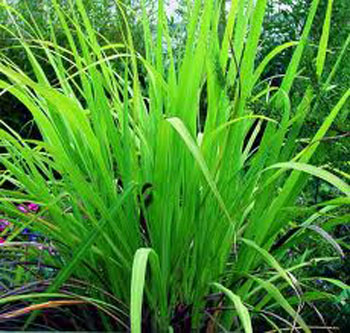
I’ve used this lovely oil with clients a few times in the past couple of weeks. It blends well with so many oils and adds a green, fresh and slightly rosey scent to a formula. This is a relative newcomer to aromatherapy and doesn’t really have a rich colourful history like the spice oils, but is a wonderful addition to a collection. This gorgeous grass originally hails from India and is sometimes known as East Indian geranium. It’s also grown in Madagascar and the Comoro Islands. Although I can’t really find out a lot about this lovely oil I assume, like lemongrass, it has been used in India as a part of their Ayurvedic lifestyle and natural way of treating disorders in the body.

Palamarosa (Cymbopogon martini) is a grass like lemongrass and citronella, and belongs to the same family – Graminae (or Poaceae). This is the family of ‘true grasses”. There’s also a gingergrass plant that creates an essential too, and that is quite close to palmarosa as it is a variation of the plant – Cymbopogon martini var. sofia. One of my suppliers offers gingergrass oil and although I don’t use it therapeutically is has a beautiful soft scent. Maybe I’ll do a story on that oil soon.

Back to palmarosa – which is an oil often used in cosmetics and soaps to enhance the scent and add an inexpensive rose scent to the product.

Rosa centifolia - another rose used to make essential oil

Rosa centifolia

I’ve always used palmarosa as a skin conditioning oil and one of it’s main components is geraniol so that may give you a hint too, as geranium is a great oil for the skin. However it’s interesting to note that geranium only contains about a third of the amount of geraniol than palmarosa! And while we are on the geraniol track, lemongrass has a high content of geranial – a different molecule with slightly different carbon bonds (with a similar function).

In aromatherapy today palmarosa is used for

* hydrating the skin and hair

* as a stimulant for skin cell growth therefore working well on scar tissue and the uneven appearance of skin

* as a tonic to the digestive system

* as an insect repellent – just like lemongrass and citronella

* I use it as an oil for happiness and for flexibility in the emotions and thoughts

Try these combo’s –

Scent your space

Scent your space

1. Scent Your Space

In a traditional oil burner with a candle or a diffuser add 25 drops of oil

“Aperitif”

Get your house in the mood for a lovely dinner

Palmarosa      10 drops

Mandarin         8 drops

Juniper            7 drops

—————————————————————————————————————————————

“I’m Going to be Flexible on this Issue”

Palmarosa      8 drops

Rosemary       5 drops

Geranium       5 drops

Siberian Fir     7 drops

—————————————————————————————————————————————

nourish your skin with oil blends

peru balper nourish your skin with oil blends

2. Nourishing Body Oil Blend

For a coat of your body use 3 teaspoons of carrier oil in a little dish and, add 7 – 8 drops of essential oil.

***** Always put the drops of essential oil into the bottle or dish first, then add the carrier oil. It gives the scents time to create a synergistic fusion.

For a 50ml bottle of oil add 25 drops and see my articles “Ratios for Blending Essential Oils – A Reminder of the Basics” and  “Aromatherapy – It’s Easy as 1 2 3”

“Sweet and Soft”

Soften up your skin and add a little sweetness –

Palmarosa      3 drops

Peru Balsam   3 drops

Lavender       2 drops

—————————————————————————————————————————————

“Gettin’ Vibed Up”

An oil blend to refresh and send you into the day with gusto –

Palmarosa     2 drops

Cinnamon     2 drops

Lemon          2 drops

—————————————————————————————————————————————

Happy blending and remember to use your intention when you are creating your formulas. See my article about intention.
copyright suzannerbanks 2013

Clove – A Healing Oil and Spice

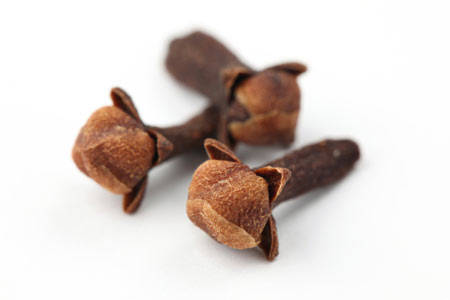
Cloves - interesting little things pic via articles.timesofindia.indiatimes.com

Cloves – interesting little things pic via articles.timesofindia.indiatimes.com

Aw look at these cute little things! They are classified as “calyxes” and come from a larger pod from an evergreen tree hailing from Indonesia, Sri Lanka and probably India too and other tropical islands like Madagascar. Originally they were only found on the “spice islands”  The Maluku Islands or Moluccas, and were traded worldwide in the 1600’s and  1700’s by the Dutch East India Company. They are basically part of the flower and when we get the clove it has been dried. This tree belongs in the same family as eucalyptus another scented tree along with guava and feijoa too!

By now you would have caught on to the fact that spices have a rich interesting history and clove is no exception. The Greeks and Romans used the clove bud as did ancient Chinese medicine where they were used as a warming tonic, and a stress relief treatment also great for high blood pressure. Records even show the use of cloves in 3BC in China where they were chewed to freshen the breath. In Ayurveda cloves are used for swelling, nausea and to help prevent colds.

We all love a good story and Wikipedia claims

“… the clove trade is also mentioned by Ibn Battuta and even famous One Thousand and One Nights characters such Sinbad the Sailor is known to have bought and sold cloves.”

Go Sinbad!  Arrrrrrrrr the spice trade of the high seas!

So now we come to modern aromatherapy and the use of clove oil today. Even if you haven’t used it yourself, you may now of clove oil’s use in reducing dental pain. It has an analgesic effect and I often put some clove oil in a formula for a client if they are experiencing physical pain.

Clove buds on the tree pic via namastenutritionist.com

Clove buds on the tree pic via namastenutritionist.com

* It is great to reduce swelling and inflammation in arthritis and in muscles too.

* Vapourised to kill air-born germs to prevent the spread of viruses – due to its high content of eugenol which is a strong antiseptic. Eugenol is also found in cinnamon, allspice, bay, basic, rose, jasmine, and carnation plants and oils.

* As a warming tonic to the souls who is unhappy or depressed

* As a calming agent to the digestive system

Clove is one of those oils that you don’t want to overdo so be mindful when blending. Try these recipes –

sniffing bottle of oil

sniffing bottle of oil

1. Open The Bottle and Take a Huge Whiff

Clove – relax, unwind, calm nausea, warmth

2. Nourishing Body Oil Blend

For a coat of your body use 3 teaspoons of carrier oil in a little dish and, add 7 – 8 drops of essential oil.

***** Always put the drops of essential oil into the bottle or dish first, then add the carrier oil. It gives the scents time to create a synergistic fusion.

For a 50ml bottle of oil add 25 drops and see my articles “Ratios for Blending Essential Oils – A Reminder of the Basics” and  “Aromatherapy – It’s Easy as 1 2 3”

“Soothe Me”

A formula for helping pain and swelling from arthritis –

Clove         2 drops

Lavender   2 drops

Fennel       2 drops

Marjoram   2 drops

————————————————————————————————————————————–

“Chill”

A chill out blend –

Clove                2 drops

Frankincense    3 drops

Orange             2 drops

—————————————————————————————————————————————

Happy blending and remember to use your intention when you are creating your formulas. See my article about intention.

copyright suzannerbanks 2013

Fennel Oil – Licorice Love

Fennel - Foeniculum vulgare

Fennel – Foeniculum vulgare

Fennel is a great oil and the plant itself has many medicinal uses. Back through history there are many references to the plant as being useful for improving eyesight, aiding digestion and also calming hunger, improving the flow of breast milk, helping to breakdown uric acid in the body and stimulating fluid loss through urinating.

Poets and herbalists have praised this wonderful plant, as did the Romans and the Greeks.

In “Paradise Lost” (a poem first published in ten books in 1667) Milton the English poet, refers the aroma of fennel:

A savoury odour blown,

Grateful to appetite, more pleased my sense

Than smell of sweetest Fennel.

A 17th Century herbalist, William Cole, notes in his 1650 book “Nature’s Paradise”:

‘both the seeds, leaves and root of our Garden Fennel are much used in drinks and broths for those that are grown fat, to abate their unwieldiness and cause them to grow more gaunt and lank.’

Illustration of a Roman army

Illustration of a Roman army

It’s interesting that both these English references are around the same time which indicates that fennel was well used in the 17th century in England. But before that there are tales of Roman soldiers chewing on fennel seeds on the march when there was no time for resting, or perhaps not much food available. They also regarded it as a medicine to improve eyesight.

It is claimed that the Greeks used fennel as a slimming agent and it even appears in their mythology with Prometheus using a stalk of fennel to steal fire from the Gods.
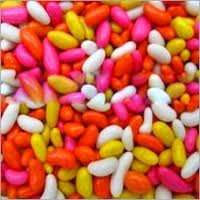
In India you may often find these delicious little treats to aid digestion – sugar-coated fennel seeds.
sugar coated fennel seeds

sugar coated fennel seeds

Today in aromatherapy we use the essential oil of fennel which is steam distilled from the seeds in much the same way as our predecessors did. Fennel oil is used for:
* stimulating regularity of menses
* helping digestion
* acting as a diuretic for fluid retention and bloating
* stimulating flow of mother’s milk
* relieving coughs by breaking down mucous and by acting as an expectorant
fennel flower

fennel flower

I use fennel oil for all these things and also for nurturing. It is a soft, rounded sweet oil and it blends well with many others. I call it “licorice love” which describes its energetic action of softness, of self-care and sweetness.
Try these recipes:
1. Scent Your SpaceIn a traditional oil burner with a candle or a diffuser add 25 drops of oil

“Be Kind”

Fennel        10 drops

Orange       10 drops

Geranium     5 drops

———————————————————————————————————————————-

“Finally A Moment to Myself!”

Fennel        6 drops

Juniper      10 drops

Lavender    6 drops

Patchouli    3 drops

———————————————————————————————————————————-

nourish your skin with oil blends

nourish your skin with oil blends

2. Nourishing Body Oil Blend

For a coat of your body use 3 teaspoons of carrier oil in a little dish and, add 7 – 8 drops of essential oil.

***** Always put the drops of essential oil into the bottle or dish first, then add the carrier oil. It gives the scents time to create a synergistic fusion.

For a 50ml bottle of oil add 25 drops and see my article “Aromatherapy – It’s Easy as 1 2 3”

“Oh The Pain”

to help relieve menstrual pain –

Fennel          3 drops

Peppermint  2 drops

Lavender      3 drops

———————————————————————————————————————————-

“The Silence of Licorice”

To soften your tension and nerves –

Fennel                            2 drops

Bergamot                       3 drops

Roman Chamomile 3%  9 drops *

* see my article for more info on 3% blends in jojoba

———————————————————————————————————————————

Happy mixing and remember to use your intention when you are blending.
See my article about intention.
copyright suzannerbanks 2013

Nutmeg – A Spice Oil of Mysticism and Intrigue!

Nutmeg - Myristica fragrans

Nutmeg – Myristica fragrans

Just look at this gorgeous pod of deliciousness!

The red, almost brain-like cover is what mace is made from. The nutmeg we know and love, and use in cooking is hidden underneath. Isn’t nature wonderful? The colours are divine and the nutmeg seed is protected by layers of cellular material. This seed is part of the whole pod which is actually the fruit of this evergreen tree.

The nutmeg tree

The nutmeg tree

Like many spices and spice oils, nutmeg has a rich history spanning, in the very least hundreds of years, and probably even more. Originating from the Banda Islands, north of Timor and west of Papua New Guinea, the trade of this wonderful spice is traced as far back as the middle ages in Europe. You can imagine how long before this the islanders would have used this amazing plant.

In the 1600’s the Dutch East India Company ruled the spice trade and the beautiful islands. They staged a nasty takeover of the islands to absolutely rule and control the supply of nutmeg to the world. When the Brits took over they transplanted many of these nutmeg trees to other islands under British rule and because of this Grenada actually produces 20% of the world’s nutmeg supply. They even have an illustration of the nutmeg on their flag.

The flag of Grenada

The flag of Grenada

Our modern history is quite brutal really. Thank goodness we are now in a time of rapid evolution – the best time to employ essential oils to get us all to the next level of peace and harmony.

The essential oil of nutmeg is steam distilled from the seed and it is high in a-pinene (alpha pinene, b-pinene (beta pinene) and sabinine (also in black pepper oil); with many other constituents including camphene. We know that camphene (and other types of camphor molecules) are warming and stimulating constituents – and so is the oil of nutmeg.

The traditional uses of nutmeg include:

* to ease the symptoms of colds and flu

* as a tonic to warm the body

* as a treatment for all things digestive – to stimulate appetite, to treat nausea and vomiting and to generally stimulate the digestive fire

* as an anti-inflammatory agent especially in the treatment of arthritis and swelling of the joints

* to warm aching muscles and joints

The nutmeg spice is known as an hallucinogen due to a chemical constituent called elemecin, which Wikipedia claims is similar to the properties of mescaline. According to Salvatore Battaglia (an aromatherapist and author of a great book called “The Complete Guide to Aromatherapy”), this is lost in the distillation process and is not present in the oil.

Isn’t it interesting that the red mace covering of the seed looks like a brain – and that the seed can effect the brain, inspiring whacky mind visions!

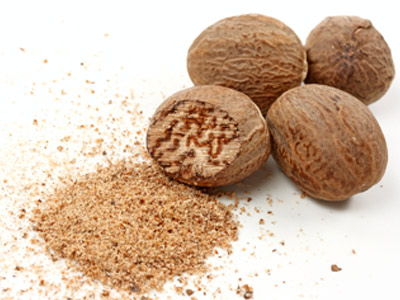
nutmeg

nutmeg

I use this oil as a connection to spirit – as an awakening oil of the mind and the higher chakras. I find nutmeg oil to be expansive on all levels of our existence – the physical, the emotional, the mental and the spiritual. And just the fact that it’s called “myristica”, I always think of this oil as an agent of attaining our mystical existence, and accessing our mystical guides. I use this oil when I need to connect to universal intelligence.

Try these recipes:

1. Pure Pulse Point Perfume

In a little dish mix these oils and anoint your pulse points or chakras – 3 drops of essential oils and dilute with a few drops of carrier oil – always patch test first!

“Sweet Release”

Allow divine guidance to enter your world

Nutmeg        2 drops * patch test first as nutmeg could be sensitising to the skin

Orange         1 drop

————————————————————————————————————————————–

2. Scent Your Space

In a traditional oil burner with a candle or a diffuser add 25 drops of oil

“Intergalactic Love”

Reach out into the universe with love

Nutmeg        10 drops

Rosewood     8 drops

Mandarin       6 drops

————————————————————————————————————————————–

Remember to use your intention when you are blending, it will add to the creation process and also be an exercise in using your intuition.

copyright suzannerbanks 2013

May Chang – Shiny, Happy and a Little Bit Effervescent

May Chang flower

May Chang flower

I looked into my oils today and it jumped out at me and I thought “what a lovely oil”. That’s what I’ll write about today.

So here goes…….

May Chang   Listea cubeba

May chang berries - sometimes called mountain pepper

May chang berries – sometimes called mountain pepper

This gorgeous, sparkly essential oil is made from the berries of the tree which is native to China and south-east Asia. I was first introduced to it when a friend brought some back from her holiday in Thailand about 15 years ago. It’s part of the Lauraceae family which also holds cinnamon and rosewood. May chang, and these oils too, have a subtle peppery note about them too.

It is a lemon scented oil and is high in neral and geranial which is are monoterpenoid structures within the oil. It is however, more than that. It smells like bubbly lemonade. It has a 3D effervescence about it, and that’s probably not possible – can you smell effervescence?. Well I reckon you can in this lovely oil.

Mainly used for fragrance in soaps, May chang does have some therapeutic properties too. In traditional Chinese medicine according to Salvatore Battaglia:

“….May chang is used to treat dysmenorrhoea that is relieved with heat or pressure, stomach aches, lower back pain, chills headaches and muscular aches from external conditions.”

So from this we can see that is has a warming quality to it, which you would expect from the local name of ‘mountain pepper”.

Also described as a great oil for respiratory issues like asthma is it also being used in heart research in China.

AND

I call it a happiness oil.

Like all the other citrus oils it is uplifting, fun, sweet and sparkly. (Once again I suppose you can’t really use the word “sparkly” to describe a scent, but hey, I’m going to anyway).

Try these recipes:

1. Scent Your Space

In a classic oil burner or a diffuser add these oils:

“Secret May Chang Business”

To introduce a fun, easy atmosphere in your home –

May Change       15 drops

Lavender              5 drops

Geranium             5 drops

—————————————————————————————————————————————-

“I’ve Got The Power”

To give you a lift if you need energy to carry on –

May Change        10 drops

Cardamom            5 drops

Rosemary             5 drops

Orange                 5 drops

—————————————————————————————————————————————-

2. Skin Scrub

Add these oils to a cup of fine sea salt, a splash of your favourite carrier oil and some water to make a slurry –

“ZING!”

May Chang                     3 drops

Roman Chamomile 3%   3 drops

—————————————————————————————————————————————-

3. Space Cleansing Mist

In a 50ml mist bottle add these oils:

Anime Alchemist”

For an uplifting aura cleanse –

May Chang                15 drops

Rosewood                   5  drops

Juniper                        5 drops

—————————————————————————————————————————————-

4. Pure Pulse Point Perfume

In a little dish mix these oils and anoint your pulse points or chakras – 3 drops of essential oils and dilute with a few drops of carrier oil – always patch test first!

“I’m Effervescent”

To help inspire feelings of vitality

May Change    2 drops

Cinnamon        1 drop

—————————————————————————————————————————————

Princess May Chang

Princess May Chang

And just for fun May Chang, also refers to this gregarious little anime character who seeks the secrets and tools of alchemy to restore her family’s name. She travels with her pet panda too. CUTE!

I also made a few interesting, repetitive typo’s while writing…….. May change ……… May change ………… May change………………………………..

copyright suzannerbanks 2013

Sweet Orange Essential Oil: A Must-Have for the Scent Lover

orange -  it's a great food AND oil!

orange – it’s a great food AND oil!

How can you NOT be captured by the beautiful colour, taste and scent of an orange?

Well, actually, I have a client who really can’t bare the smell of orange essential oils because it gives her a headache. Fair enough. But let’s all love it together – because we can!

* I use a lot of orange essential oil because it is light, fresh, sweet and blends well with ALL essential oils.

* I use a lot of orange essential oil because it is a simple representation of the beauty of life.

* I use a lot of orange essential oil because it lends itself to become the body of an aromatherapy blend, easily and effortlessly.

* I use a lot of orange essential oil because it appeals to most people by connecting to the inner child, or the innocence and happiness of children.

* I use a lot of orange essential oil because it always allows my client to completely relax and enjoy the experience of the treatment

orange

orange

Traditionally orange oil as been used for:

* helping with digestion and gut issues including symptoms of IBS

* as a tonic for depression and anxiety

* as a soothing agent to the skin, and in inflammatory skin conditions like acne

* as a mild stimulant to the lymphatic system

I would say most therapists use orange oil because of it’s scent and it’s intrinsic nature of joy and happiness.

orange = happiness

orange = happiness

Handy Hints

+ If you squeeze oranges for fresh juice keep the rind and rub it over the kitchen benches to act as a disinfectant and make your place smell great.

+ Use the rind in a bath to have a de-stress unwind moment of peace – no need for a bottle of oil go straight to the source.

+ Make a cake with whole boiled oranges and almond meal to have an aromatherapy treatment and a dessert at the same time.

+ Kids LOVE this oil so it’s good have around in case they need a little help to re-focus and chill out

And try these recipes:

Scent Your Space

1. “Good Morning Darling (Get out of Bed on the Wrong Side Did Ya?)”

To infuse your space with some soft happiness add these oils to a classic oil burner:

Orange          15 drops

Rosewood     5 drops

Cinnamon      5 drops

—————————————————————————————————————————————-

2. “I’ve Got a Headache”

To relieve tension and relax:

Orange                     10 drops

Lavender                  10 drops

Cedarwood Virginian  5 drops

—————————————————————————————————————————————-

Skin Scrub

To a cup of fine sea salt add a good splash of oil (almond, olive, sunflower) and either 5 drops of orange oil OR grate the rind of 2 oranges into the mix.

—————————————————————————————————————————————-

Pure Pulse Point Perfume

Anoint your chakras, or pulse points with the pure essential oil. Use the energy of the oil and the scent for transformation and energy protection. Always place a tiny residue under your nose for the scent to go to work on your mind.

In a little dish mix these oils and anoint your pulse points or chakras – 3 drops of essential oils and dilute with a few drops of carrier oil – always patch test first!

1. “Serendipity”

To invite openness into your life:

Orange         2 drops

Geranium     1 drop

—————————————————————————————————————————————-

2. “I’m Lovin Myself Sick Tonight”

To help you connect with your inner sexy goddess:

Orange       2 drops

Nutmeg      1 drop

—————————————————————————————————————————————-

Orange oil is an oil of happiness so…….

Remember to treat your self first and then everyone will benefit!

copyright suzannerbanks 2013