
Rosemary Essential Oil – Get Fired Up!

Get fired up!

Get fired up!

Rosemary is a herb that is found all around the world in suburban gardens, dried in little bags and fresh at grocery stores. It’s a herb that has been used for medicine and in gastronomy for thousands of years and packs a powerful punch. Rosmarinus officianalis belongs to Lamiacae family (which has all the herbs in it) and the genus Rosmarinus.

I have written about this wonderful herb before when I attended a funeral and we were offered sprigs of rosemary to place on the coffin (Remember with Rosemary – Lest We Forget). Rosemary’s traditional use is that of remembering.

In Shakespeare’s Hamlet, Ophelia says, “There’s rosemary, that’s for remembrance.” (Hamlet, iv. 5.) Wikipedia

The fresh herb and of course the essential oil, is stimulating to the mind, and is warming and generally stimulating in its nature. It is high in 1-8 cineole (found in high amounts in Eucalyptus), and camphor and a-pinene (also found in many others oils including sage and thyme, citrus oils, eucalyptus and cedarwood).
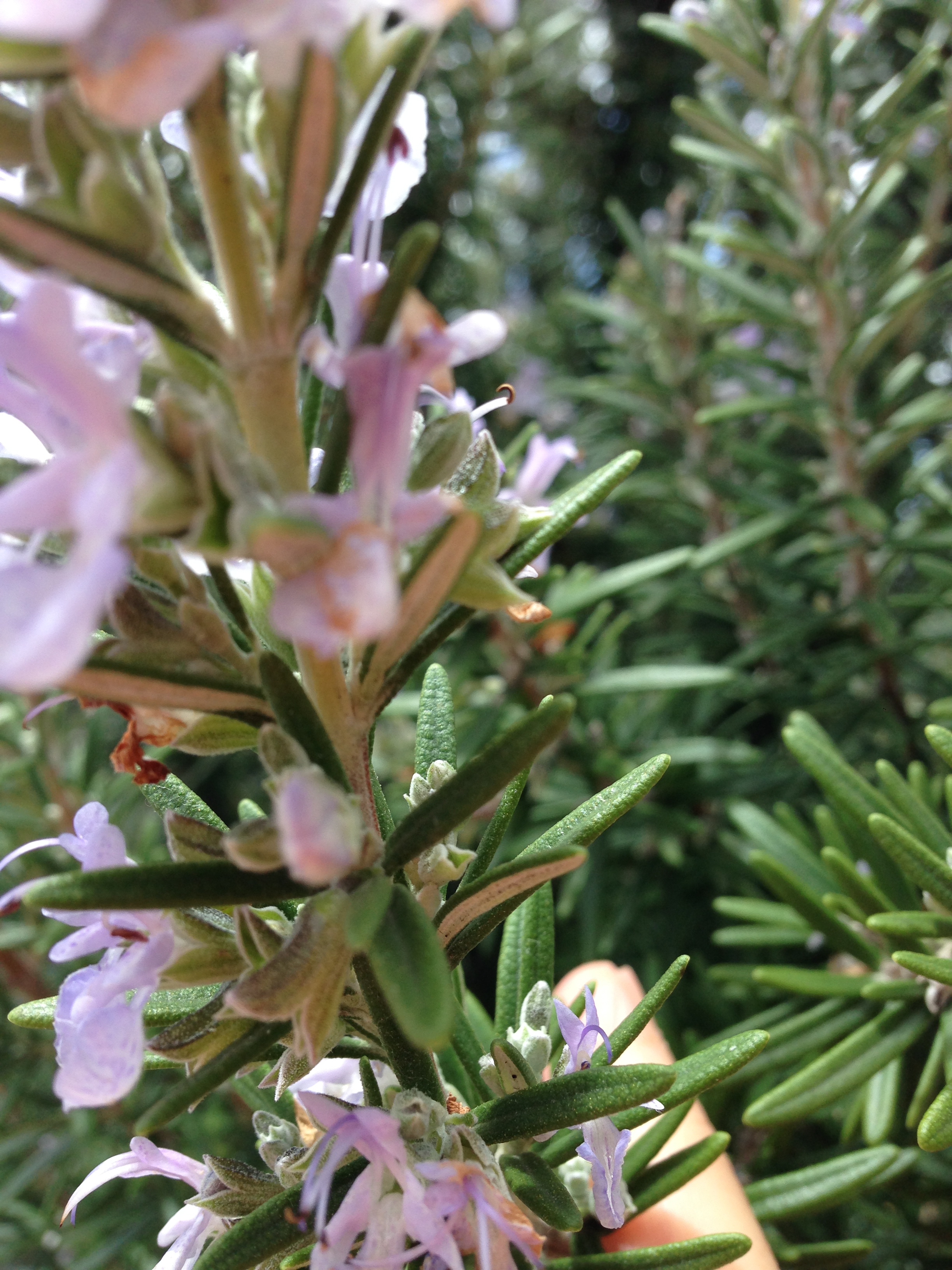
Flowering rosemary in my client's garden

Flowering rosemary in my client’s garden

Rosemary was found in the tombs of Egypt, used by the Greeks and Romans as medicine and revered as a sacred herb. More modern herbalists and physicians from the middle ages have used rosemary to treat any sickness of the head – and in this way we could see rosemary as a “cephalic oil” – the same as basil, which I have just written about. It has been used as a treatment for the liver, muscle aches and pains and for colds and sinus.

In aromatherapy today rosemary is used –

* for muscular aches and pains

* for stimulating memory – to be used in study and for the elderly

* for warming the body and increasing circulation to extremities

* as a digestive tonic

* as a tonic for the spleen meridian organs (liver, gall bladder, pancreas, spleen)

Rosemary botanical drawing - from Köhler's Medizinal Pflanzen

Rosemary botanical drawing – from Köhler’s Medizinal Pflanzen

As you can see the modern uses of rosemary are the same as the traditional uses of rosemary – stimulating and warming. It certainly is a strongly flavoured herb. Recently my friend, who has loads of rosemary bushes on his new property, stuck some in a bottle of gin and it didn’t take very long for the flavour to infuse.

I use rosemary frequently in my practice. Most clients have some type of muscle stiffness or soreness and rosemary is a real winner when it comes to relieving muscle tension. I’ll often use lavender, rosemary and marjoram together for a warming, pain relieving oil blend.

Rosemary oil is produced in a few countries around the world and this herb and oil has some very common chemotypes (again this is similar to basil and other herbs like marjoram too). Different chemotypes will have different scents and varying degrees of the common chemical constituents, depending on the soil, climate and other factors. Don’t get too confused, just dive in and use whatever rosemary oil you can find. It’s inexpensive and easily accessible!

Rosemary will stimulate your mindpic via goldenagersrock.com

Rosemary will stimulate your mind – pic via goldenagersrock.com


Black Pepper – A Strong Essential Oil with a Soft Scent

Please check out my new book REVELATION! – Reveal Your Destiny with Essential Oils

Amazon USA      Booktopia AU      Amazon UK

and many other stores worldwide as a Kindle and Paperback


Black Pepper – A Strong Essential Oil with a Soft Scent


Black pepper - pic via www.seriouseats.com

Black pepper – pic via http://www.seriouseats.com

Many moons ago my first guest post on Australian Perfume Junkies was about black pepper. Black pepper is one of those oils that I may not use frequently, but when I do use it, I am always intrigued as if I am smelling it for the first time. And I seem to be surprised at its soft, warm scent. When you taste black pepper it can be sharp, pungent and spicy but when you smell the essential oil it is gentle and sweet with a hint of spice.

From my APJ story;

“The essential oil of black pepper is a lot softer and sweeter than the taste, and is used in Aromatherapy for symptoms such as poor circulation, muscle and joint aches and pains, as treatment for bad digestion and as a general warming tonic. It has been used as an aphrodisiac, and an anti-dote to depression. Taking in all these properties, what can the divine scent tell us? Like many spice oils, it carries the energetic resonance of the evolution of humanity – really. Each drop, each whiff can link us to the past. It’s an oil of warmth, expansion and action. It’s a stimulating scent to the brain and can certainly be employed to open your mind. When I smell black pepper straight from the bottle (the best way to experience an essential oil is to take off the lid and take a huge sniff) I am inspired to carry on. To me it’s an oil of searching for your purpose in life, and giving inspiration to go forward and seize the day.”

Wow I just quoted myself hehehehehehe. To read the full story click here.

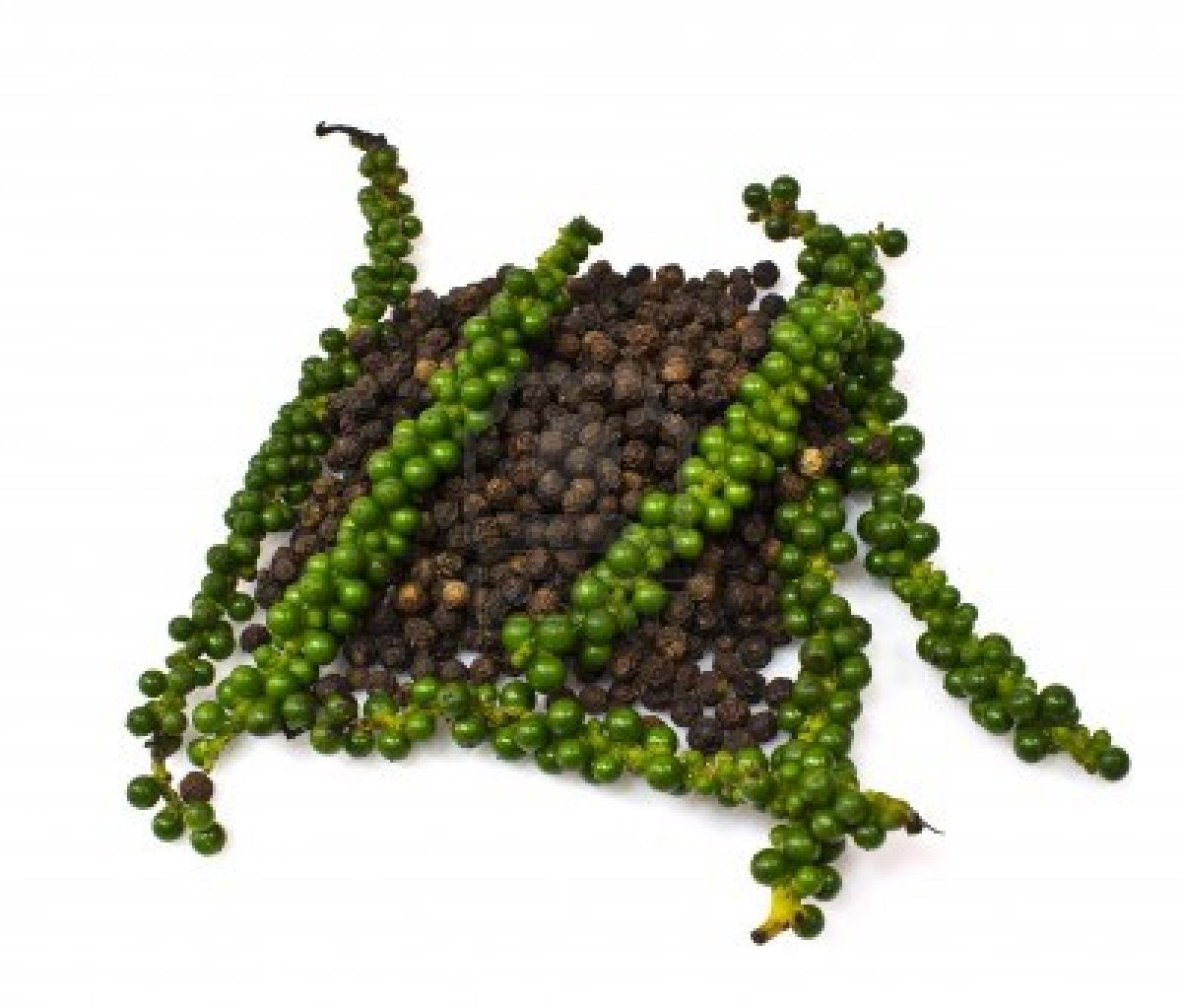
Black pepper in its dried and undried forms - pic via kampot-pepper.us

Black pepper in its dried and natural forms – pic via kampot-pepper.us

Black pepper is considered as slightly sensitising, which means it may cause a reaction on the skin. This is why I say to “patch test first”, even though I know not many of you do. Putting a couple of drops neat on your skin would not be advisable but putting a couple of drops in an oil blend may work quite well.

Here’s a couple of recipes –

An essential oil steam in the shower will do wonders for your mind and energy levels - pic via completehealthcircle.com

An essential oil steam in the shower will do wonders for your mind and energy levels – pic via completehealthcircle.com

1. Put A few Drops Of Oil into the bottom of the Shower

This works in a similar way to just taking a whiff but if you’ve got an extra minute, it will give you a completely different experience. Your whole body will be immersed in an essential oil steam.

Black pepper – will gently warm up your brain and body in the morning, creating space for you to shine!

Nourish your body with a beautiful oil blend - pic via redbookmag.com

Nourish your body with a beautiful oil blend – pic via redbookmag.com

2. Nourishing Body Oil Blend

For a coat of your body use 3 teaspoons of carrier oil in a little dish and, add 7 – 8 drops of essential oil.

***** Always put the drops of essential oil into the bottle or dish first, then add the carrier oil. It gives the scents time to create a synergistic fusion.

For a 50ml bottle of oil add 25 drops and see my articles “Ratios for Blending Essential Oils – A Reminder of the Basics” and  “Aromatherapy – It’s Easy as 1 2 3”

Oh My Aching Legs!”

Rub this blend on, and then put your feet up –

Black pepper  2 drops

Lavender        4 drops

Peppermint    1 drop

——————————————————————————————————————

“Hike”

When you need to warm up your muscles before you conquer your day –

Black pepper  2 drops

Rosemary      2 drops

Lemon           4 drops

—————————————————————————————————————–

“God Give Me Strength”

When you need to summon some courage –

Black pepper             2 drops

Cedarwood Virginian  2 drops

Petitgrain                   4 drops

——————————————————————————————————————

Happy blending and remember to use your intention when you are creating your formulas. See my article about intention.

copyright suzanne

5 Essential Oils to Get You Started with Vigour in 2014

Happy shiny people - pic via www.breathezy.com

Happy shiny people – pic via http://www.breathezy.com

Christmas is over.

New Year celebrations are over. (Except we’ll be having another party for Chinese New year when we celebrate the year of the horse).

The year has started.

I’m lagging a bit behind and found it hard to drag myself out of bed this morning so looked to my trusty friends (my essential oils), to get me vibed up.

My last article 2014! The Universal Number of 7! was all about this year and its intrinsic number of truth. To seek the truth of your existence here on earth, you will need a bit of curiosity and of course some energy to keep you going. Some essential oils will open your mind and stimulate the frontal cortex, and other essential oils will give you body a bit of a kick start.

Flowering rosemary

Flowering rosemary

1. Rosemary

Stimulate your mind with rosemary. Remember with rosemary. Study with rosemary, warm your body up and help sore muscles release tightness. It is an easily accessible and inexpensive oil with a long history of medicinal uses.


2. Lavender

Lavender will always be on every list of oils I create. It is a relaxing oil but also an oil of solidarity and bringing your energy together. It’s the stalwart – loyal, reliable and hard working.

Lavender can ground your energy, help induce a state of calm, help with pain relief and generally be a medicinal oil of great standing.

Black pepper

Black pepper

Black pepper

Forward ho! Black pepper is the spice that can warm your heart, open your mind and also be a warming tonic to your body. It is a great oil for finding your dharma and taking your unique brand of evolutionary energy into the world. Even though the spice itself is quite piquant, the essential oil of black pepper has a magical sweetness about it.


Lemongrass

I think this oil may be one of the most loved oils in the world. It has so many uses but I’ll always use this oil for a client who is lacking energy. It’s lemon scented goodness is backed up with a deep grassy green scent that represents freedom to me.

Need physical energy? Use lemongrass!

Basil

Basil

Basil

Oh you just can’t keep a good herb down! The herbs are so wonderful for healing and have been used for centuries. Basil is an oil for opening your mind and stimulating your brain. It is expansive and great for maintaining fluid thought and allowing universal intelligence to come through your crown chakra. Basil is for clarity and can be used on your body like lavender, as it has a high content of linalool which is an active ingredient in lavender.

How can you use these oils to stimulate your energy?

* try taking a whiff straight from the bottle

* put a few drops in the bottom of the shower (cover the drain for a minute with your foot or a cloth) and inhale

* make an oil blend for your body – for a coat of your body use 3 teaspoons of carrier oil in a little dish and, add 7 – 8 drops of essential oil and see my articles “Ratios for Blending Essential Oils – A Reminder of the Basics” and  “Aromatherapy – It’s Easy as 1 2 3”.

* it will be best to use a combination of oils rather than just 7 drops of the one oil as, for example,  black pepper is slightly sensitising and could be too strong for some people

* as a hint, use lavender and a citrus oil to one of the oils above to make a lovely blend

Happy blending and remember to use your intention when you are creating your formulas. See my article about intention.

copyright suzannerbanks 2013


Marjoram – A Must-Have Essential Oil for the Scent Enthusiast

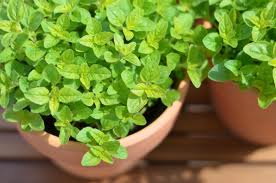
Marjoram is a dainty herb with a big scent - pic via thelastrevelation.com

Marjoram is a dainty herb with a big scent – pic via thelastrevelation.com

Ah marjoram. I’m not sure if I’m addicted to this very strong, herbaceous, hardy oil but rarely a week goes by that I wont use this with clients, friends or myself.

I have written an article generally on the herbs “Essential Oils from Herbs are Spectacular”, but I think we may need to go deeper into each one.

We’ll start with marjoram because I just felt like talking about it. Often when I go to have my treatment, my aromatherapist also uses this oil frequently with me as it has some great indications for the body and spirit too (of course)!

Marjoram (Oreganum marjorana) belongs to the herb family called Lamiacae, and the genus of Oreganum. It may now be more obvious why marjoram and oregano (Oreganum vulgare)  look very similar and sometimes it’s hard to tell the fresh herbs apart from each other.

Great pic comparing oregano and marjoram - pic via cookthink.com

Great pic comparing oregano and marjoram – pic via cookthink.com

Herbs are the ancient medicinal healers of our world and when I make a blend for a client that has a few herbs in it I always say to myself silently “ah the herbs’ and feel like I’ve created a very traditional therapeutic blend. This herb was used by the ancient Greeks and according to Salvatore Battaglia, the name marjoram means “joy of the mountains”. Aw lovely!

In aromatherapy marjoram is used for:

* aching and sore muscles

* general body pain

* as a warming tonic

* to help someone deal with grief

* to help with falling asleep

* to counteract stress

* as a sedative for distraught emotions

* generally for calming and soothing

* to reduce coughing

I use marjoram for all these things too, and particularly love the way it blends so well with all the other oils. I like marjoram and use it a lot along with lavender because they are so beautifully calming. Who doesn’t want to chill out when they have a massage? We all need a little help de-stressing from the ups and downs of daily life so in this respect it’s a great oil.

a client's oil formulation

A client’s oil formulation with marjoram

Here are a few recipes –

1. Nourishing Body Oil Blend

For a coat of your body use 3 teaspoons of carrier oil in a little dish and, add 7 – 8 drops of essential oil.

***** Always put the drops of essential oil into the bottle or dish first, then add the carrier oil. It gives the scents time to create a synergistic fusion.

For a 50ml bottle of oil add 25 drops and see my articles “Ratios for Blending Essential Oils – A Reminder of the Basics” and  “Aromatherapy – It’s Easy as 1 2 3”

“Release the Day”

Release the stress of the day by putting this all over your body after a shower –

Marjoram   3 drops

Bergamot  4 drops

————————————————————————————————————————————–

 “Oh My Aching Legs”

Apply to aching legs and rest with your feet elevated –

Marjoram     4 drops

Lavender      2 drops

Rosemary     2 drops

(ah the herbs)!

————————————————————————————————————————————–

Anoint yourself with pure essential oils

Anoint yourself with pure essential oils in a little carrier oil

2. Pure Pulse Point Perfume

In a little dish mix these oils and anoint your pulse points or chakras – 3 drops of essential oils and dilute with a few drops of carrier oil – always patch test first!

“I’m Ready for You Now Sleep”

Induce relaxation –

Marjoram     2 drops

Neroli 3%    3 drops  * see my article for more info on 3% blends in jojoba

————————————————————————————————————————————-

“Phew I’m Glad That’s Over”

Marjoram       1 drop

Rosewood     1 drop

Lemongrass   1 drop

————————————————————————————————————————————–

Happy blending and remember to use your intention when you are creating your formulas. See my article about intention.

copyright suzannerbanks 2013

Myrrh – A Healing Resin of Old

myrrh resin pic via www.pointsoflight.com

myrrh resin pic via http://www.pointsoflight.com

Myrrh. Whenever I say this oil in my head it sounds like merr-er-er. Just like Steve Martin’s character in the movie “The Man with Two Brains”, Dr Hfuhruhurr. I can’t help it. I’ve created a permanent synapse in my brain, that pronounces myrrh like Hfurhruhurr (except with an M). I don’t really use myrrh very much and maybe this is the reason.

I do however, use myrrh as an oil of abundance – a little goes a long way. Just like frankincense, myrrh is a resin in its natural state and then it’s steam distilled to produce an essential oil. In all bottles of myrrh that I’ve owned, before too long the cap is often stuck to the bottle with the dried oil – it wants to revert back to its original form. This never happens with frankincense which is quite a thin oil. Look how similar the trees are – they are from the same family, Burseraceae, but a different genus. Myrrh is from Commiphora, and frankincense is from the Boswellia genus.

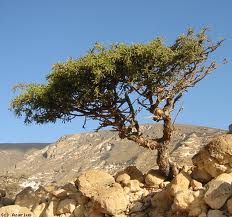
myrrh tree pic via azarius.net

myrrh tree pic via azarius.net

frankincense tree pic via herbsocietyvic.org.au

frankincense tree pic via herbsocietyvic.org.au

Myrrh is native to parts of Africa and still revered as a great healer. We know of stories in the bible which tells us that this resin has been used for centuries. Like many of the older plants and oils, myrrh is also noted in ancient Egypt as an important ingredient in the holy incense kyphi, and the temples of Jerusalem in the incense of ketoret. I’ve just written about spikenard (see my article Spikenard – an Essential Oil with a Rich History and a Heady Scent), which appears in the same texts and was also an ingredient in these ceremonial incenses.

With its amazing qualities of healing and preservation you can see why the Egyptians used myrrh in embalming. If it’s hardening on the lid of my oil bottle then it’s working that way when embalming a body!

Egyptian mummy

Egyptian mummy

Myrrh is a great wound healer and works really well with gum disease and mouth ulcers. I would use myrrh in an oil blend with a client to add dimension to the scent and to address fears of lack, and a general feeling of being unsupported. I love myrrh to stimulate healing from past hurts and to help someone gain strength to continue in life.

A drop of oil can be essential

A drop of myrrh may be all you need

In aromatherapy today myrrh is used for –

* gum disease

* deep cracks n the heels

* chronic wounds that wont heal

* to reduce mucous in coughs and bronchitis

* as a meditative oil to connect to spirit

* to help with period pain and for use in childbirth

Embrace myrrh as an oil to support you in your connection to the divine. Be sparing with myrrh in your oil formulations as a little goes a long way.

copyright suzannerbanks 2013

Spikenard – an Essential Oil with a Rich History and a Heady Scent

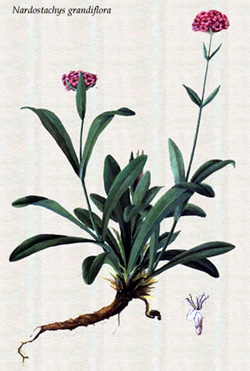
Nardostachys grandiflora or Nardostachys jatamansi pic via www.medievalcookery.com

Nardostachys grandiflora or Nardostachys jatamansi pic via http://www.medievalcookery.com

In a recent article I included spikenard in one of my recipes – see The Hierophant – A Tarot Card Reading with Essential Oils. It is commonly called spikenard, nard and the Indian name jatamansi (which is what I call it in my mind).

When I posted the link on my Facebook page one of my friends read the article (thanks Jason), and wanted to know more about this oil. My brief comments went something like this:

It’s an oil of the bible and the story is that Mary used this to bathe Jesus feet, and it was said to cost as much as a year’s wages. It has history in other religions and appears connected to the first and second Temples of Jerusalem. Used in Ayurveda it’s great for healing and a deep connection to spirit.

So that is a quick look at the oil and I thought I’d elaborate because it’s so amazing. This is a strong oil and belongs to the same family as Valerian, Valerianaceae. I must say I’ve never used Valerian oil in my practice, as even the scent of Valerian tea is super strong and if you’ve ever taken an herbal sleep formula with Valerian, you can smell it as soon as you open the bottle!

So spikenard has the same deep, base, intensity that valerian has, and also the vetiver root (even though vetiver is more like a grass). As with vetiver oil, the rhizomes of the spikenard plant hold the essential oil. It’s sweet, heavy and almost syrupy as it flares out of the bottle. One or two drops is enough in any formula to invoke the meta-physical properties of the oil, and to bring an oil blend together and give it substance.

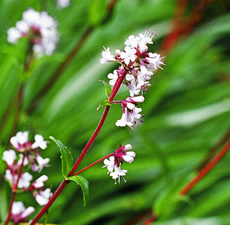
spikenard flower - pic via www.rkessentialoil.com

spikenard flower – pic via http://www.rkessentialoil.com

As with many essential oils, the plants have been used for centuries for both healing and  religious and spiritual ceremonies. We are relying on ancient texts to illuminate us on the uses of these plants and also the scholars who translate them. It is always fascinating to me that thousands of years ago great healers knew what the plants were good for even though they had no scientific means of measuring their components. So is this intuition, trial and error, or a combo of both? However we look at it, it is a gift from the universe and our modern medicine would be nowhere today without this ancient knowledge.

There is so much to write about here I’ll just touch on the most interesting references to this oil. Said to have been used in the Temple of Solomon, the First Temple of Jerusalem (circa 800 BC)  and the Second temple (circa 530 BC onward to about 70 BC), in the incense called Ketoret mentioned n the Hebrew Bible and other texts. Ketoret is also very similar to the Egyptian incense called kyphi too which was recorded in the Pyramid texts dating back to 2300BC. Also talked about in the Bible, as mentioned above, this plant was used in Greek and Roman healing and ceremonies, and even used in medieval cookery. And as jatamansi, it’s been used in Ayurveda for thousands of years too, especially for grounding Vata, helping digestion and and as a heart tonic.

spikenard - pic via www.aroma-pure.com

spikenard – pic via http://www.aroma-pure.com

Ok so what is spikenard used for in modern Aromatherapy?

* as a calming tonic for someone freaking out (as is valerian and vetiver)

* to induce sleep

* to act as a calming digestive tonic

* as a wound healing oil by acting as a anti-bacterial agent and also an anti-inflammatory

* as an oil for meditation to induce a soothing, calming energy to connect to higher consciousness

* as a base oil to bring an oil blend together

* to stimulate hormone production

* for mature and dry skins

When you use this oil, use it sparingly like you would do with Vetiver. The secrets of the universe are encoded in every drop of oil!

copyright suzannerbanks 2013

The Chariot – A Tarot Card Reading with Essential Oils

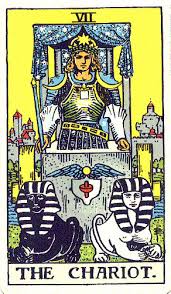
The Chariot - #7 in the Rider-Waite tarot deck

The Chariot – #7 in the Rider-Waite tarot deck


I. Love. This. Card.

Power!

Strength!

Will!

Destiny!

And sphinxes!

I love it when this card comes up in a reading because it’s about going out into the big wide world and creating your life. It could be about getting a new job and diving into it wholeheartedly. The card could be asking you to make decisions about how you want to be in the world – how do you see yourself functioning? Do you want to be successful (whatever that means to you), do you want to use your creative genius to drive you life or maybe you need

to garner the energy to move forward in your life?

The Sphinx - pic via toptravellists.com

The Sphinx – pic via toptravellists.com

The twin sphinxes – I’m not sure about them but I interpret this very strong image as being a representation of polarities – positive and negative, black and white. To go out into the world and be confident and successful we do need a good sense of ourselves and be able to balance our positive and negative sides.

This is a card about action and desire. Dream it. Do it! Use your mind and brainpower to create your life the way you’ve always imagined it to be. If this is a new way of doing things for you then it requires an unwavering confidence in yourself – and sometimes that’s hard. Fake it til you make it! With the energy of the Chariot card you will make it by acknowledging all the different sides of yourself and moving forward anyway.

Black pepper - a great oil to represent The Chariot

Black pepper – a great oil to represent The Chariot

I have formed a strong connection with black pepper oil and The Chariot. It’s hard for me to think of one without the other. Here are some recipes to invoke the energy of The Chariot:

1. Open The Bottle and Take a Huge Whiff

Black pepper – warmth and courage

Ylang Ylang – love yourself and release resentment

Lavender – strength and solidarity

Rosemary – activate your mind

—————————————————————————————————————————————

get any cute little dish to mix your oils in

get any cute little dish to mix your oils in

2. Pure Pulse Point Perfume

In a little dish mix these oils and anoint your pulse points or chakras – 3 drops of essential oils and dilute with a few drops of carrier oil – always patch test first!

“Forward, Ho!”

Have the courage to do it –

Black pepper  2 drops

Petitgrain        1 drop

—————————————————————————————————————————————

“Run Don’t Walk”

Get cracking NOW –

Basil       1 drop

Lemon    2 drops

—————————————————————————————————————————————

“Clear the Path”

Inhale and make way for new things –

Peppermint   1 drop

Orange          1 drop

Geranium      1 drop

————————————————————————————————————————————–

nourish your skin with oil blends

nourish your skin with oil blends

3. Nourishing Body Oil Blend

For a coat of your body use 3 teaspoons of carrier oil in a little dish and, add 7 – 8 drops of essential oil.

***** Always put the drops of essential oil into the bottle or dish first, then add the carrier oil. It gives the scents time to create a synergistic fusion.

For a 50ml bottle of oil add 25 drops and see my articles “Ratios for Blending Essential Oils – A Reminder of the Basics” and  “Aromatherapy – It’s Easy as 1 2 3”

“Warm Up”

Get limber for your journey –

Black Pepper        3 drops

Jasmine 3%         9 drops * see my article for more info on 3% blends in jojoba

—————————————————————————————————————————————

“Release”

Allow nervousness to float away –

Neroli 3%     15 – 20 drops * see my article for more info on 3% blends in jojoba

—————————————————————————————————————————————


Happy blending and remember to use your intention when you are creating your formulas. See my article about intention.

copyright suzannerbanks 2013

Clove – A Healing Oil and Spice

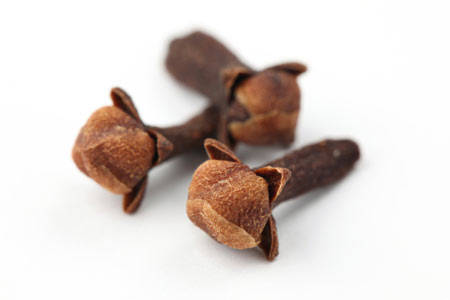
Cloves - interesting little things pic via articles.timesofindia.indiatimes.com

Cloves – interesting little things pic via articles.timesofindia.indiatimes.com

Aw look at these cute little things! They are classified as “calyxes” and come from a larger pod from an evergreen tree hailing from Indonesia, Sri Lanka and probably India too and other tropical islands like Madagascar. Originally they were only found on the “spice islands”  The Maluku Islands or Moluccas, and were traded worldwide in the 1600’s and  1700’s by the Dutch East India Company. They are basically part of the flower and when we get the clove it has been dried. This tree belongs in the same family as eucalyptus another scented tree along with guava and feijoa too!

By now you would have caught on to the fact that spices have a rich interesting history and clove is no exception. The Greeks and Romans used the clove bud as did ancient Chinese medicine where they were used as a warming tonic, and a stress relief treatment also great for high blood pressure. Records even show the use of cloves in 3BC in China where they were chewed to freshen the breath. In Ayurveda cloves are used for swelling, nausea and to help prevent colds.

We all love a good story and Wikipedia claims

“… the clove trade is also mentioned by Ibn Battuta and even famous One Thousand and One Nights characters such Sinbad the Sailor is known to have bought and sold cloves.”

Go Sinbad!  Arrrrrrrrr the spice trade of the high seas!

So now we come to modern aromatherapy and the use of clove oil today. Even if you haven’t used it yourself, you may now of clove oil’s use in reducing dental pain. It has an analgesic effect and I often put some clove oil in a formula for a client if they are experiencing physical pain.

Clove buds on the tree pic via namastenutritionist.com

Clove buds on the tree pic via namastenutritionist.com

* It is great to reduce swelling and inflammation in arthritis and in muscles too.

* Vapourised to kill air-born germs to prevent the spread of viruses – due to its high content of eugenol which is a strong antiseptic. Eugenol is also found in cinnamon, allspice, bay, basic, rose, jasmine, and carnation plants and oils.

* As a warming tonic to the souls who is unhappy or depressed

* As a calming agent to the digestive system

Clove is one of those oils that you don’t want to overdo so be mindful when blending. Try these recipes –

sniffing bottle of oil

sniffing bottle of oil

1. Open The Bottle and Take a Huge Whiff

Clove – relax, unwind, calm nausea, warmth

2. Nourishing Body Oil Blend

For a coat of your body use 3 teaspoons of carrier oil in a little dish and, add 7 – 8 drops of essential oil.

***** Always put the drops of essential oil into the bottle or dish first, then add the carrier oil. It gives the scents time to create a synergistic fusion.

For a 50ml bottle of oil add 25 drops and see my articles “Ratios for Blending Essential Oils – A Reminder of the Basics” and  “Aromatherapy – It’s Easy as 1 2 3”

“Soothe Me”

A formula for helping pain and swelling from arthritis –

Clove         2 drops

Lavender   2 drops

Fennel       2 drops

Marjoram   2 drops

————————————————————————————————————————————–

“Chill”

A chill out blend –

Clove                2 drops

Frankincense    3 drops

Orange             2 drops

—————————————————————————————————————————————

Happy blending and remember to use your intention when you are creating your formulas. See my article about intention.

copyright suzannerbanks 2013